Ai2 Releases Open Robotics Model Designed for Real-World AI Automation
Why It Matters
By open‑sourcing a faster, more versatile robot model, Ai2 lowers the barrier for real‑world automation, accelerating adoption in labs and industry. The release signals a shift toward general‑purpose, adaptable robotics that can operate beyond tightly controlled settings.
Key Takeaways
- •MolmoAct 2 cuts inference time from 6.7 s to under 1 s.
- •Open-source model includes 720 hours of bimanual manipulation data.
- •Supports tasks like towel folding, tray lifting, and table clearing.
- •Piloted in Stanford wetlab to automate CRISPR sample handling.
Pulse Analysis
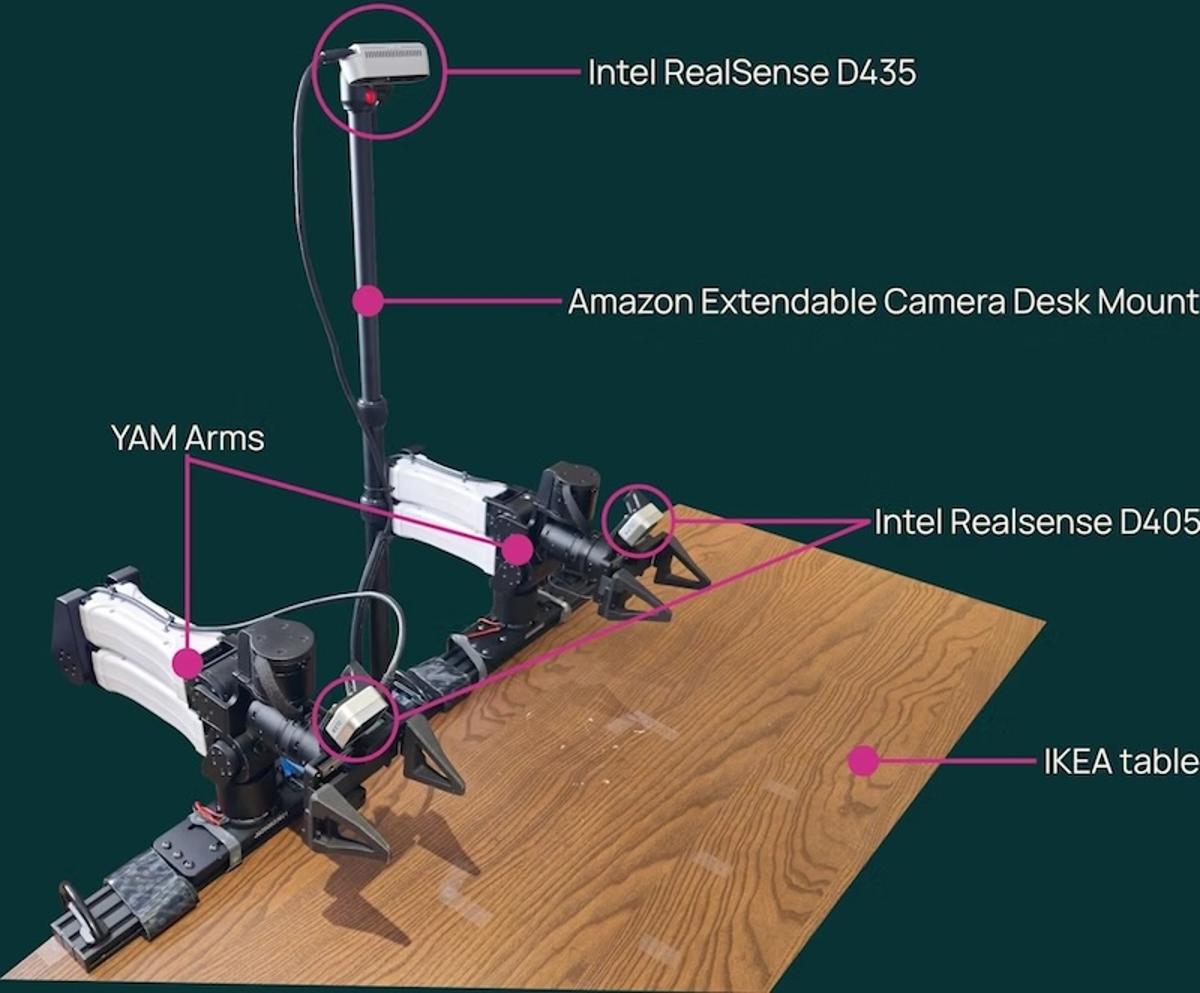
MolmoAct 2 arrives at a pivotal moment for robotics, where the industry is moving from narrow, pre‑programmed solutions toward adaptable, general‑purpose agents. The model’s Action Reasoning architecture lets robots evaluate three‑dimensional scenes before acting, a leap that reduces latency from several seconds to sub‑second response times. This speed boost not only makes robot motions appear smoother but also opens the door to more complex, time‑sensitive applications such as assembly lines and dynamic warehousing. By releasing full model weights, code, and the extensive MolmoAct 2‑Bimanual YAM dataset, Ai2 invites researchers and startups to iterate rapidly without the heavy cost of proprietary platforms.
The dataset itself—over 720 hours of coordinated two‑arm demonstrations—represents the largest open‑source bimanual manipulation collection to date. It covers everyday tasks like towel folding, grocery scanning, and smartphone charging, providing a rich training ground for models that need to handle varied object geometries and occlusions. Such breadth is critical for bridging the gap between simulated environments and the messy reality of factories, kitchens, or laboratories, where objects are rarely presented in ideal configurations. The open‑source nature also encourages cross‑institutional benchmarking, fostering a more collaborative ecosystem that can accelerate breakthroughs in perception‑action loops.
Perhaps the most compelling proof point is MolmoAct 2’s early deployment in a Stanford wet‑lab project targeting CRISPR gene‑editing workflows. By automating repetitive pipetting, sample transfers, and equipment operation, the system promises to free scientists from mundane tasks and reduce human error, potentially speeding up experimental cycles. This use case illustrates how a versatile robotics foundation model can be a catalyst for scientific discovery, extending AI’s impact from digital assistants to physical laboratories. As more domains recognize the value of open, high‑performance robot models, MolmoAct 2 could become a cornerstone for the next generation of autonomous systems.
Ai2 releases open robotics model designed for real-world AI automation
Comments
Want to join the conversation?
Loading comments...