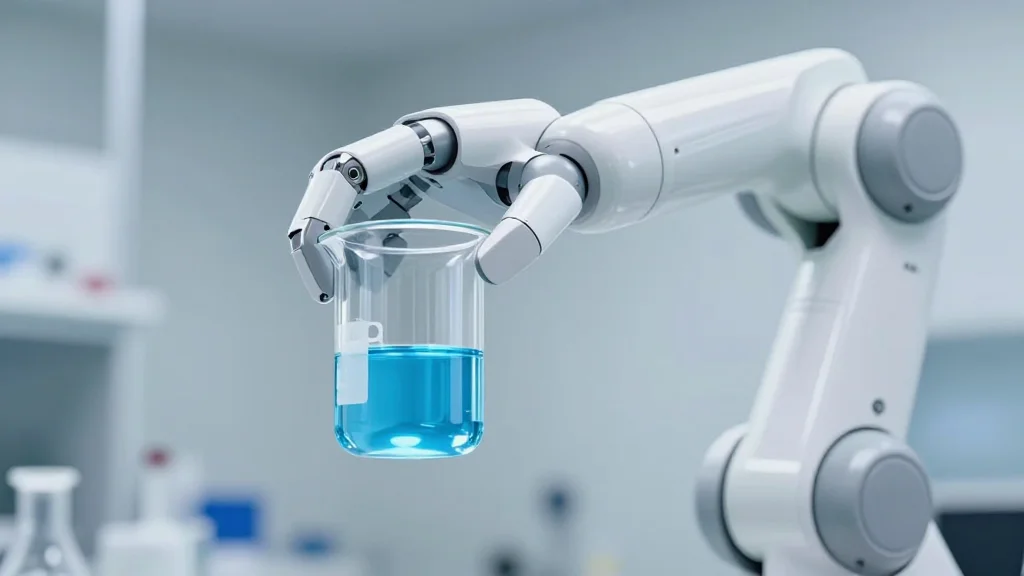
AI‑Driven Autonomous Robot Labs Unveiled to Speed Scientific Experiments

Why It Matters
The deployment of AI‑driven autonomous robot labs could fundamentally alter the pace of scientific discovery. By automating routine bench work, researchers can accelerate hypothesis testing, reduce experimental error, and increase reproducibility—addressing key pain points that have slowed progress in fields ranging from drug development to materials science. Moreover, the technology democratizes access to high‑throughput experimentation, potentially leveling the playing field for smaller labs that lack extensive staffing. Beyond productivity gains, the convergence of robotics and AI in the laboratory raises broader societal questions about the future of scientific labor, data ownership, and the ethical boundaries of automation. As these systems become more capable, policy makers, institutions, and researchers will need to navigate the balance between efficiency and the preservation of human insight that drives innovation.
Key Takeaways
- •Researchers have built AI‑driven autonomous robot labs that can run experiments without human hands.
- •The labs integrate machine‑learning models with robotic manipulators for planning, execution, and analysis.
- •Automation promises to cut experimental timelines by weeks or months and improve reproducibility.
- •The technology is positioned as a complement to human researchers, not a replacement.
- •Next steps include pilot deployments in universities and biotech firms and development of standardized interfaces.
Pulse Analysis
The emergence of autonomous robot labs marks a pivotal inflection point in the research ecosystem, echoing earlier waves of automation in manufacturing and logistics. Historically, laboratory automation has been limited to discrete instruments—pipetting robots, plate readers, and the like—each requiring manual setup and oversight. The new generation of AI‑powered labs consolidates these functions into a unified, self‑optimizing platform, echoing the broader trend of end‑to‑end automation seen in sectors such as automotive production. This integration could trigger a virtuous cycle: faster data generation fuels more robust AI models, which in turn enhance the robots' decision‑making capabilities.
From a competitive standpoint, early adopters—particularly well‑funded biotech startups and research universities—stand to gain a substantial edge. By compressing the experimental cycle, they can iterate on drug candidates or material formulations at a speed that outpaces rivals still reliant on manual workflows. However, the technology also lowers barriers for smaller players, potentially democratizing high‑throughput experimentation and fostering a more diverse innovation landscape.
Looking forward, the key challenges will revolve around standardization, data governance, and workforce adaptation. Industry consortia will likely emerge to define open protocols that enable interoperability across hardware vendors and AI frameworks. Simultaneously, institutions must invest in training programs that equip scientists with the skills to design AI‑compatible experiments and interpret robot‑generated data. If these hurdles are addressed, AI‑driven robot labs could become as ubiquitous as the internet in shaping the future of scientific inquiry.
AI‑Driven Autonomous Robot Labs Unveiled to Speed Scientific Experiments
Comments
Want to join the conversation?
Loading comments...