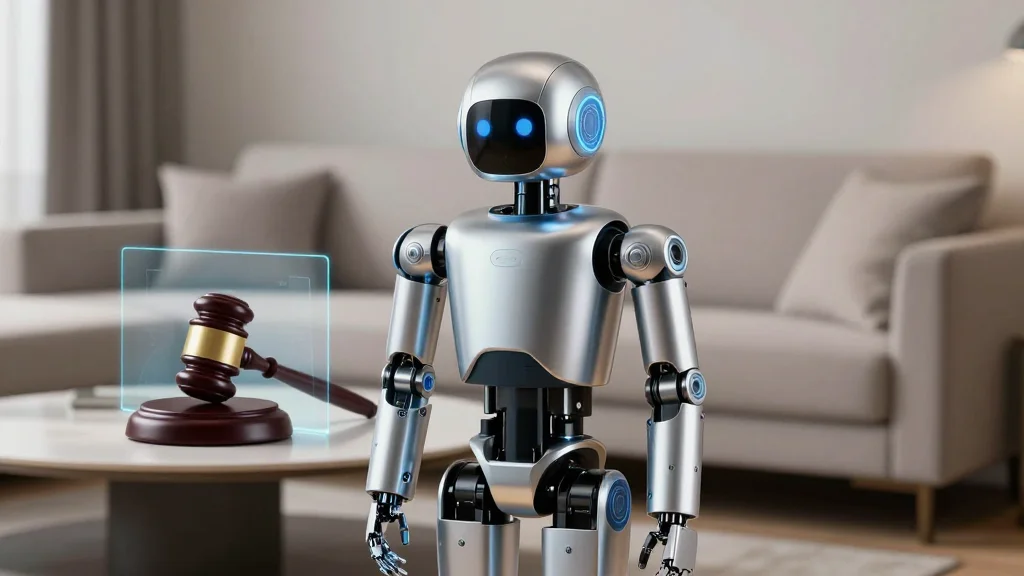
Airbnb Host Sues The Bot Company Over $12,000 Damage Claim for Secret Robot Tests

Companies Mentioned
Why It Matters
The dispute underscores a broader regulatory gap as robotics companies move from controlled labs to everyday spaces. Without clear standards, homeowners risk property damage, privacy breaches, and safety hazards, potentially eroding public trust in autonomous technologies. A court ruling that holds The Bot Company accountable could catalyze industry‑wide best practices, prompting startups to secure explicit consent, provide transparent testing schedules, and obtain liability coverage before entering private homes. For investors, the case highlights the need to assess not only technical viability but also legal risk management. Companies that embed robust compliance frameworks may attract more capital, while those that rely on covert testing could face costly litigation and reputational damage, slowing the rollout of consumer‑grade robots that promise to reshape household labor.
Key Takeaways
- •Airbnb host Sean Donovan sues The Bot Company for over $12,000 in damages.
- •The lawsuit alleges unauthorized testing of a six‑foot tracked robot in the rental home.
- •The Bot Company, founded by ex‑Cruise CEO Kyle Vogt, has raised >$300 million but has not disclosed robot specs.
- •More than 30 visitors entered the property between April 12‑25, suggesting a makeshift R&D lab.
- •The case could force new consent and liability standards for in‑home robotics testing.
Pulse Analysis
The Bot Company’s alleged covert testing reflects a tension that has long haunted the robotics sector: the need for real‑world data versus the ethical imperative to protect private spaces. Historically, autonomous vehicle firms have navigated this balance by partnering with municipalities and obtaining permits for public road trials. Household robots lack an equivalent regulatory sandbox, leaving startups to improvise. This lawsuit may accelerate the creation of a formal framework, similar to the FAA’s approach for drone testing, that mandates consent forms, insurance, and third‑party audits for any in‑home deployment.
From an investment perspective, the incident could recalibrate risk assessments. Venture capitalists have poured billions into domestic‑robot ventures, betting on a future where chores are automated. However, legal exposure adds a new layer to due‑diligence. Firms that proactively embed compliance—such as documented guest agreements, clear test‑area demarcations, and real‑time monitoring—will likely command higher valuations, while those that rely on stealthy field trials may see their capital streams dry up. The outcome of Donovan’s case will serve as a litmus test for how quickly the industry adapts.
Finally, consumer perception cannot be ignored. Public enthusiasm for home robots hinges on trust that devices will not damage property or invade privacy. A high‑profile lawsuit, especially one with vivid details of broken heirlooms and rearranged kitchenware, can quickly turn curiosity into caution. Companies that engage transparently with users, perhaps by offering opt‑in beta programs with clear safety guarantees, will be better positioned to scale. In short, the legal battle is more than a $12,000 dispute; it is a bellwether for the governance model that will shape the next decade of domestic robotics.
Airbnb Host Sues The Bot Company Over $12,000 Damage Claim for Secret Robot Tests
Comments
Want to join the conversation?
Loading comments...