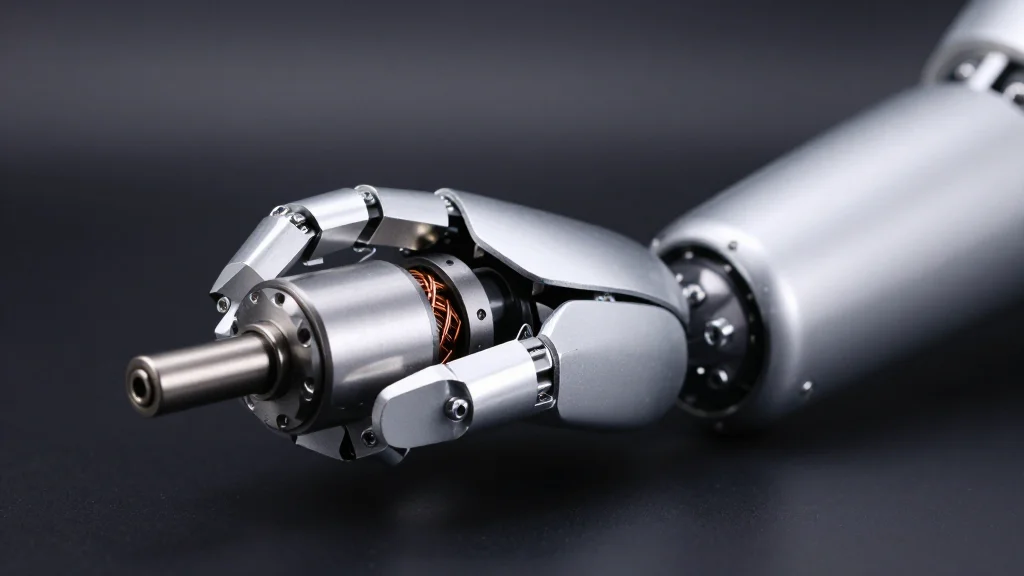
Allient Inc. Publishes New Whitepaper on Motor Selection for Humanoid Robotics Systems
Companies Mentioned
Why It Matters
Motor selection directly influences robot stability and efficiency, making the guide critical for manufacturers scaling humanoid platforms. It provides a technical roadmap that can accelerate commercial deployment and reduce development risk.
Key Takeaways
- •Whitepaper details motor types for humanoid joint applications
- •Highlights torque density and inertia as key performance metrics
- •Addresses thermal limits in compact actuator designs
- •Offers selection criteria for locomotion, balance, manipulation functions
- •Positions Allient as a specialist supplier for robotics actuation
Pulse Analysis
The humanoid robotics sector is crossing the research‑to‑market threshold, driven by advances in AI, sensor fusion, and lightweight structures. As robots gain the ability to walk, lift, and interact with humans, the demand for precise, high‑torque actuation spikes. Motors must deliver exceptional torque density while minimizing inertia and heat, because any lag or overheating can destabilize balance or reduce lifespan. Consequently, engineers are seeking clear, data‑rich guidance to navigate the expanding catalog of motor technologies and align them with specific joint functions.
Allient’s newly published whitepaper tackles this need by breaking down four primary motor architectures—frameless, slotless, geared, and direct‑drive—and mapping each to performance parameters such as torque per volume, response time, and thermal envelope. The document also quantifies how inertia and friction affect joint dynamics, offering calculation tables that engineers can plug into system‑level models. By coupling its decades‑long expertise in motion control with real‑world case studies, Allient provides a practical decision framework that reduces prototyping cycles and helps manufacturers meet stringent reliability standards.
The timing of the guide aligns with several market forces: OEMs are scaling humanoid platforms for logistics, healthcare, and entertainment, while investors are pouring capital into modular robot ecosystems. Access to a vetted motor selection methodology lowers technical risk, accelerating time‑to‑revenue for startups and large integrators alike. Moreover, Allient’s emphasis on compact, high‑torque solutions positions it to capture a larger share of the actuation market as demand for lighter, more agile robots grows. Companies that adopt these insights can expect improved efficiency and competitive advantage in the emerging humanoid economy.
Allient Inc. Publishes New Whitepaper on Motor Selection for Humanoid Robotics Systems
Comments
Want to join the conversation?
Loading comments...