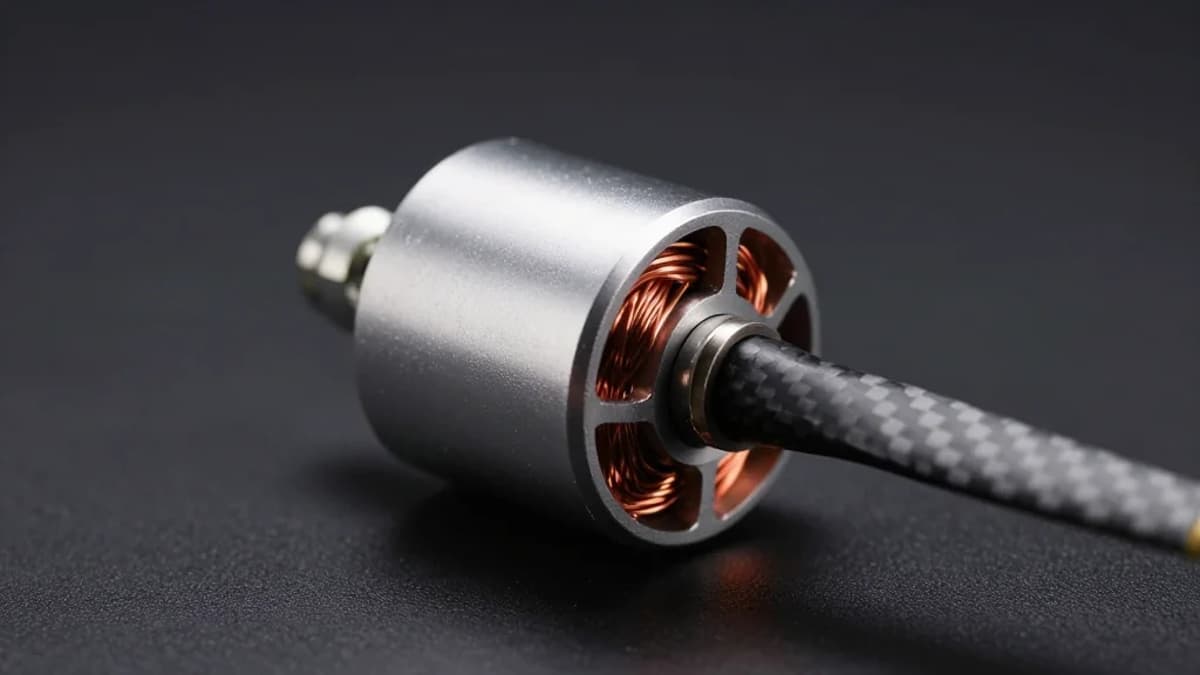
Allient Inc. Releases New Whitepaper on Motor Selection for Drone Systems
•February 10, 2026
0
Companies Mentioned

Why It Matters
The guide equips engineers with data‑driven criteria to choose motors that boost drone reliability and performance, a decisive factor as the UAV market expands across defense and commercial sectors.
Key Takeaways
- •Whitepaper covers motor types, performance, thermal factors.
- •Drone market growth drives need for efficient propulsion.
- •Allient offers COTS/MOTS motors, ESCs, gimbals, kits.
- •Guidance includes mission‑specific motor selection criteria.
- •Emerging trends: lightweight composites and AI‑optimized control.
Pulse Analysis
The commercial and defense drone sectors are entering a phase of rapid diversification, with platforms now tasked with everything from precision agriculture to autonomous logistics and high‑risk reconnaissance. As payloads become more sophisticated and flight times extend, motor efficiency, power density, and thermal stability have shifted from peripheral concerns to core performance determinants. Engineers therefore require granular data that links motor characteristics to mission outcomes, a gap that Allient’s new whitepaper aims to fill by translating decades of motion‑control expertise into actionable guidance.
The 30‑page guide walks readers through the full selection lifecycle, beginning with an overview of brushless versus outrunner configurations, then drilling into torque curves, Kv ratings, and cooling strategies. It highlights common engineering challenges such as vibration‑induced fatigue and heat dissipation in high‑altitude operations, while offering decision trees for matching motor specs to payload weight, flight envelope, and endurance goals. Allient leverages its U.S. high‑volume manufacturing capability to provide both off‑the‑shelf (COTS) and made‑to‑order (MOTS) solutions, including integrated ESCs, propellers, and gimbal assemblies that can be rapidly fielded for defense contracts.
By publishing this technical resource, Allient positions itself as a knowledge leader in a market projected to exceed $50 billion by 2030. The whitepaper’s emphasis on emerging trends—such as lightweight composite housings, AI‑driven motor control algorithms, and next‑generation battery integration—signals where future competitive advantage will lie. Companies that adopt these insights can expect improved flight reliability, lower operational costs, and faster time‑to‑market for new UAV applications, reinforcing Allient’s role as a strategic supplier for both established defense programs and fast‑growing commercial drone innovators.
Allient Inc. Releases New Whitepaper on Motor Selection for Drone Systems
0
Comments
Want to join the conversation?
Loading comments...