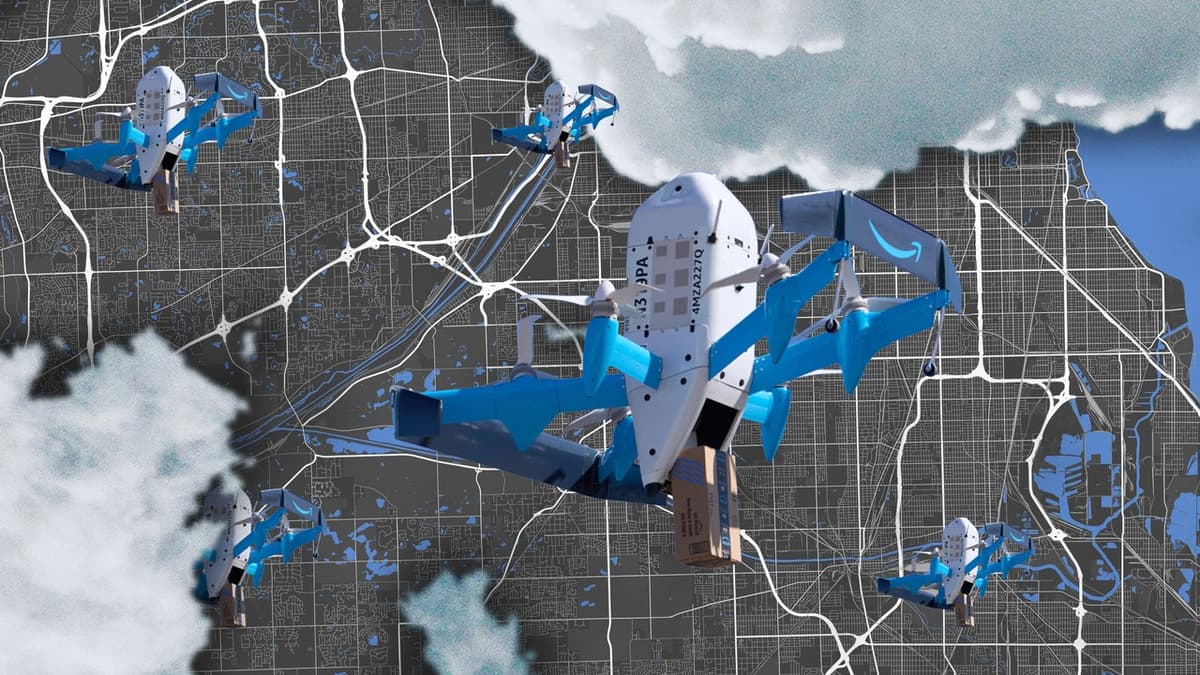
Amazon’s Drone Ambitions Are About to Reshape Chicago’s South Suburbs
Why It Matters
The trial will test Amazon’s ability to scale autonomous deliveries while exposing regulatory and safety gaps that could shape nationwide drone logistics policies.
Key Takeaways
- •Amazon will pilot Prime Air drones in Chicago’s south suburbs.
- •MK30 drones carry 5‑lb payloads, fly 400 ft at 73 mph.
- •Recent crashes in Texas and 2025 raise safety concerns.
- •FAA lacks detailed public guidance for community‑level drone trials.
Pulse Analysis
The race to dominate the skies for last‑mile logistics has accelerated in recent years, with Amazon positioning its Prime Air program as the flagship effort. By targeting Chicago’s south suburbs, Amazon hopes to demonstrate that autonomous, high‑speed drones can reliably serve dense residential areas, a critical step toward its 500 million‑package annual target by 2035. Competitors such as Wing, Flytrex, UPS, and emerging air‑taxi firms are also conducting trials, creating a crowded low‑altitude environment that will demand interoperable standards and shared traffic‑management solutions.
Safety concerns have moved from theoretical to tangible as several high‑profile crashes have occurred. The MK30, weighing up to 85 lb and capable of 73 mph, can generate significant kinetic energy if a failure occurs at altitude, raising questions about liability and public risk. Incidents in Texas and earlier crashes involving other vendors illustrate the fragile balance between rapid innovation and reliable operation. Experts argue that without mature low‑altitude traffic‑management systems and real‑time drone‑to‑drone communication, the probability of collisions with birds, structures, or other drones will rise sharply as commercial volumes increase.
Regulators, chiefly the FAA, are under pressure to provide clearer guidance and transparent community outreach. While the agency has approved the MK30 and published basic operational diagrams, detailed protocols for incident reporting, neighborhood impact assessments, and cross‑operator coordination remain sparse. The Chicago pilot highlights a broader policy gap: how to integrate private drone fleets into the national airspace while preserving public safety and trust. As municipalities grapple with noise, privacy, and emergency‑response considerations, the success of Amazon’s trial could set precedents that shape the future regulatory framework for urban drone logistics nationwide.
Amazon’s drone ambitions are about to reshape Chicago’s south suburbs
Comments
Want to join the conversation?
Loading comments...