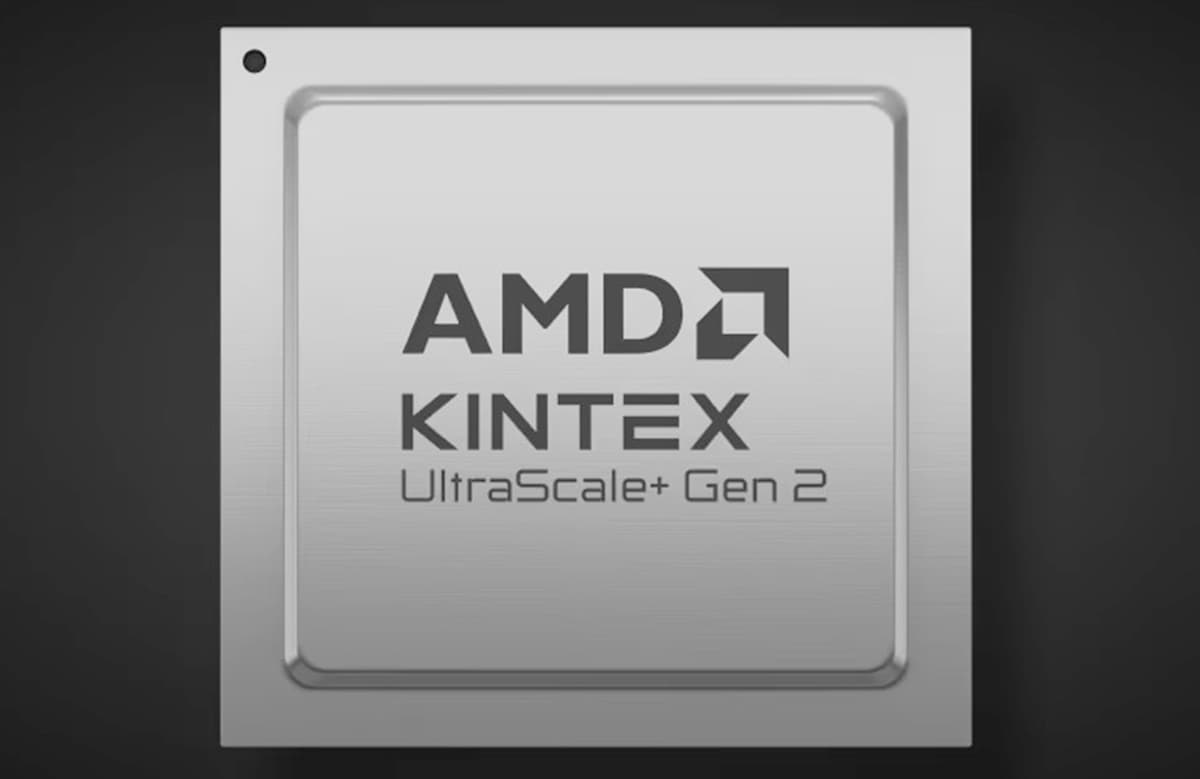
AMD Expands Midrange FPGA Offerings with Kintex UltraScale+ Gen 2 Family
•February 5, 2026
0
Companies Mentioned

Why It Matters
The performance and security upgrades let designers meet rising data‑rate and latency demands without moving to costlier high‑end FPGAs, preserving budget and design cycles. Long‑term availability also reduces redesign risk for regulated industries such as medical and industrial automation.
Key Takeaways
- •Five‑fold memory bandwidth boost over previous generation
- •PCIe Gen4 double channel density, supports 4K AV‑over‑IP
- •Integrated LPDDR4X/5/5X controllers enhance latency and power efficiency
- •Built‑in security: encryption, anti‑cloning, CNSA 2.0 cryptography
- •Availability through 2045 ensures long‑term product lifecycle
Pulse Analysis
The FPGA market has long been dominated by a split between high‑end, feature‑rich parts and low‑cost, limited‑function devices. AMD’s introduction of the Kintex UltraScale+ Gen 2 family narrows that gap, offering mid‑range pricing with capabilities that were previously reserved for premium offerings. By delivering a five‑fold increase in memory bandwidth and doubling PCIe Gen4 channel density, the new chips address the data‑intensive workloads emerging in edge AI, machine vision, and 4K broadcast pipelines, while keeping power consumption in check.
Technical enhancements extend beyond raw throughput. Integrated LPDDR4X, LPDDR5, and LPDDR5X memory controllers provide deterministic latency and high‑speed access, crucial for real‑time signal processing and timing‑critical applications such as medical imaging and industrial automation. Security is baked into the silicon, featuring bitstream encryption, anti‑cloning mechanisms, and CNSA 2.0‑grade cryptography, which safeguards intellectual property and meets stringent regulatory standards. These attributes enable designers to build adaptable pipelines that can scale with future bandwidth demands without extensive redesign.
AMD also eases adoption through a clear migration path from its Spartan UltraScale+ portfolio, offering early‑access evaluation kits and tool support via Vivado and Vitis. With a product roadmap guaranteeing availability through 2045, manufacturers in regulated sectors gain confidence that their designs will remain supported for decades, reducing total cost of ownership and minimizing certification churn. The Kintex UltraScale+ Gen 2 family therefore positions AMD as a strategic partner for enterprises seeking high performance, security, and longevity in a single, cost‑effective FPGA solution.
AMD expands midrange FPGA offerings with Kintex UltraScale+ Gen 2 family
0
Comments
Want to join the conversation?
Loading comments...