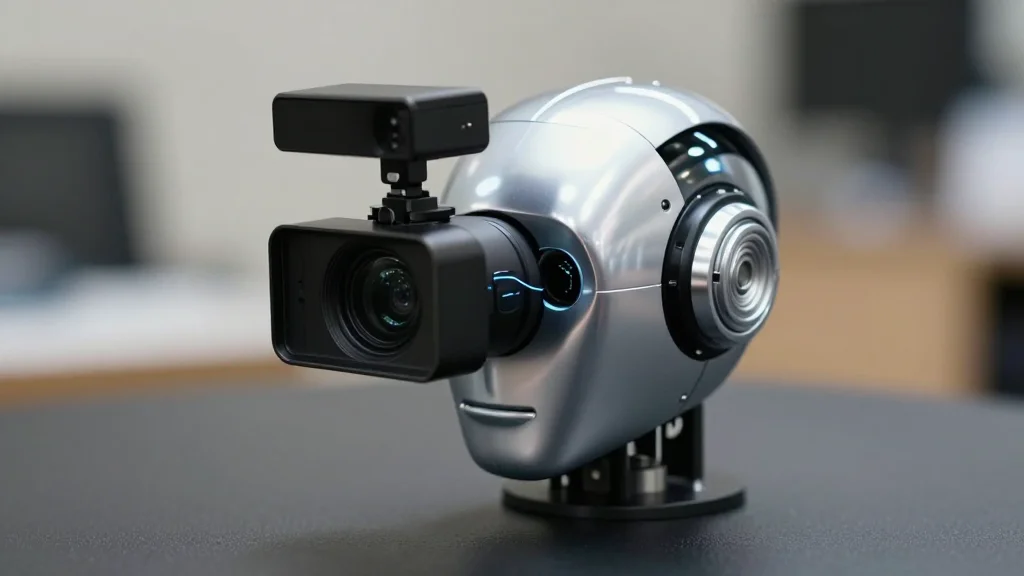
Anaxi Labs Crowdsources Video Data to Train Robot Perception Models

Why It Matters
The ability to train robot perception models with real‑world video data could dramatically shorten development cycles, making advanced robotics more accessible to a broader range of companies. By mirroring the data‑centric approach that propelled large language models, Anaxi Labs is positioning physical AI to benefit from the same economies of scale, potentially reshaping supply chains, labor markets, and consumer experiences. If successful, the model could also set new standards for data governance in robotics, balancing the need for rich, diverse datasets with privacy safeguards. This balance will be critical as robots move from controlled industrial settings into homes and public spaces, where data sensitivity is higher.
Key Takeaways
- •Anaxi Labs launches a crowdsourced video platform for robot perception training.
- •Co‑founder Kate Shen likens the approach to the chips‑and‑data formula behind LLMs.
- •Platform aggregates human‑scale task videos, automatically annotates them, and offers standardized datasets.
- •Early adopters include a warehouse automation firm and a home‑assistant robot startup.
- •Beta release planned for September, with global expansion targets for 2027.
Pulse Analysis
Anaxi Labs' strategy taps into a proven paradigm: data as the primary accelerator of AI capability. In the language model arena, the surge of open‑source datasets and massive compute resources democratized AI development. Robotics has lagged because perception data is harder to capture at scale and often siloed within large corporations. By opening the data pipeline to a crowd, Anaxi could level the playing field, allowing smaller players to compete on perception quality without massive capital outlays.
Historically, robotics firms have relied on synthetic simulation environments or expensive, bespoke data collection rigs. Both approaches suffer from the reality gap—simulated scenarios rarely capture the messiness of real homes or factories. Anaxi's human‑scale video sidesteps this by embedding the nuances of human motion, lighting variations, and object interactions directly into the training set. If the beta partners report measurable improvements—say, a 15% boost in object detection accuracy under variable lighting—industry adoption could accelerate rapidly.
However, the model's success hinges on scaling contributor participation while maintaining data quality. Incentive structures must be compelling enough to attract a steady stream of uploads, yet cost‑effective for the startup. Moreover, regulatory scrutiny around video privacy could impose additional compliance costs. Competitors may respond by building proprietary data farms or forming alliances with video platforms, potentially fragmenting the market. In the short term, Anaxi Labs' approach offers a compelling proof‑of‑concept that could redefine how robot perception is taught, but the long‑term landscape will depend on how quickly the ecosystem can standardize data formats, address privacy concerns, and prove ROI to skeptical investors.
Anaxi Labs Crowdsources Video Data to Train Robot Perception Models
Comments
Want to join the conversation?
Loading comments...