Companies Mentioned
Why It Matters
Lightning’s sub‑hour half‑marathon proves that humanoid robots can sustain human‑like endurance, accelerating China’s push to commercialize robotics for logistics and manufacturing. The breakthrough signals a shift from laboratory prototypes toward market‑ready, high‑performance machines.
Key Takeaways
- •Lightning completed half marathon in 50:26, beating human record
- •Over 100 robots entered, showing rapid reliability improvements
- •Robots used self‑governed and remote‑controlled navigation systems
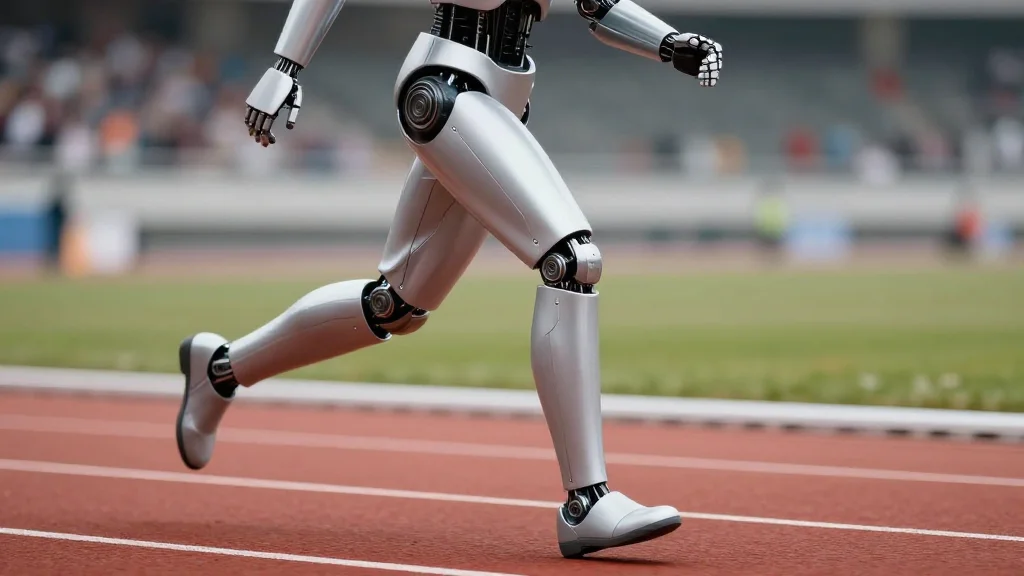
- •Humanoid design mimics human joints with ankle, knee, hip actuators
- •China aims to commercialize humanoids for logistics and manufacturing
Pulse Analysis
The Beijing E‑Town Half Marathon served as a high‑visibility laboratory for more than a hundred humanoid robots, culminating in Honor’s Lightning shattering the human half‑marathon record by over seven minutes. While the event featured parallel human and robotic tracks, the real story lay in the robots’ ability to finish a 21‑kilometer distance without catastrophic failures—a stark improvement from the previous year when most units dropped out. This performance underscores China’s strategic investment in humanoid platforms, positioning the nation as a leader in large‑scale autonomous mobility.
Lightning’s achievement rests on a sophisticated blend of hardware and software that mimics human gait. Actuators at the ankles, knees and hips generate fluid joint movements, while high‑frequency inertial sensors feed real‑time orientation data to control algorithms that constantly adjust the center of mass. These micro‑adjustments enable the robot to maintain balance on varying terrain and sustain speed for the race’s duration. The dual approach of fully autonomous units and remotely piloted machines also illustrates the flexibility of current control architectures, offering a roadmap for scaling humanoid capabilities beyond controlled labs.
The implications extend far beyond athletics. Demonstrated endurance and reliable locomotion open pathways for deploying humanoids in warehouses, last‑mile delivery and complex assembly lines where traditional wheeled robots struggle. As Chinese firms accelerate mass‑production pipelines, global manufacturers may soon face competition from cost‑effective, human‑compatible robots that can navigate stairs, uneven floors and crowded environments. This paradigm shift could reshape supply‑chain dynamics, drive new standards for AI‑driven safety, and spark a race among tech giants to capture the emerging market for versatile, humanoid automation.
Androids Break Human Record at Half Marathon
Comments
Want to join the conversation?
Loading comments...