Are Consumers Ready for Humanoid Robots?
Why It Matters
These advances could reshape sectors from security to personal fitness, unlocking new revenue streams while prompting regulatory and ethical debates. Understanding consumer readiness is crucial for companies planning mass‑market humanoid deployments.
Key Takeaways
- •Boston Dynamics' Atlas runs 5 km/h, lifts 150 kg, rivaling athletes
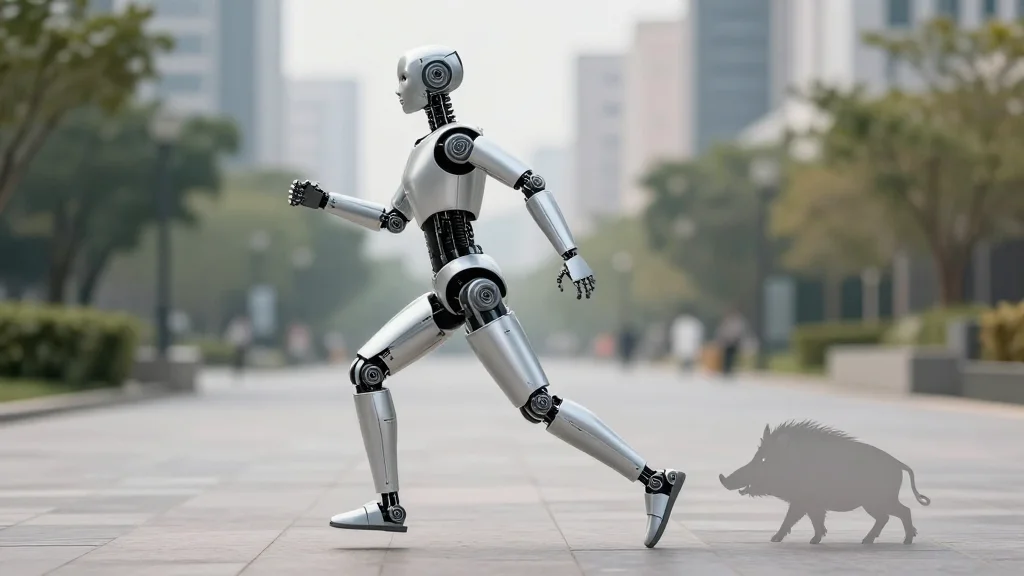
- •Warsaw police deployed humanoids to chase wild boars, reducing injuries
- •Beijing's robot broke half‑marathon record, 1:45:30, showcasing endurance
- •62% of consumers feel uneasy about robots sharing public spaces
- •Analysts forecast a $12 bn personal‑robot market by 2035
Pulse Analysis
The past five years have witnessed a quantum leap in humanoid robotics, driven by breakthroughs in motor control, lightweight composites, and deep‑learning perception. Boston Dynamics’ Atlas now sprints at five kilometres per hour, lifts 150 kg, and navigates uneven terrain with a balance previously reserved for elite athletes. In Warsaw, municipal authorities deployed a fleet of autonomous humanoids to herd stray wild boars away from pedestrian zones, dramatically cutting injury reports. Meanwhile, a Chinese research team entered a half‑marathon in Beijing, clocking a 1:45:30 finish—proof that endurance and speed are no longer science‑fiction.
Despite the engineering triumphs, consumer readiness remains a pivotal hurdle. A recent Pew‑style poll found that 62 % of respondents feel uneasy about robots sharing sidewalks or public transport, citing privacy and safety concerns. Regulatory frameworks are still catching up; most cities lack clear guidelines on liability when a robot collides with a cyclist or a child. Manufacturers are therefore investing heavily in fail‑safe hardware and transparent AI explainability to build trust, while marketers emphasize assistive rather than intrusive use cases.
Financial analysts project a $12 billion market for personal humanoid assistants by 2035, spurred by aging populations and demand for home‑based care. Venture capital has already poured over $1.8 billion into startups focusing on tactile feedback, natural language interaction, and energy‑efficient actuation. Yet ethical debates over job displacement and anthropomorphic design linger, prompting think‑tanks to call for industry standards. Companies that can align cutting‑edge robotics with robust safety protocols and clear consumer value propositions are poised to capture the next wave of growth in this nascent sector.
Are consumers ready for humanoid robots?
Comments
Want to join the conversation?
Loading comments...