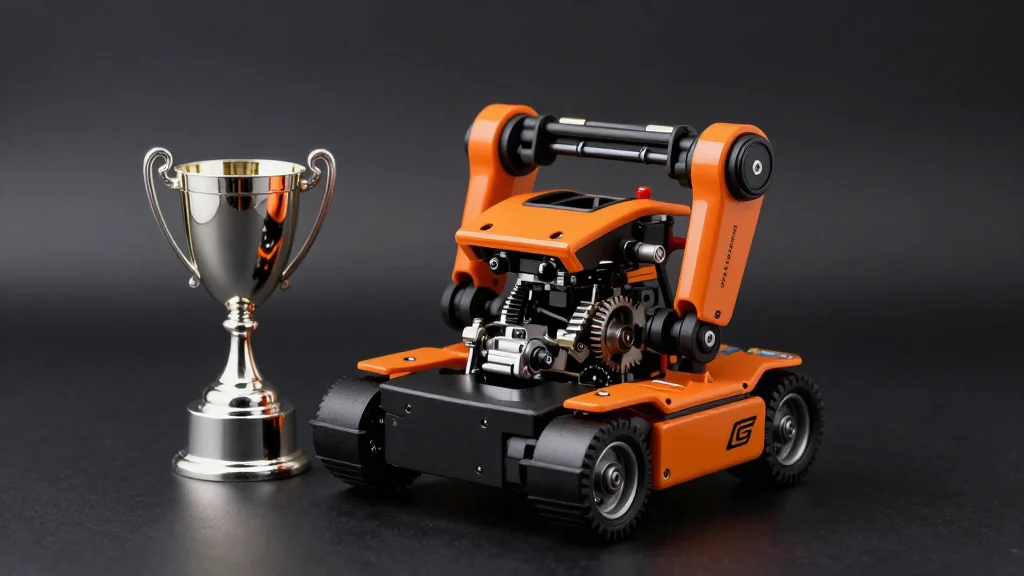
Arkansas Tech Robotics Team Takes Runner‑Up Spot at 2026 VEX U World Championship

Why It Matters
Arkansas Tech’s achievement highlights how regional universities can compete on a global stage, reinforcing the importance of investing in hands‑on robotics curricula. The VEX U Think Award, which rewards programming consistency, directly addresses industry concerns about software reliability in safety‑critical applications, suggesting that competition outcomes can influence hiring trends. The success also serves as a catalyst for other institutions in the Arkansas University System and beyond to expand their robotics programs, potentially increasing the talent pool available to U.S. manufacturers and tech firms seeking skilled graduates in automation and AI integration.
Key Takeaways
- •Arkansas Tech finished runner‑up at the 2026 VEX U World Championship in St. Louis.
- •More than 120 college and university teams competed in the event.
- •The team earned the VEX U Think Award for the most consistent robot programming.
- •Program founded in fall 2019; previous best was sixth place in 2025.
- •Senior leaders Brady Bray, Ryan Nanthalangsy, Jason Easterling, Brandon Gallegos, Juan Leon and Hunter Mathis led the squad.
Pulse Analysis
The Arkansas Tech result is a microcosm of a larger trend: collegiate robotics competitions are evolving from hobbyist showcases into rigorous engineering incubators. VEX U’s emphasis on autonomous performance and programming consistency mirrors the standards that automotive OEMs and industrial automation firms now require from suppliers. As a result, universities that can demonstrate sustained success in these arenas become de‑facto talent pipelines, attracting corporate sponsorships and research grants.
Historically, the U.S. robotics talent pipeline has been dominated by a handful of flagship programs at large research universities. Arkansas Tech’s ascent challenges that paradigm, proving that smaller institutions can leverage the modular, low‑cost VEX platform to produce high‑caliber engineering outcomes. This democratization of robotics education could lead to a more geographically diverse workforce, reducing the concentration of talent in traditional tech hubs.
Looking forward, the industry will likely watch how teams like Arkansas Tech integrate emerging technologies—such as edge AI and sensor fusion—into their competition robots. Success in these areas could translate into direct recruitment pipelines for companies developing autonomous vehicles, warehouse robotics, and AI‑driven manufacturing solutions. In short, a runner‑up finish at a student competition may soon be a credible indicator of a graduate’s readiness to tackle the complex, safety‑critical challenges of tomorrow’s robotics landscape.
Arkansas Tech Robotics Team Takes Runner‑Up Spot at 2026 VEX U World Championship
Comments
Want to join the conversation?
Loading comments...