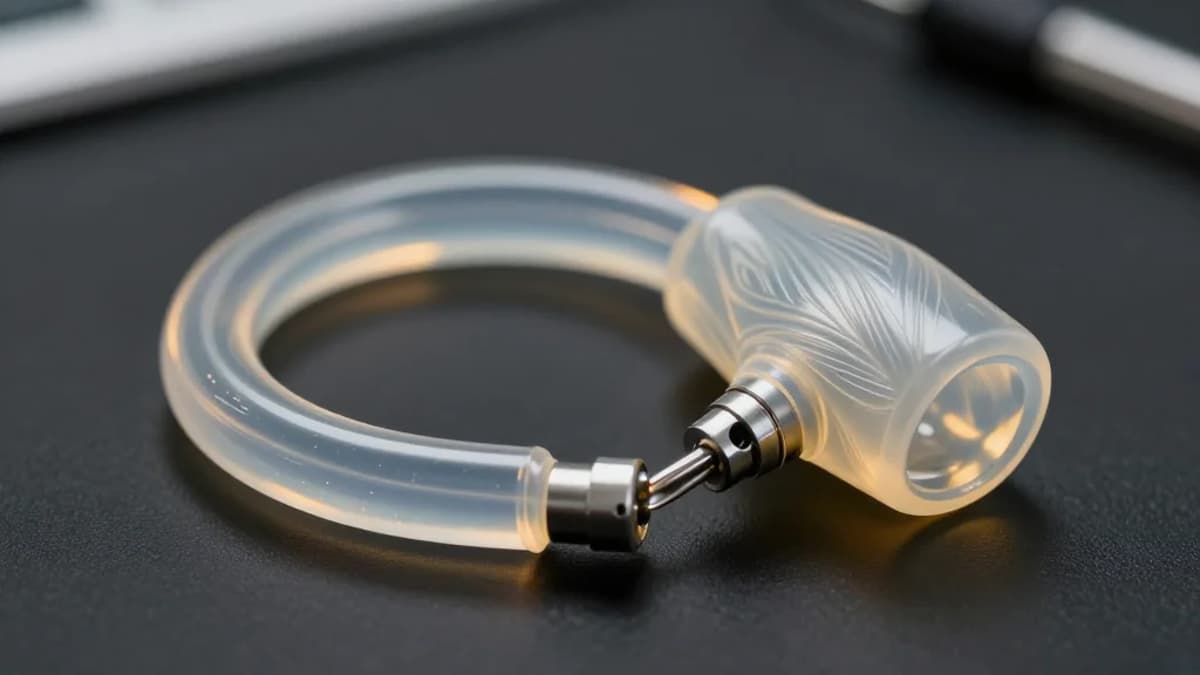
Artimus Robotics Is Launching Next-Generation Artificial Muscles and Seeking Partners to Evaluate the Technology in Markets Requiring Dexterous Robotic Manipulation.
•February 18, 2026
0
Why It Matters
Doubling actuator output while ensuring safe, compact integration accelerates the adoption of truly dexterous robots, reshaping automation and human‑robot interaction markets.
Key Takeaways
- •New HASEL actuators double previous mechanical output.
- •Fully encapsulated design enhances safety and integration.
- •Targets humanoid robots and industrial automation markets.
- •Seeking partners for real‑world evaluation and deployment.
- •Soft artificial muscles mimic mammalian skeletal performance.
Pulse Analysis
The robotics sector has long chased actuators that combine strength, speed, and compliance. Artimus Robotics’ HASEL technology—an electrohydraulic system that leverages lightweight plastics, fluid, and flexible conductors—offers a soft‑actuation alternative to traditional electromagnetic motors. By refining material formulations and scaling manufacturing, the company achieved a performance leap that places its artificial muscles on par with mammalian skeletal output, a milestone that could unlock new classes of lightweight, silent robots.
Beyond raw power, the fully encapsulated architecture addresses a critical barrier: safety in human‑proximate environments. Encapsulation prevents fluid leakage and shields delicate components, allowing robots to interact with unpredictable surroundings without risking damage or injury. Compared with rigid actuators, these soft muscles provide higher degrees of freedom in a compact footprint, enabling more nuanced finger‑level dexterity and smoother motion trajectories—key attributes for tasks ranging from delicate assembly to assistive caregiving.
Artimus’ partnership drive signals a strategic shift from prototype to market validation. By inviting collaborators across humanoid platforms and industrial lines, the firm aims to gather real‑world performance data, accelerate integration pipelines, and co‑develop application‑specific control algorithms. Successful deployments could spur broader industry adoption, prompting OEMs to redesign manipulators around soft actuation. As the ecosystem matures, investors and manufacturers alike will watch closely, anticipating a wave of more adaptable, efficient robots that bridge the gap between human-like dexterity and industrial robustness.
Artimus Robotics is launching next-generation artificial muscles and seeking partners to evaluate the technology in markets requiring dexterous robotic manipulation.
0
Comments
Want to join the conversation?
Loading comments...