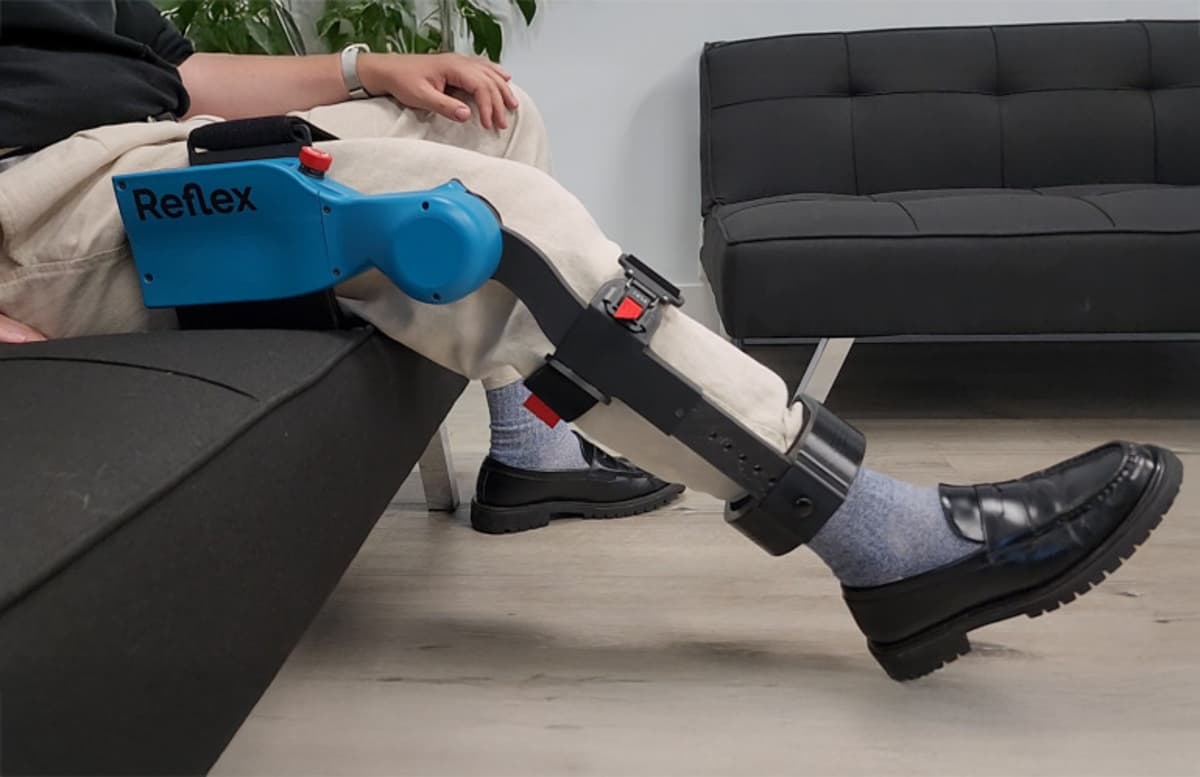
ATDev Develops Reflex to Bring Robotics and AI to Rehabilitation
•January 7, 2026
0
Companies Mentioned


Why It Matters
Reflex offers scalable, insurance‑reimbursable rehab support, potentially reshaping outpatient therapy economics and expanding access for mobility‑impaired patients. The ARPA‑H contract positions ATDev at the forefront of federally funded, next‑generation assistive technology development.
Key Takeaways
- •Reflex weighs under 5 lb, adds sensor‑guided knee rehab.
- •Secured $200k SkyDeck, 2023 pre‑seed, 2025 seed funding.
- •ARPA‑H RAMMP contract links ATDev to $41 M federal program.
- •Partnerships with NVIDIA, AWS, Kinova accelerate AI‑driven devices.
- •User‑centered design drives next‑gen robotic wheelchairs.
Pulse Analysis
The convergence of robotics and artificial intelligence is redefining physical therapy, and ATDev’s Reflex exemplifies this shift. By integrating lightweight exoskeletal mechanics with real‑time sensor data, the device enables clinicians to prescribe continuous, data‑rich exercises outside traditional clinic walls. This model not only enhances patient adherence but also aligns with emerging reimbursement frameworks that favor outcomes‑based care, positioning Reflex as a viable alternative to labor‑intensive therapist sessions.
ATDev’s rapid capital accumulation underscores investor confidence in the assistive‑tech market. Early backing from UC Berkeley’s SkyDeck, followed by strategic pre‑seed and seed rounds, has funded prototype refinement and regulatory groundwork. Crucially, the company’s involvement in the ARPA‑H RAMMP program ties its roadmap to a $41 million federal initiative aimed at open‑source mobility solutions for veterans and the aging population. Collaborations with industry leaders such as NVIDIA, AWS, and Kinova provide the computational horsepower and robotic expertise needed to scale AI‑driven rehabilitation platforms.
Beyond the knee‑focused Reflex, ATDev is cultivating an ecosystem that places end‑users at the design table. By harvesting insights from over 200 wheelchair interviews and planning advisory boards of individuals with disabilities, the firm ensures its next‑generation robotic wheelchairs address real‑world needs. Demonstrations slated for this summer will showcase integrated computer‑vision, robotic arms, and autonomous navigation, signaling a broader ambition to democratize independence through modular, AI‑enabled assistive devices. Exhibiting at CES further amplifies ATDev’s market visibility, hinting at a near‑term commercial rollout that could accelerate adoption across healthcare and home‑care settings.
ATDev develops Reflex to bring robotics and AI to rehabilitation
0
Comments
Want to join the conversation?
Loading comments...