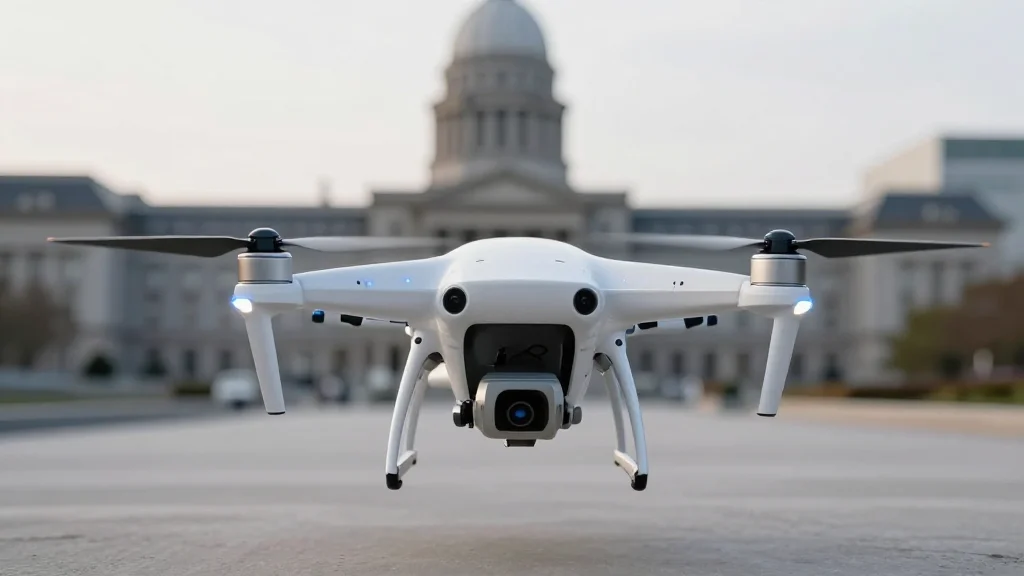
Auburn, Ala., Will Buy 4 Drones for First Responder Use
Why It Matters
Deploying autonomous drones gives Auburn police faster situational awareness, potentially reducing response times and improving officer safety. The investment signals growing municipal adoption of advanced robotics for public‑safety efficiency.
Key Takeaways
- •Auburn signs six‑year $992k drone contract with Axon
- •Four Skydio drones will patrol two public safety docks
- •Annual cost rises from $89,782 to $180,543 after year one
- •Drones provide pre‑arrival video, thermal imaging for police investigations
- •Flight restrictions apply near airport; special permission required
Pulse Analysis
Municipalities across the United States are turning to autonomous aerial platforms to augment first‑responder capabilities. Skydio’s "Drone as a First Responder" technology combines AI‑driven navigation with high‑resolution visual and thermal sensors, allowing a drone to launch, navigate to a predefined perimeter, and stream live footage before human units arrive. This model promises faster scene assessment, reduced exposure for officers, and richer evidence collection, aligning with broader public‑safety trends that prioritize data‑driven decision making and officer safety.
Auburn’s six‑year, $992,501 agreement with Axon Enterprise reflects a calculated investment in that emerging toolkit. The city will field four drones covering two dock locations—one at the Public Safety Building and another at the Water Resource Management facility—providing real‑time aerial reconnaissance for incidents ranging from traffic accidents to fires. The contract’s escalating annual fees, from $89,782 in year one to $180,543 thereafter, suggest a subscription‑style pricing model that includes maintenance, software updates, and training, ensuring the technology stays current as capabilities evolve.
The deployment raises broader considerations for local governments. While the upfront cost is modest compared to traditional emergency‑services equipment, municipalities must navigate FAA regulations, especially near airports, and address community privacy concerns. Early adopters like Auburn can leverage data on response‑time reductions and investigative efficiencies to justify the expense and potentially secure grant funding. As more cities evaluate ROI, autonomous drones may become a standard component of public‑safety budgets, reshaping how first responders gather intelligence and protect citizens.
Auburn, Ala., Will Buy 4 Drones for First Responder Use
Comments
Want to join the conversation?
Loading comments...