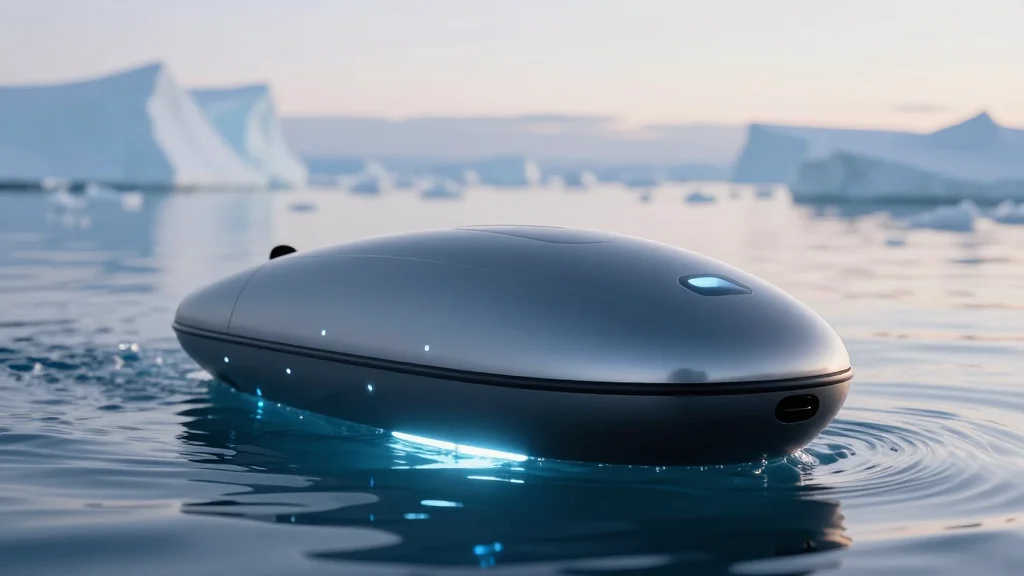
Autonomous Deep‑Diving Robots Uncover Ocean Heat Driving Antarctic Sea‑Ice Collapse

Why It Matters
The discovery that deep‑ocean heat is a decisive factor in Antarctic sea‑ice loss reshapes scientific understanding of polar climate dynamics. By pinpointing the mechanism behind the 2016‑onward ice collapse, the research offers a clearer target for climate models, which have historically struggled to reproduce the rapid decline. Accurate modeling is essential for projecting future sea‑level rise, informing coastal adaptation plans worldwide. Beyond the scientific insight, the deployment demonstrates how autonomous robotics can fill critical data gaps in remote, harsh environments. As climate change accelerates, the ability to continuously monitor oceanic conditions at scale will become indispensable for early warning systems and for evaluating the effectiveness of mitigation policies.
Key Takeaways
- •Stanford-led team used autonomous Argo floats to sample temperature and salinity down to several thousand feet in the Southern Ocean.
- •Data revealed a sudden release of deep‑water heat in 2016, directly linked to rapid sea‑ice decline.
- •Quotes from lead author Earle Wilson and climate scientist Zachary Labe highlight the ocean‑atmosphere coupling.
- •Findings sharpen the debate over anthropogenic wind changes versus natural variability.
- •Robotic observations will feed into next‑generation climate models to improve sea‑ice forecasts.
Pulse Analysis
The Antarctic sea‑ice episode illustrates a broader shift in how the robotics industry is intersecting with climate science. Historically, autonomous underwater vehicles (AUVs) served niche roles—mapping seafloor topography or inspecting offshore infrastructure. The Argo network’s success marks a transition to large‑scale, systematic data collection that can resolve processes previously hidden beneath the waves. This evolution is driven by advances in battery density, miniaturized sensors, and satellite telemetry, which together lower the cost per deployment and enable near‑real‑time data streams.
From a market perspective, the validation of Argo‑style platforms for high‑impact climate research is likely to attract new funding streams, both public and private. Governments seeking to meet emissions‑reduction commitments may allocate resources to expand autonomous ocean observatories, while venture capitalists eyeing climate‑tech opportunities could back startups that specialize in ruggedized sensor suites and AI‑driven data analytics. The competitive edge will hinge on the ability to deliver higher spatial resolution and longer mission lifespans than legacy floats.
Looking forward, the integration of robotic data into predictive models could create a feedback loop that accelerates both scientific discovery and policy response. As models become more accurate, they can inform targeted mitigation measures—such as protecting critical ice‑shelf zones or adjusting shipping routes—thereby reducing economic risk. The Antarctic case sets a precedent: when robotics supply the missing pieces of a complex Earth system, the resulting clarity can reshape global climate strategies. The next decade will likely see a proliferation of autonomous platforms across all oceans, turning the once‑inaccessible deep sea into a data‑rich frontier for climate resilience.
Autonomous Deep‑Diving Robots Uncover Ocean Heat Driving Antarctic Sea‑Ice Collapse
Comments
Want to join the conversation?
Loading comments...