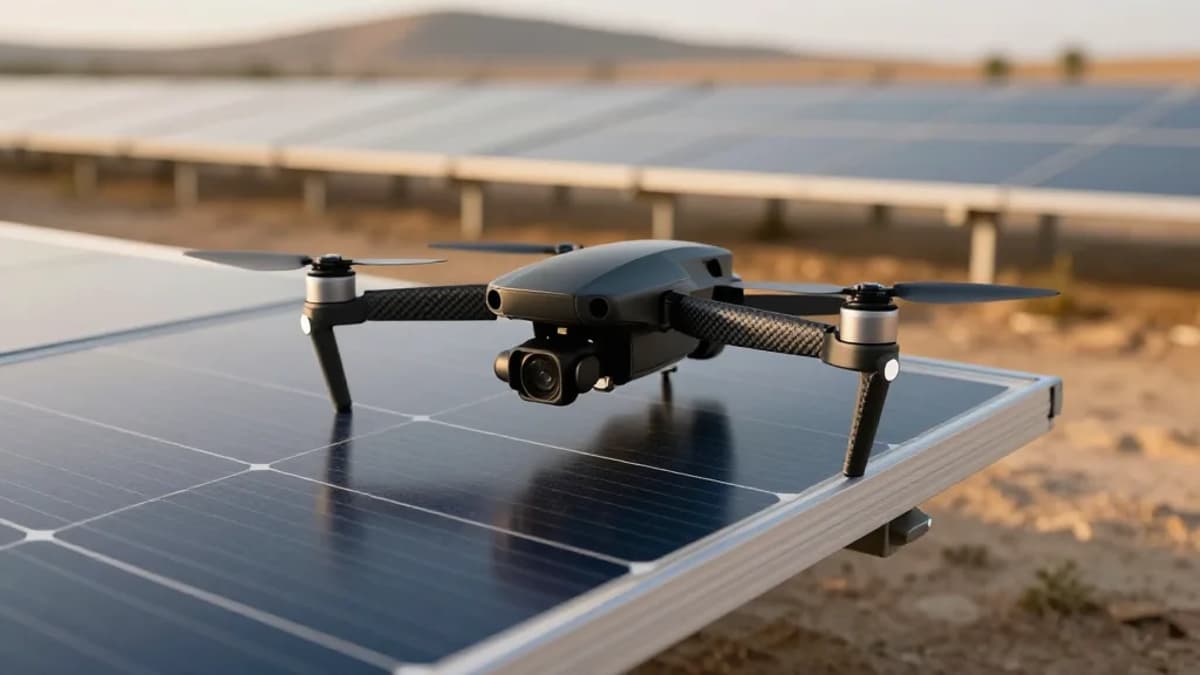
Autonomous Inspection of Photovoltaic Panels
•December 22, 2025
0
Companies Mentioned

Why It Matters
Automating PV inspections lowers operational expenses and enables more frequent performance monitoring, accelerating renewable‑energy efficiency gains.
Key Takeaways
- •RB‑WATCHER uses RTK‑DGPS and SLAM for precise navigation
- •Bispectral PTZ camera captures geolocated images of panels
- •Hybrid connectivity ensures data flow via 4G/5G or RTK link
- •Simulation validates sensor setup before on‑site deployment
- •Automation reduces inspection costs and increases frequency
Pulse Analysis
Photovoltaic farms span vast, often remote areas, making traditional manual inspections time‑consuming and costly. Operators must travel to thousands of panels, collect visual data, and manually log findings, which limits inspection frequency and hampers early fault detection. As solar capacity scales globally, the industry seeks scalable solutions that can deliver high‑resolution, geotagged imagery without the logistical overhead of human crews, paving the way for smarter asset management.
Robotnik’s RB‑WATCHER addresses these challenges with a hybrid localisation stack that fuses RTK‑DGPS accuracy outdoors and SLAM capabilities beneath panel arrays where satellite signals disappear. Equipped with a bispectral PTZ camera, the robot records detailed, geolocated images that feed directly into digital‑twin platforms, enhancing predictive maintenance models. Continuous connectivity—via 4G/5G or a dedicated RTK radio link—ensures real‑time data streaming, while pre‑deployment simulations allow engineers to fine‑tune sensor placement and navigation paths before field trials, reducing risk and deployment time.
The broader impact extends beyond cost savings. By automating inspections, solar operators can increase monitoring cadence, catching degradation or shading issues early and optimizing energy yield. Precise, structured data supports advanced analytics, from performance forecasting to automated defect classification, strengthening the business case for large‑scale solar investments. As the technology matures, autonomous inspection robots like RB‑WATCHER are poised to become standard components of next‑generation renewable‑energy infrastructure, driving both operational efficiency and sustainability goals.
Autonomous inspection of photovoltaic panels
0
Comments
Want to join the conversation?
Loading comments...