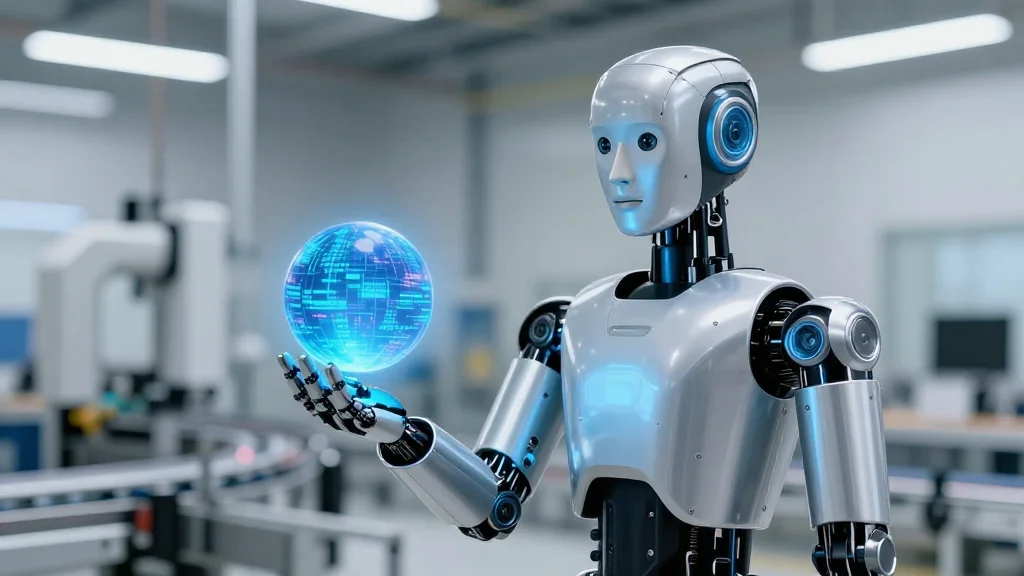
Barclays Research Expects Humanoid Robots to Fundamentally Reshape the Real Economy
Companies Mentioned
Why It Matters
The shift signals a new capital‑intensive growth cycle that could reshape labor markets, geopolitics, and valuation metrics across global asset classes.
Key Takeaways
- •Humanoid robot market projected at $200 bn by 2035.
- •China accounts for 85% of 2025 deployments, leading supply chain.
- •Robots could cover 60% of China’s aging workforce gap.
- •Physical AI expected to lift productivity and real rates globally.
- •Barclays sees positive impact on long‑term asset returns.
Pulse Analysis
The emergence of "physical AI" marks the third phase of automation, where machines not only process data but also act in the real world. Advances in machine learning, battery density, and actuator design have lowered the cost of building human‑like robots, enabling them to perform full‑job functions rather than isolated tasks. Analysts estimate the global humanoid market could reach $200 billion by 2035, creating a sizable new asset class for investors and prompting manufacturers to redesign production lines around collaborative robots.
China’s lead in the robotics ecosystem is underpinned by its massive manufacturing base, state‑driven industrial policy, and control over critical components such as servomotors and lithium‑ion cells. With 85% of humanoid deployments recorded in 2025, the country is positioned to use these machines to offset the demographic drag of an aging population. By potentially covering 60% of the projected workforce shortfall, robots could sustain GDP growth, reinforce China’s strategic autonomy, and shift the global balance of technological power toward East Asia.
From a macroeconomic perspective, widespread robot adoption expands the production frontier, driving higher equilibrium real interest rates and stronger earnings growth. Barclays expects the net effect on markets to be positive, as productivity gains outweigh displacement costs, leading to improved long‑term asset returns. Investors should watch sectors poised to benefit—industrial automation, AI chipmakers, and advanced materials—while monitoring transition risks such as regulatory pushback and supply‑chain bottlenecks that could temper the upside.
Barclays Research Expects Humanoid Robots to Fundamentally Reshape the Real Economy
Comments
Want to join the conversation?
Loading comments...