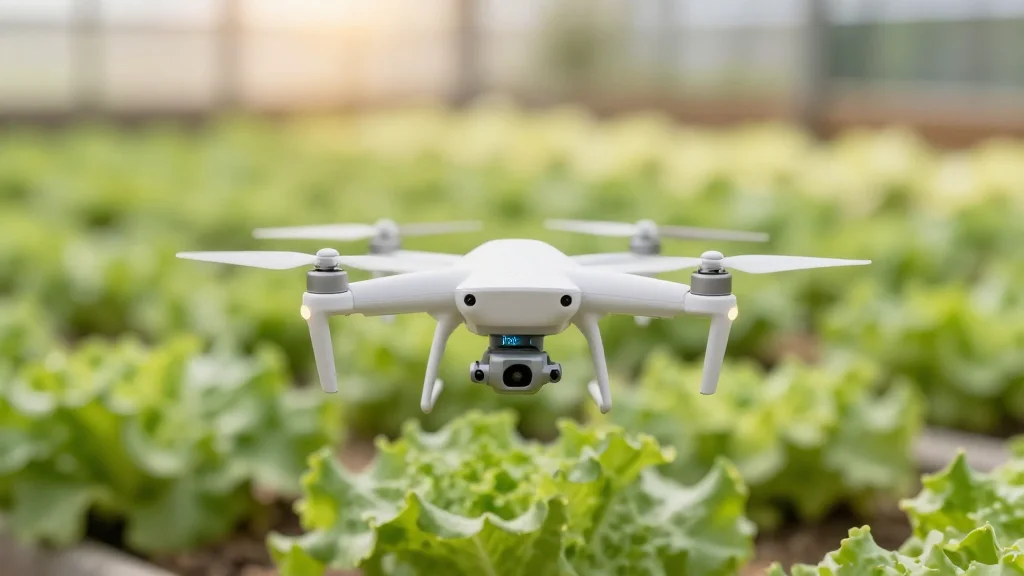
Bee‑Nav Lets Micro‑drones Fly GPS‑free for Hundreds of Meters

Why It Matters
Bee‑Nav demonstrates that biologically inspired algorithms can outperform conventional engineering approaches in resource‑constrained robotics. By shrinking the memory and processing requirements for autonomous navigation, the technology lowers the entry barrier for companies seeking to deploy fleets of tiny drones for routine inspections, precision agriculture, and rapid disaster assessment. The ability to operate without GPS also expands the operational envelope to underground mines, dense urban canyons, and indoor facilities where satellite signals are unreliable. Beyond immediate commercial use, the research validates a broader design philosophy: leveraging the efficiency of natural systems to solve engineering problems. If the bee‑style learning and memory model can be generalized, it may inspire similar breakthroughs in other low‑power autonomous platforms such as ground‑based micro‑robots or underwater swarms, accelerating the overall pace of robotics innovation.
Key Takeaways
- •Bee‑Nav uses a 42 KB neural memory, a 90% reduction from prior 500 KB solutions.
- •System enables micro‑drones to travel and return over several hundred meters without GPS.
- •Developed by Delft University of Technology with partners at Wageningen and Oldenburg universities.
- •Published in the journal *Nature*, highlighting peer‑reviewed validation.
- •Potential to cut drone weight and power consumption, opening new logistics and inspection markets.
Pulse Analysis
The Bee‑Nav breakthrough arrives at a moment when the micro‑drone sector is grappling with a classic trade‑off: autonomy versus payload. Traditional SLAM pipelines demand gigabytes of map data and powerful CPUs, which push the weight envelope beyond what sub‑250‑gram airframes can sustain. By distilling navigation down to a 42‑KB visual memory, Delft’s team effectively decouples autonomy from hardware heft, a shift that could trigger a wave of ultra‑light, battery‑efficient designs.
Historically, robotics has borrowed heavily from biology—think of Boston Dynamics’ quadrupeds mimicking animal gait. Bee‑Nav extends that lineage by translating the honeybee’s learning flight into a concrete engineering solution. The approach sidesteps the computationally intensive feature‑matching routines of SLAM, instead relying on a learned association between panoramic snapshots and a home vector. This not only reduces on‑board processing but also offers resilience to GPS denial, a growing concern as regulators tighten satellite spectrum usage.
From a market perspective, the reduction in memory and compute translates directly into lower bill‑of‑materials for manufacturers. Early adopters in greenhouse automation can replace expensive, wired sensor networks with swarms of cheap, autonomous pollinators that monitor plant health and micro‑climate. In disaster response, teams can deploy fleets of disposable drones that navigate rubble without the need for pre‑mapped environments, delivering rapid situational awareness. The key question now is scalability: can the 42‑KB model maintain accuracy in highly dynamic or low‑light settings? Ongoing field trials will determine whether Bee‑Nav becomes a niche academic curiosity or a foundational layer for the next generation of low‑cost autonomous robots.
Bee‑Nav lets micro‑drones fly GPS‑free for hundreds of meters
Comments
Want to join the conversation?
Loading comments...