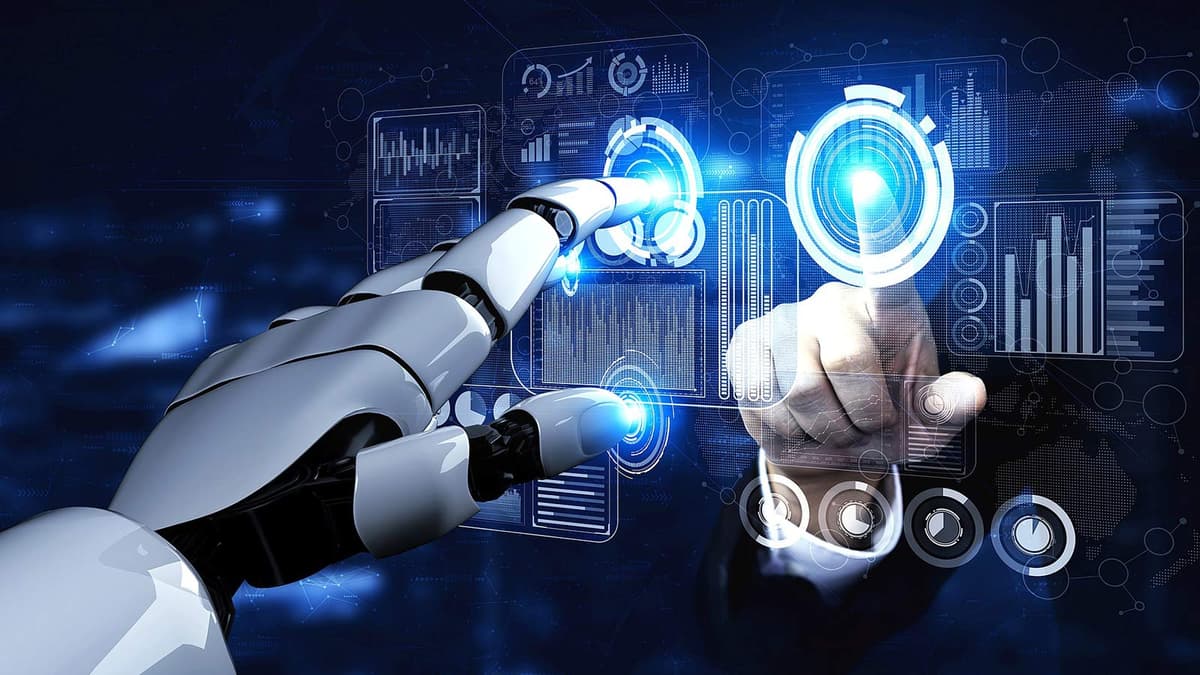
BionIT Labs Launches Adam’s Hand for Humanoids and Service Robots
•January 20, 2026
0
Companies Mentioned


Why It Matters
Providing trustworthy, human‑scale dexterity enables Physical AI to move beyond simulation, accelerating real‑world robot deployments across industries.
Key Takeaways
- •Adam’s Hand now integrates with humanoid and service robots
- •Demonstrated dexterity on Robee R and Robee M at CES
- •Leverages prosthetic expertise for high‑fidelity manipulation
- •Targets AI‑driven robots needing reliable, human‑scale hardware
- •Supports safety, ethics standards from medical device development
Pulse Analysis
Physical AI has long struggled with the "embodiment problem"—the ability to translate sophisticated algorithms into reliable, real‑world actions. BionIT Labs, a veteran in medical prosthetics, addresses this gap with Adam’s Hand, a hardware platform that brings human‑level dexterity to robots. By repurposing decades of prosthetic research, the company delivers a hand that can sense force, adapt grip, and maintain stability over prolonged use, qualities essential for service and industrial robots that must operate safely alongside humans.
The Adam’s Hand system combines lightweight, anthropomorphic design with robust sensor arrays that capture tactile and positional data at high resolution. Its modular architecture allows seamless integration into existing robot arms, while the underlying firmware adheres to the stringent safety and ethical standards of medical device manufacturing. This ensures not only consistent performance but also compliance with emerging regulations governing human‑robot interaction. Early demonstrations on the Robee R industrial humanoid and the Robee M medical platform highlighted the hand’s ability to handle delicate objects and sustain heavy loads, proving its versatility across sectors.
For robotics integrators, the availability of a proven, off‑the‑shelf dexterity solution reduces development cycles and lowers entry barriers for AI‑driven applications. Service robots in hospitality, healthcare, and logistics can now achieve nuanced manipulation tasks without bespoke hardware engineering. As enterprises seek to scale Physical AI deployments, Adam’s Hand positions BionIT Labs as a critical enabler, potentially reshaping supply chains and accelerating the adoption of autonomous systems that interact safely and effectively with the physical world.
BionIT Labs Launches Adam’s Hand for Humanoids and Service Robots
0
Comments
Want to join the conversation?
Loading comments...