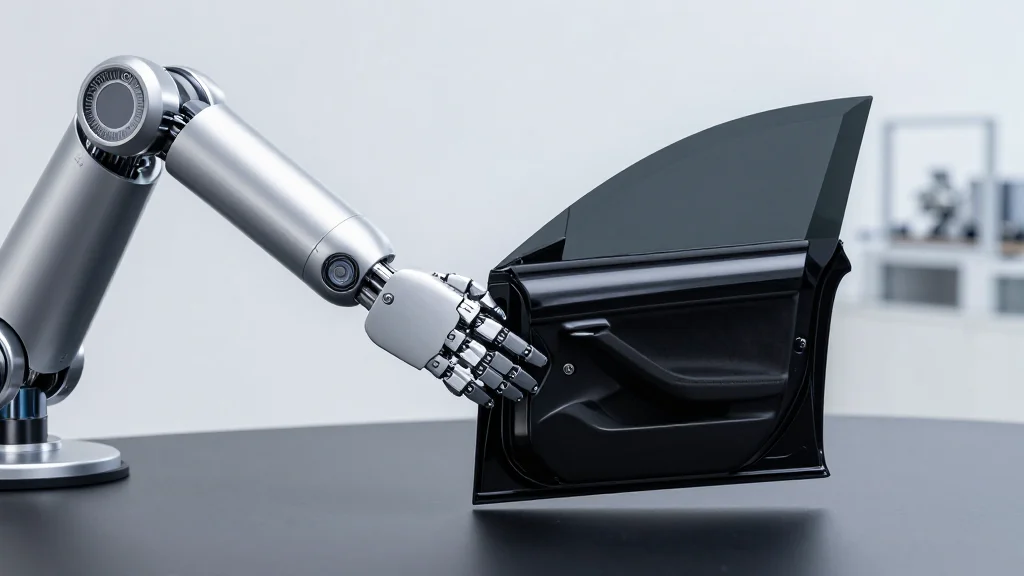
BMW Deploys Hexagon’s AEON Humanoid Robots on Spartanburg EV Line, Targeting 30,000‑Vehicle Scale

Companies Mentioned
Why It Matters
The deployment of humanoid, AI‑driven robots in a high‑volume EV plant signals a potential turning point for automotive manufacturing. Traditional robotic arms excel in repeatable, tightly controlled tasks but struggle with the variability of real‑world assembly lines. By proving that mobile robots can operate safely alongside humans, BMW could unlock new levels of flexibility, reduce downtime caused by part misalignment, and mitigate the impact of labor shortages. The move also puts pressure on competing OEMs to adopt similar technologies or risk falling behind in productivity and cost efficiency. Beyond the factory floor, the pilot highlights a broader industry trend toward “physical AI,” where machines make decisions based on sensor input rather than pre‑programmed scripts. If successful, the technology could accelerate the shift from rigid automation to adaptable, collaborative systems, reshaping supply‑chain dynamics, workforce training, and capital allocation in the automotive sector.
Key Takeaways
- •BMW began a pilot of Hexagon Robotics' AEON humanoid robots on its Spartanburg EV assembly line.
- •Earlier Spartanburg test helped produce over 30,000 vehicles using Figure 02 robots.
- •AEON robots use Hexagon’s "Physical AI" to navigate and adapt in real‑time without human direction.
- •Pilot will expand to BMW’s Leipzig plant under the iFACTORY initiative.
- •BMW aims to assess cycle‑time, defect reduction and labor‑hour savings before a Q4 2026 rollout decision.
Pulse Analysis
BMW’s foray into mobile, AI‑enabled humanoid robots reflects a strategic response to two converging pressures: the need for higher EV output and a tightening skilled‑labor market. Fixed‑axis robots have delivered incremental gains for decades, but their rigidity forces manufacturers to redesign workstations whenever a new model or variant is introduced. AEON’s ability to move through existing human‑centric layouts could dramatically lower the cost of retooling, a benefit that becomes more pronounced as model cycles accelerate.
Historically, OEMs have been cautious about deploying humanoid robots at scale because early prototypes faltered in noisy, unpredictable environments. Hexagon’s claim of “Physical AI” suggests a maturation of sensor fusion and edge‑computing capabilities that finally bridge the gap between lab demos and production reality. If BMW validates the technology’s ROI—through measurable reductions in cycle time and defect rates—the competitive pressure on rivals like Volkswagen, Toyota and Tesla will intensify. Those firms have already invested heavily in collaborative cobots, but few have pursued fully mobile, human‑sized platforms.
The pilot also raises labor‑relations questions. While BMW frames the robots as augmentative tools, unions may view the deployment as a stepping stone toward broader workforce displacement. Transparent performance data and joint training programs will be essential to maintain trust. Moreover, the success of AEON could spur a wave of supplier investments in AI‑driven hardware, reshaping the robotics supply chain away from traditional industrial robot manufacturers toward firms that blend AI, vision and mobility. In the next 12‑18 months, the industry will likely see a cascade of pilots, each testing the balance between flexibility, cost and workforce impact. BMW’s decision in Q4 2026 will serve as a bellwether for whether humanoid robots become a mainstream component of the automotive assembly line or remain a niche experiment.
BMW Deploys Hexagon’s AEON Humanoid Robots on Spartanburg EV Line, Targeting 30,000‑Vehicle Scale
Comments
Want to join the conversation?
Loading comments...