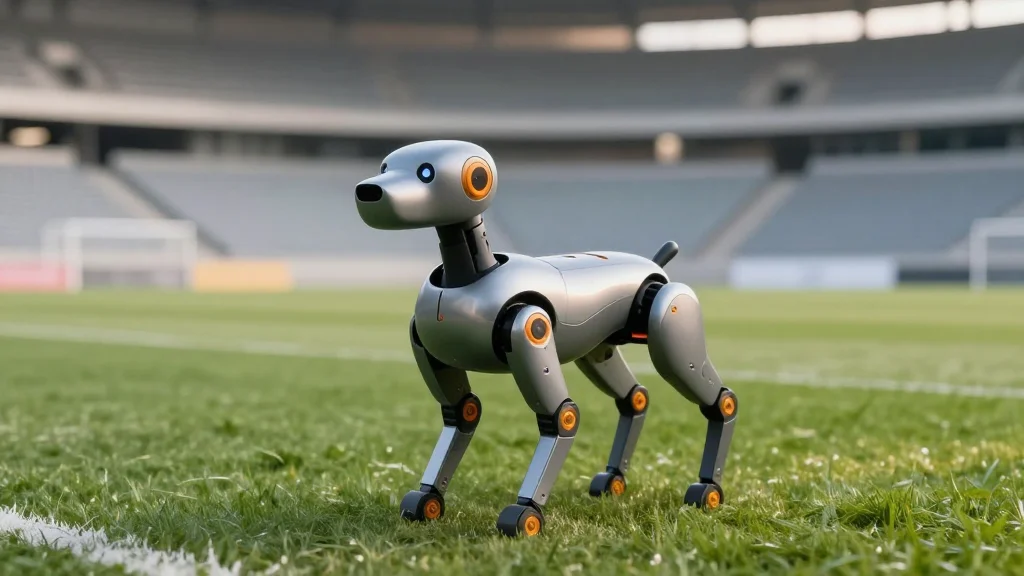
Boston Dynamics Deploys Spot Robot Dogs for Security at U.S. World Cup Venues

Companies Mentioned

Why It Matters
Deploying Spot robots at the World Cup illustrates how quadruped platforms are moving from niche research projects into mainstream security operations. The visibility of the bots at a globally watched event provides a proof point for potential buyers in stadiums, airports and critical infrastructure, where rapid perimeter checks and hazardous‑material detection are valuable. Moreover, the partnership between Boston Dynamics and Hyundai showcases how traditional automotive firms are leveraging robotics to diversify revenue streams and reinforce brand narratives around innovation. The rollout also raises policy questions about surveillance, data handling and the role of remote operators in public safety. As robots become more common in crowded venues, regulators will need to address privacy safeguards, accountability for AI‑driven alerts, and the ethical limits of automated enforcement. The World Cup thus serves as a live laboratory for both technology adoption and the governance frameworks that will shape the next decade of public‑space robotics.
Key Takeaways
- •Boston Dynamics' Spot robots are patrolling U.S. World Cup venues for perimeter security.
- •Hyundai Motor, Spot's owner, says the bots will help create a safer tournament environment.
- •Spots are equipped with 360° cameras, thermal sensors and AI anomaly detection.
- •Boston Dynamics confirmed the robots lack facial‑recognition capability.
- •The deployment could accelerate adoption of quadruped robots in security and infrastructure sectors.
Pulse Analysis
The World Cup deployment is a watershed moment for mobile robotics, turning a novelty into a functional security tool under real‑world pressure. Historically, quadruped robots like Spot have been showcased in controlled environments—labs, factories, or limited public demos. By inserting the platform into a high‑stakes, high‑traffic event, Boston Dynamics forces the technology to confront unpredictable human behavior, variable lighting and the need for rapid decision‑making. Successful performance will validate the business case for stadium operators and other venue managers, potentially unlocking a new revenue stream that rivals traditional CCTV and guard services.
From a competitive standpoint, the move puts pressure on rivals such as Unitree, ANYbotics and emerging Chinese firms that are also fielding rugged quadrupeds. Hyundai's backing gives Boston Dynamics a financial cushion and a branding engine that can market the robots as part of a broader mobility ecosystem. However, the public backlash over privacy and the specter of remote foreign operators could temper enthusiasm among municipalities wary of data sovereignty issues. Companies that can bundle robust data‑governance frameworks with their hardware will likely capture the most market share.
Looking ahead, the key question is whether Spot will remain a semi‑autonomous assistant or evolve into a fully autonomous security sentinel. Advances in edge AI, better sensor fusion and tighter integration with existing security infrastructure could push the platform toward higher autonomy, reducing the need for human operators and lowering operational costs. Yet each step toward autonomy will amplify concerns about accountability and bias. The World Cup thus not only tests the technical limits of quadruped robots but also sets the stage for the regulatory and societal debates that will define the next era of public‑space robotics.
Boston Dynamics Deploys Spot Robot Dogs for Security at U.S. World Cup Venues
Comments
Want to join the conversation?
Loading comments...