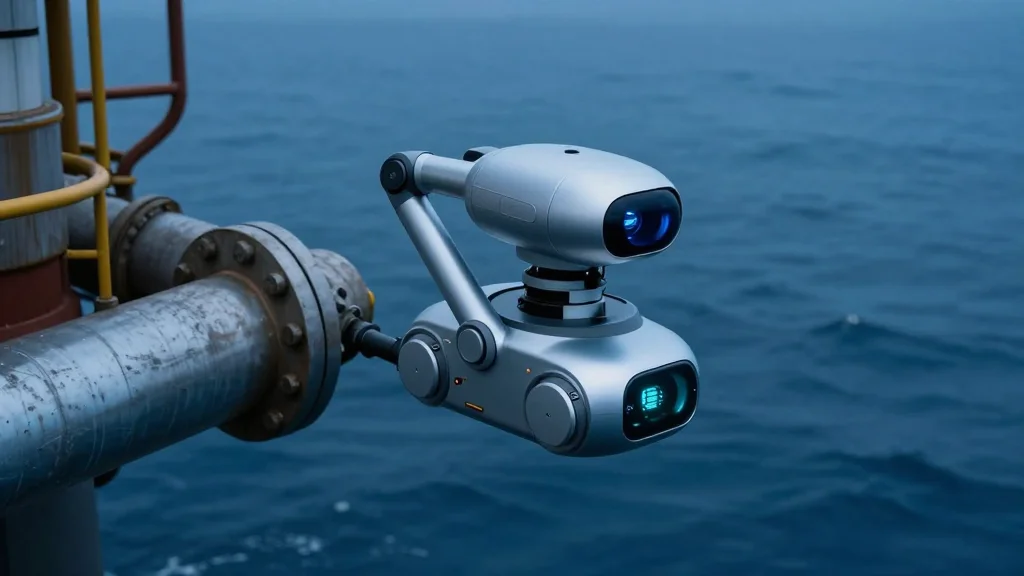
Bubble Robotics Raises $5M to Deploy AI‑Infused Offshore Inspection Robots

Companies Mentioned
Why It Matters
The shift from vessel‑based inspections to autonomous robots could dramatically lower operating expenses for the offshore energy sector, which spends billions annually on chartered ships and crew logistics. By cutting costs and improving safety, the technology addresses two of the industry's most pressing challenges: financial pressure and workforce shortages. Beyond economics, continuous, real‑time monitoring enabled by persistent robots could enhance maritime security and environmental stewardship. Early detection of cable faults, pipeline leaks, or structural fatigue would allow operators to intervene before incidents escalate, supporting the broader energy transition and climate resilience goals.
Key Takeaways
- •Bubble Robotics raised $5 million in a pre‑seed round to develop AI‑infused offshore robots.
- •Robots aim to replace vessels that cost up to $100,000 per day, potentially cutting inspection costs by 80‑90%.
- •Company secured letters of intent worth over $4 million from energy and maritime security firms.
- •Robotics‑as‑a‑service model eliminates upfront capital costs for customers.
- •Field trials scheduled for late 2026 in the North Sea and Gulf of Mexico.
Pulse Analysis
Bubble Robotics is entering a niche that has long been dominated by traditional marine service firms such as Subsea 7 and TechnipFMC. Those incumbents rely on chartered vessels and human crews, a model that is both capital‑intensive and vulnerable to labor shortages. By offering a subscription‑style service, Bubble sidesteps the high upfront CAPEX that typically deters smaller operators from adopting advanced inspection tech. This could democratize access to high‑resolution offshore data, especially for emerging offshore wind developers who operate on tighter margins.
Historically, marine robotics have struggled with reliability in corrosive, high‑energy environments. The company’s claim that edge AI and satellite links have reached an “inflection point” is plausible—recent advances in low‑power AI chips and high‑throughput LEO constellations have reduced latency and bandwidth constraints that previously limited remote autonomy. However, the real test will be durability: saltwater corrosion, bio‑fouling, and extreme weather can degrade sensors and mechanical components faster than on‑shore equivalents. Bubble’s upcoming trials will be the first public proof points, and their outcomes will likely dictate whether investors pour additional capital into the sector.
If Bubble succeeds, the competitive dynamics could shift quickly. Larger offshore service providers may be forced to partner with or acquire autonomous‑robotics firms to stay relevant, mirroring the AI‑driven consolidation seen in other heavy‑industry sectors. Conversely, a failure would reinforce the entrenched belief that human‑operated vessels remain indispensable for complex offshore tasks. Either way, Bubble Robotics’ $5 million seed raise signals that capital markets are betting on a transformative, albeit risky, wave of marine automation.
Bubble Robotics Raises $5M to Deploy AI‑Infused Offshore Inspection Robots
Comments
Want to join the conversation?
Loading comments...