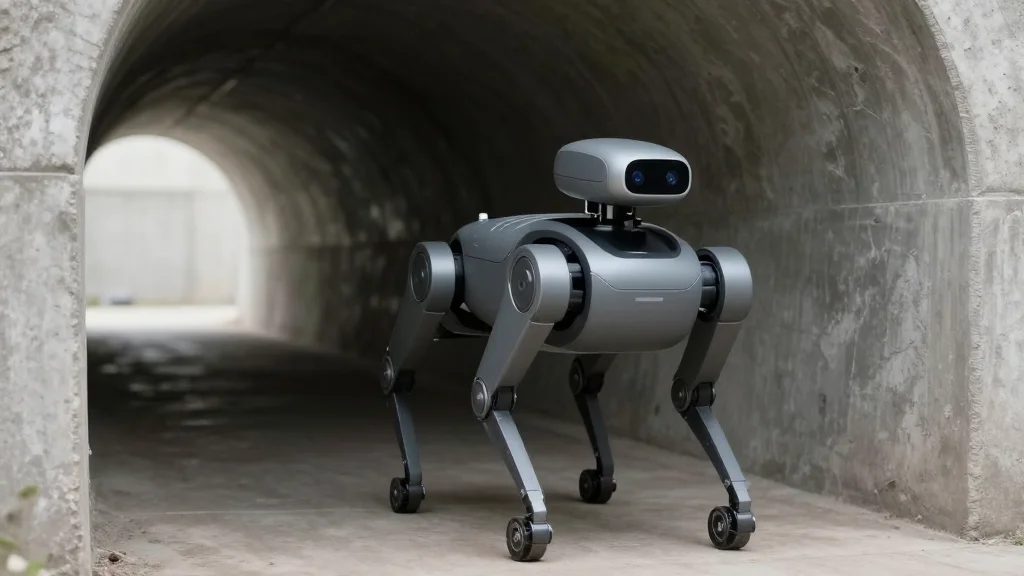
Caltrans Deploys $250K Spot Robot Dogs to Inspect Hazardous Infrastructure

Companies Mentioned

Why It Matters
The Caltrans Spot deployment marks one of the first large‑scale, publicly funded uses of Boston Dynamics’ quadruped robot in the United States, demonstrating that high‑cost autonomous platforms can be justified by safety and cost‑avoidance metrics. By proving a tangible ROI, the project could accelerate adoption of similar robots in other state agencies, prompting a shift from traditional human‑centric inspection methods to mixed‑human‑robot teams. Beyond immediate safety gains, the initiative highlights a regulatory gap: OSHA has yet to issue guidance on robotic dogs in hazardous environments. As more agencies adopt such technology, policymakers will need to address liability, training standards, and worker‑robot interaction protocols, shaping the future legal framework for public‑sector robotics.
Key Takeaways
- •Caltrans purchased two Boston Dynamics Spot robots at about $250,000 each.
- •Spot was used to map a collapsed culvert in Eureka, saving $50,000‑$60,000 on permits and work.
- •Aaron Chamberlin, Caltrans field systems coordinator, emphasized the safety advantage of sending a robot instead of a person into landslides or confined spaces.
- •Robots can be dispatched statewide in under six hours, providing rapid data for engineers.
- •OSHA currently has no specific regulations governing the use of robotic dogs in hazardous inspections.
Pulse Analysis
Caltrans’ decision to invest in Spot reflects a broader trend where public agencies are willing to allocate capital for niche robotics that deliver clear safety and cost benefits. Historically, government procurement of advanced robotics lagged behind private industry due to budget constraints and risk aversion. The successful pilot, however, demonstrates that when the cost per incident avoided exceeds the upfront price, the business case becomes compelling. This mirrors early adopters in the oil and gas sector, where autonomous inspection drones reduced downtime and prevented accidents, eventually prompting wider industry uptake.
The deployment also underscores a strategic shift: rather than seeking to replace human workers, Caltrans positions Spot as a force multiplier, extending the reach of skilled engineers into environments that were previously off‑limits. This collaborative model may become the template for future public‑sector robotics, where robots handle the most hazardous or repetitive tasks while humans focus on analysis and decision‑making. As more states observe Caltrans’ outcomes, we can expect a ripple effect, with transportation departments, water districts, and emergency responders piloting similar quadruped platforms.
Regulatory lag remains a wildcard. The absence of OSHA guidance creates both flexibility and uncertainty. If the agency later issues standards, they could either formalize best practices—accelerating adoption—or impose constraints that raise compliance costs. Stakeholders, including labor unions and safety advocates, will likely lobby for clear rules. In the meantime, Caltrans’ cautious rollout—limited to two units and specific high‑risk scenarios—offers a pragmatic path: demonstrate value, gather data, and then scale responsibly. This measured approach could set the tone for how government entities balance innovation with accountability in the emerging robotics era.
Caltrans Deploys $250K Spot Robot Dogs to Inspect Hazardous Infrastructure
Comments
Want to join the conversation?
Loading comments...