CES 2026: Schaeffler Shows Motion Technology Portfolio for the Industry of the Future
Companies Mentioned
Why It Matters
By marrying mechanical excellence with digital intelligence, Schaeffler’s solutions accelerate industry digital transformation, improving uptime and reducing carbon footprints.
Key Takeaways
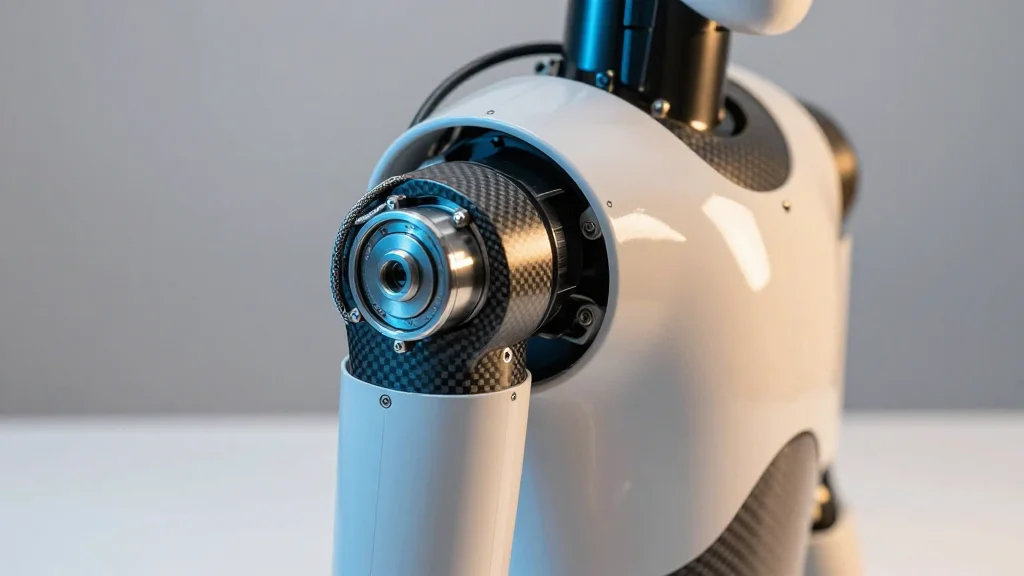
- •Planetary‑gear actuator enables precise, back‑drivable humanoid robots
- •High‑performance bearings boost efficiency in wind and solar farms
- •Autonomous forklifts replace hydraulics, enhancing factory productivity
- •Software‑defined vehicle components reduce rare‑earth reliance
- •AI‑ready motion data supports predictive maintenance and digital twins
Pulse Analysis
At CES 2026, Schaeffler used the global stage to illustrate how motion technology is evolving from pure mechanics to a data‑centric discipline. The debut of a compact planetary‑gear actuator signals a shift toward humanoid robots that can safely collaborate with humans, thanks to back‑driving capability and integrated sensing. By embedding encoders and controllers directly into the drive unit, manufacturers gain high‑resolution telemetry that feeds AI models, shortening the path from prototype to production and opening new use‑cases in logistics and service automation.
Energy generation is another arena where Schaeffler’s motion expertise meets sustainability goals. Its high‑performance bearing families are engineered to withstand the variable loads of wind turbines and the thermal cycles of solar trackers, delivering higher efficiency and longer service intervals. Coupled with AI‑ready condition‑monitoring data, these components enable digital twins that simulate wear patterns and predict failures before they occur, reducing downtime for utilities and data‑center operators alike. The result is a measurable reduction in operational emissions and capital expenditures, reinforcing the business case for renewable‑energy infrastructure upgrades.
In the factory floor, autonomous material‑handling systems illustrate the convergence of electromechanical precision and software‑defined control. Schaeffler’s forklift demonstrator replaces traditional hydraulics with precise actuators, integrated steering, and battery‑management algorithms that adapt to tight aisles and variable loads. This approach not only mitigates labour shortages but also creates a modular platform for future upgrades, such as over‑the‑air firmware updates and AI‑driven route optimization. Meanwhile, the company’s Master and Zone Controller architectures lay the groundwork for software‑defined vehicles, cutting reliance on rare‑earth magnets and simplifying vehicle electronics. Together, these innovations position Schaeffler as a pivotal enabler of the next industrial revolution.
CES 2026: Schaeffler shows motion technology portfolio for the industry of the future
Comments
Want to join the conversation?
Loading comments...