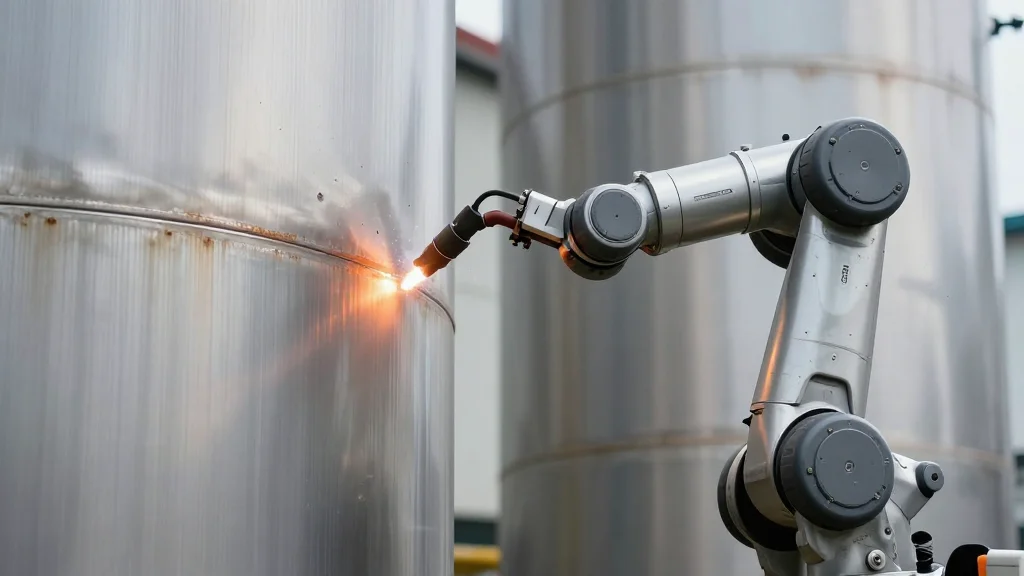
China Deploys Embodied AI Robots for Hazardous Industrial Work

Why It Matters
China’s push to embed AI in physical robots directly addresses labor shortages and safety concerns in high‑risk sectors such as petrochemicals, shipbuilding and deep‑sea infrastructure. By automating tasks that traditionally expose workers to extreme heights, toxic environments or underwater pressure, the technology promises to cut injury rates and improve operational efficiency. The scale of the ecosystem—over 24,000 firms—means that advances can be rapidly commercialized, positioning China as a leader in embodied AI and potentially reshaping global supply chains for heavy industry. The initiative also tests the limits of AI model training in real‑world, safety‑critical contexts. The massive data collection—100,000+ hours of operation—feeds a feedback loop that could accelerate improvements in perception, control and decision‑making, setting a benchmark for other nations developing similar capabilities. Success could spur further government investment, reinforce China’s strategic emphasis on AI‑driven manufacturing, and pressure competitors to accelerate their own robotics programs.
Key Takeaways
- •RobotPlusPlus unveiled a 90 kg climbing robot that can weld, scan and spray on vertical steel tanks.
- •The robot’s AI model has logged over 100,000 operational hours, equivalent to half the Earth’s circumference.
- •A new subsea robot can inspect cables at depths of 300 m, improving efficiency tenfold.
- •Grain‑leveling robots can level a 1,400 m² silo in under a day, cutting labor time by two‑thirds.
- •China’s five‑year plan (2026‑2030) designates embodied AI as a core growth engine, supported by an ecosystem of 24,000 companies.
Pulse Analysis
China’s embodied AI rollout reflects a strategic convergence of policy, capital and technical talent. The five‑year plan’s explicit focus on AI‑enabled robotics provides a stable policy backdrop that encourages long‑term R&D investment, while the dense industrial clusters in the Yangtze and Pearl River deltas supply the necessary component manufacturers and system integrators. This vertical integration reduces time‑to‑market and lowers barriers for firms like RobotPlusPlus to field complex systems at scale.
From a competitive standpoint, the Chinese approach differs from Western models that often rely on modular, software‑first solutions. Here, hardware and AI are co‑developed in a tightly coupled loop, leveraging massive real‑world data streams to refine models in situ. The "operation‑as‑collection" methodology could yield faster learning curves, but also raises questions about data governance, safety validation and the robustness of AI decisions under extreme conditions. International regulators may scrutinize the deployment of autonomous systems in hazardous environments, especially if they intersect with maritime or energy infrastructure that crosses national jurisdictions.
Looking forward, the true test will be the robots’ reliability and cost‑effectiveness in commercial settings. If the technology can consistently outperform human crews on safety, speed and cost metrics, it could trigger a wave of adoption across sectors beyond the showcased use cases—such as offshore wind, nuclear plant maintenance and large‑scale construction. That would not only cement China’s leadership in embodied AI but also reshape global labor dynamics, prompting other economies to accelerate their own automation agendas to stay competitive.
China Deploys Embodied AI Robots for Hazardous Industrial Work
Comments
Want to join the conversation?
Loading comments...