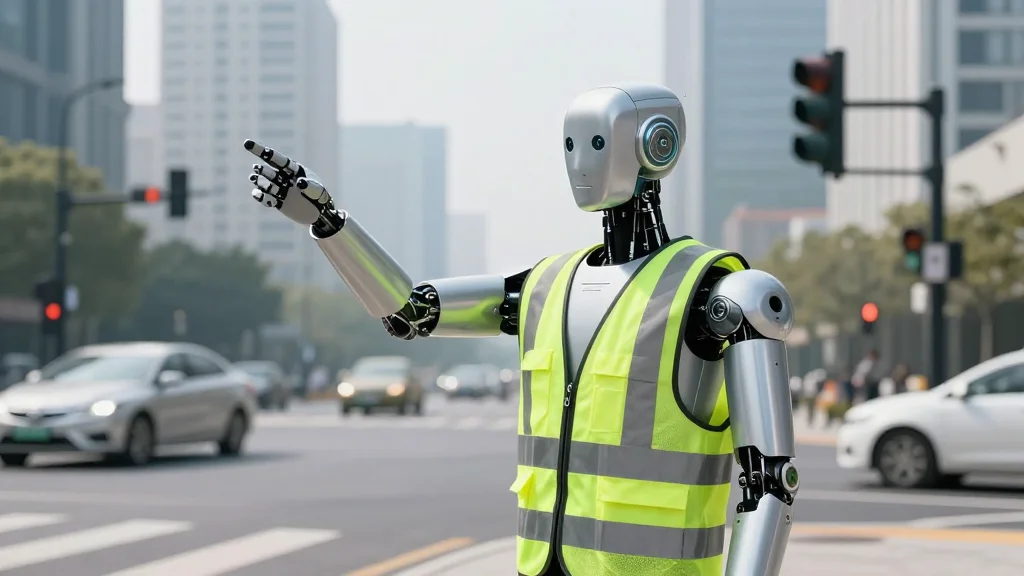
China Deploys Humanoid Robot Squads for Traffic Management in Major Cities

Why It Matters
The rollout demonstrates how AI‑enabled robotics can transition from laboratory prototypes to everyday public‑service tools, potentially reshaping municipal operations worldwide. If the Chinese model proves cost‑effective and socially acceptable, other governments may adopt similar deployments, accelerating a global shift toward automated urban management. Moreover, the initiative highlights the strategic importance of domestic robotics capabilities for national security and economic competitiveness. By fielding home‑grown humanoid platforms at scale, China not only reduces reliance on foreign technology but also creates a testbed for future applications ranging from emergency response to infrastructure inspection.
Key Takeaways
- •15 humanoid robots deployed in Hangzhou during May 2026 Labor Day holiday
- •Robots issued 11,897 traffic‑violation warnings in three days
- •Each unit costs ~88,000 yuan ($12,300 USD)
- •Rollout expanded to Kashgar and Ordos, indicating a national program
- •Robots operate up to nine hours daily, freeing human officers for complex tasks
Pulse Analysis
China’s humanoid‑robot traffic squads represent a calculated gamble on automation to solve chronic urban congestion. The move leverages the country’s deep investment in AI chips and sensor technology, turning a high‑cost, high‑visibility project into a potential cost‑saver for municipal budgets. By quantifying enforcement output—nearly 12,000 warnings in a single weekend—officials can argue for a clear return on investment, especially when human patrols would require multiple shifts and overtime.
However, the success of the program hinges on public perception and the robots’ ability to handle edge cases. Traffic enforcement often involves nuanced judgment—determining intent, assessing extenuating circumstances, or de‑escalating confrontations. If the AI misclassifies behavior, it could erode trust and provoke backlash, undermining the efficiency gains. The Chinese government’s approach of pairing robots with human officers may mitigate these risks, but it also creates a hybrid workforce that must be managed carefully.
Internationally, the deployment sends a signal that large‑scale civic robotics are no longer experimental. Competitors such as the United States, Japan and South Korea will watch the outcomes closely, potentially spurring their own public‑sector pilots. The key differentiator will be the integration of these robots with existing traffic‑management data ecosystems, enabling real‑time analytics and predictive routing. If China can demonstrate measurable reductions in congestion and accidents, the model could become a template for smart‑city initiatives worldwide, accelerating the commercialization of humanoid robotics beyond niche industrial use.
China Deploys Humanoid Robot Squads for Traffic Management in Major Cities
Comments
Want to join the conversation?
Loading comments...