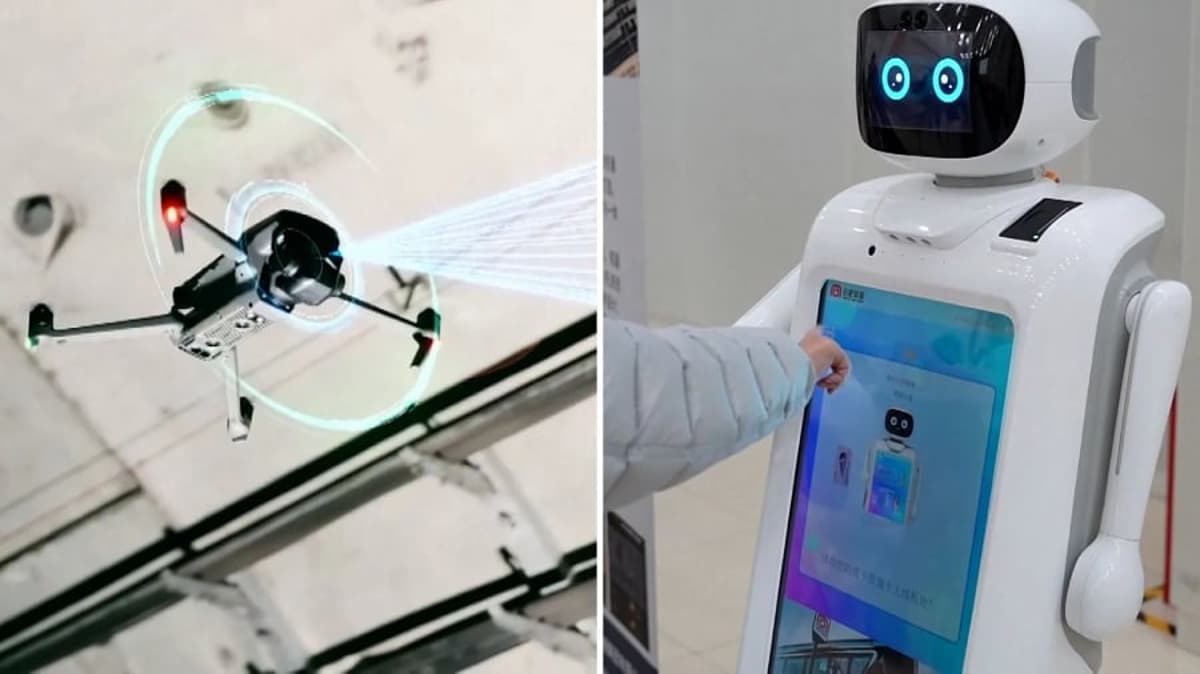
China Deploys Robot Dogs, Drones, and Humanoids to Run a ‘Full-Space’ Metro System
Why It Matters
The deployment showcases how AI‑powered robotics can boost safety, efficiency and labor productivity in high‑density public transit, setting a benchmark for metro systems worldwide.
Key Takeaways
- •Hefei metro launched China’s first full‑space robot cluster
- •Robot dogs patrol platforms, drones inspect tunnels, humanoids guide passengers
- •Central AI platform coordinates all robots for safety checks and service
- •Autonomous robots detect bolts, cracks, cutting inspection time dramatically
- •Humans stay central; robots handle repetitive, hazardous tasks
Pulse Analysis
China’s push to automate its rail networks gained a visible milestone in Hefei, where a mixed fleet of legged robot dogs, aerial drones and humanoid greeters now patrol stations and tunnels. The initiative goes beyond isolated pilots; a unified dispatch platform integrates sensory data from each device, enabling real‑time anomaly detection and rapid response. By shifting routine inspections—such as bolt tightening and crack identification—to autonomous units, the metro reduces human exposure to hazardous environments and accelerates maintenance cycles, a critical advantage during peak travel periods like the Spring Festival.
The technical backbone relies on AI models that fuse visual, ultrasonic and positional inputs to generate actionable alerts. While current algorithms handle predefined fault patterns, planners aim to upgrade the system with large‑scale generative AI, granting robots more nuanced decision‑making capabilities in unpredictable scenarios. This evolution could transform the robots from passive monitors into proactive agents that reroute traffic, coordinate emergency evacuations, or even predict equipment failures before they manifest. Such sophistication promises not only operational savings but also a new safety paradigm for densely packed urban transit corridors.
Globally, the Hefei rollout signals a shift for public‑transport operators grappling with aging infrastructure and labor shortages. The hybrid human‑robot model demonstrates a pragmatic pathway: retain staff for customer interaction and complex judgments while delegating repetitive, dangerous tasks to machines. However, scaling this approach will require robust cybersecurity, regulatory alignment and public trust in AI‑driven safety systems. If these hurdles are addressed, other metros—from Tokyo to New York—may adopt similar robot clusters, reshaping the future of urban mobility.
China Deploys Robot Dogs, Drones, and Humanoids to Run a ‘Full-Space’ Metro System
Comments
Want to join the conversation?
Loading comments...