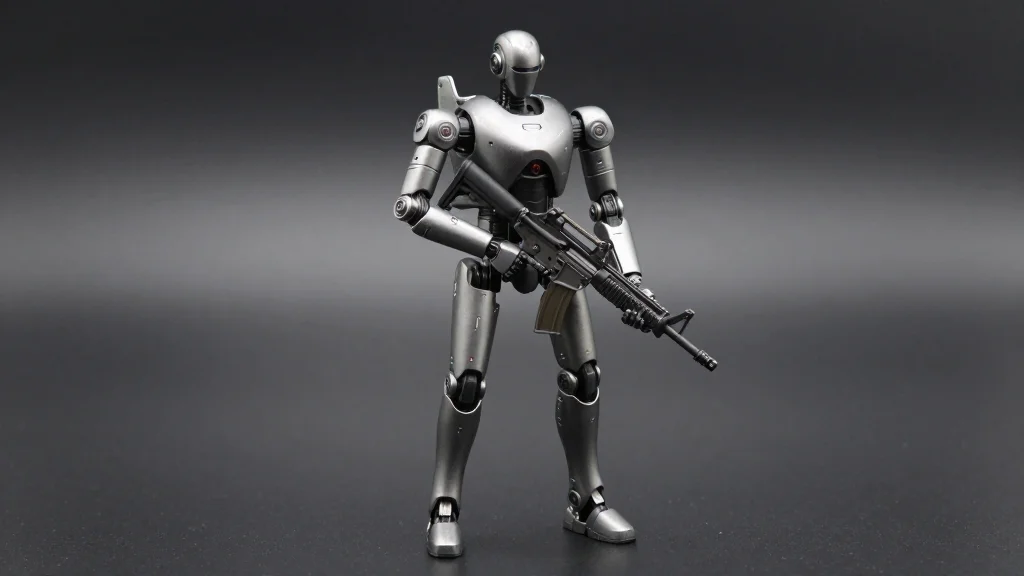
China Field‑Tests AI‑Powered Humanoid Combat Robots, Sparking Arms‑Race Fears

Why It Matters
The deployment of AI‑driven humanoid combat robots could reshape the calculus of modern warfare. By automating the most dangerous infantry tasks, these systems may reduce casualty aversion, potentially making states more willing to engage in conflict. Moreover, the technology blurs the line between conventional weapons and autonomous systems, challenging existing arms‑control frameworks and prompting urgent policy debates. For the robotics industry, the militarization of humanoid platforms signals a shift in investment priorities. Companies that once focused on manufacturing efficiency may now pivot toward defense contracts, accelerating research in perception, decision‑making and ruggedization. This pivot could spur rapid advances but also raise ethical concerns about the civilian‑military technology pipeline.
Key Takeaways
- •China has begun field‑testing AI‑powered humanoid combat robots capable of carrying rifles and grenade launchers.
- •Robots feature night‑vision and audio sensors that feed data to onboard AI for target identification.
- •China's operational robot stock exceeded 2 million units in 2024, dwarfing the U.S. total of ~34,000.
- •U.S. has deployed two reconnaissance robots to Ukraine, providing combat data for future AI soldiers.
- •Experts warn autonomous weapons could lower the threshold for war and complicate arms‑control efforts.
Pulse Analysis
China’s foray into humanoid combat robots reflects a broader strategic calculus: leverage its manufacturing might to offset the United States’ qualitative edge in combat experience. Historically, arms races have been driven by asymmetries—think nuclear deterrence during the Cold War. Here, the asymmetry is quantitative versus experiential. Beijing’s ability to mass‑produce robots at scale could eventually translate into swarms that overwhelm traditional infantry, forcing a doctrinal shift toward counter‑robotic tactics.
From a market perspective, defense contractors in both China and the U.S. are likely to see a surge in funding for AI perception, power‑dense actuators, and ruggedized computing. Companies that can bridge the gap between industrial automation and battlefield resilience will capture a new segment of defense spend. However, the rapid militarization of humanoid platforms also risks a feedback loop: as autonomous weapons become more capable, political pressure for tighter regulation may increase, potentially stalling commercial adoption of related technologies in civilian sectors.
Policy makers must grapple with a dual challenge: fostering innovation while preventing an unchecked arms race. International norms on lethal autonomous weapons remain fragmented, and China’s opaque testing regime complicates verification. The United States, meanwhile, must balance the urgency of fielding its own systems against the ethical imperative to retain meaningful human control. The next six months—marked by live‑fire trials and diplomatic negotiations—will set the tone for whether humanoid combat robots become a strategic asset or a catalyst for global instability.
China Field‑Tests AI‑Powered Humanoid Combat Robots, Sparking Arms‑Race Fears
Comments
Want to join the conversation?
Loading comments...