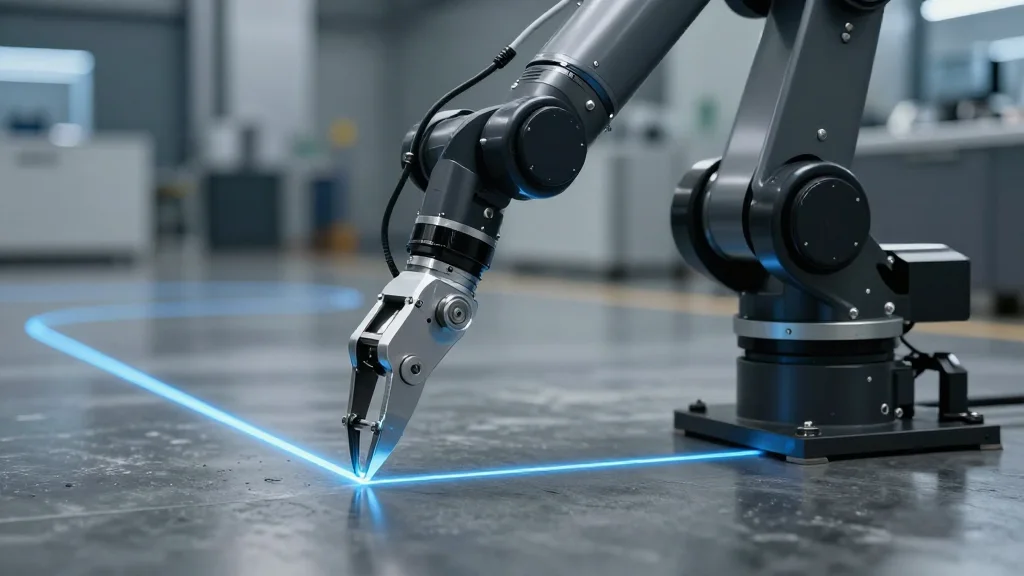
China Pushes Fully Automated “Dark Factories” To Reshape Manufacturing

Companies Mentioned
Why It Matters
Dark factories could dramatically lower production costs, giving Chinese manufacturers a competitive edge that reshapes global supply chains. The move also accelerates the adoption of advanced robotics, AI, and IoT technologies, pushing the entire industry toward higher levels of integration and autonomy. For economies dependent on manufacturing jobs, the trend underscores the urgency of workforce upskilling and the need for policies that address potential displacement. Beyond cost, fully automated plants promise higher consistency and faster time‑to‑market, which could compress product development cycles across sectors ranging from consumer electronics to automotive components. The ripple effect may spur innovation in robot safety, collaborative operation, and predictive maintenance, benefitting the broader robotics ecosystem.
Key Takeaways
- •Chinese firms are building fully automated “dark factories” that aim to run without human workers.
- •The concept could cut labor costs and enable 24/7 production, but specific investment amounts were not disclosed.
- •Technical challenges include sensor precision, AI quality control, and integration of hundreds of robots.
- •Success could trigger a surge in demand for industrial robots, vision systems, and automation software worldwide.
- •Potential labor displacement raises policy questions about retraining and social safety nets.
Pulse Analysis
The dark factory model represents a logical extension of China’s long‑term strategy to dominate high‑tech manufacturing. By leveraging economies of scale in robot procurement and a domestic supply chain for sensors and AI chips, Chinese firms can undercut competitors on both price and speed. Historically, automation waves have been incremental—first introducing robots for repetitive tasks, then expanding to collaborative cells. Dark factories aim to leapfrog that trajectory, moving directly to end‑to‑end autonomy.
However, the absence of disclosed funding or rollout schedules suggests that the industry is still in a proof‑of‑concept phase. Early adopters will likely focus on products with stable designs and high volume, where the return on automation investment is clear. Companies that can bundle hardware with AI‑driven analytics and offer comprehensive service contracts will capture the most value, as manufacturers will need ongoing support to maintain uptime and adapt to product changes.
Globally, the push for worker‑free plants could accelerate a competitive arms race in robotics. Western OEMs may respond by accelerating development of more flexible, easily reprogrammable robots that can handle a broader range of tasks without extensive retooling. Meanwhile, policymakers in manufacturing hubs outside China will need to balance the efficiency gains of automation with the social impact of reduced labor demand, potentially shaping the next wave of industrial policy.
China pushes fully automated “dark factories” to reshape manufacturing
Comments
Want to join the conversation?
Loading comments...