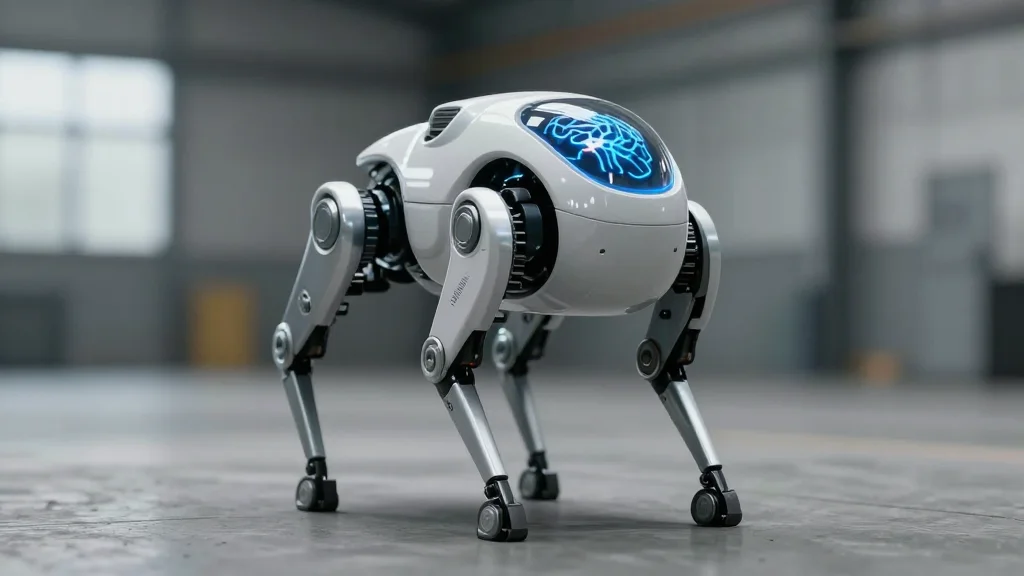
China's AGIQUAD Unveils Next‑Gen Quadruped Robot Platform

Why It Matters
The AGIQUAD announcement highlights a shift toward integrating large‑scale artificial intelligence models with mobile robotics, a combination that could dramatically lower the cost of deploying autonomous machines in complex environments. By moving beyond isolated control loops, a shared AGI brain promises faster learning, easier updates, and the ability to coordinate fleets in real time—features that are critical for scaling robotics in logistics, construction, and defense. If AGIQUAD's platform proves viable, it may pressure established quadruped manufacturers to adopt similar AI architectures, potentially reshaping supply chains, software ecosystems, and talent demands across the robotics sector. The development also underscores China's broader ambition to lead in next‑generation AI‑hardware integration, a strategic priority that could influence global standards and competitive dynamics for years to come.
Key Takeaways
- •AGIQUAD announced a new quadruped robot strategy on 12 April 2026
- •The platform is described as powered by a shared AGI "brain" and embodied intelligence
- •Company positions the robot as more than a robot dog, targeting industrial and field tasks
- •Specific performance metrics such as payload or locomotion improvements were not disclosed
- •Announcement was released via the Big News Network newswire
- •
Pulse Analysis
AGIQUAD's push to embed a shared AGI brain into a quadruped platform reflects a broader industry trend of converging large language model capabilities with embodied agents. Historically, quadruped robots have excelled in mobility but lagged in high‑level decision making, relying on pre‑programmed behaviors or narrow AI. By leveraging a generalized intelligence layer, AGIQUAD aims to create a robot that can adapt to new tasks without extensive re‑engineering, a value proposition that could lower total cost of ownership for enterprises.
The competitive landscape, however, remains fragmented. Companies like Boston Dynamics and ANYbotics have demonstrated impressive locomotion but have not publicly embraced AGI‑scale models, citing concerns over latency, safety, and regulatory compliance. AGIQUAD's claim suggests confidence in either edge‑compute advances or a hybrid cloud approach that can meet real‑time constraints. If the technical execution matches the marketing narrative, it could force incumbents to accelerate their AI roadmaps or risk losing market share in sectors where rapid adaptability is a differentiator.
Looking ahead, the key test will be empirical validation. Demonstrations that showcase the robot handling variable payloads, navigating unstructured terrain, and updating its behavior via a shared brain will be essential to convince skeptical customers. Moreover, the regulatory environment for autonomous machines operating in public or hazardous spaces will shape adoption timelines. AGIQUAD's next steps—field trials, partnership announcements, and performance data releases—will determine whether the platform is a conceptual breakthrough or a marketing headline.
China's AGIQUAD Unveils Next‑Gen Quadruped Robot Platform
Comments
Want to join the conversation?
Loading comments...