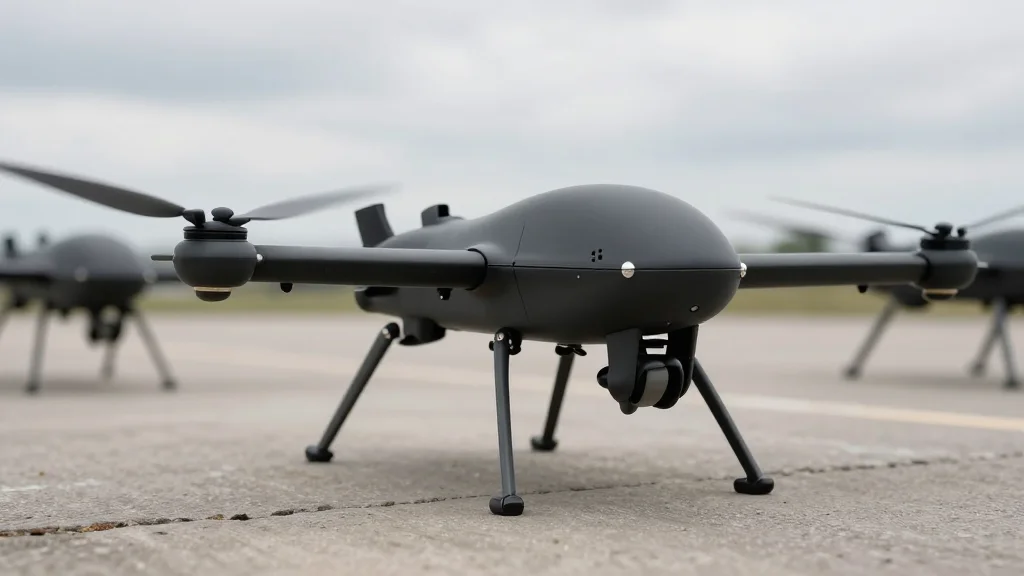
China's AI‑Enabled ‘Wolf Pack’ Drone Swarms Target Taiwan Conflict

Why It Matters
The emergence of AI‑driven wolf pack drones signals a shift from singular, high‑cost unmanned systems to swarms of inexpensive, networked robots that can be sacrificed without political fallout. This development forces defense planners worldwide to rethink force protection, logistics, and command‑and‑control architectures in contested environments. For the robotics industry, the push underscores the strategic value of modular, rugged platforms that can be mass‑produced and rapidly fielded. Beyond the immediate military implications, the report highlights how civilian AI and robotics supply chains can be co‑opted for defense purposes. Nations with deep commercial AI ecosystems may find it easier to transition cutting‑edge research into battlefield-ready hardware, accelerating the pace at which autonomous warfare capabilities proliferate.
Key Takeaways
- •FDD report details China’s AI‑enabled quadruped “wolf pack” drones for Taiwan conflict scenarios.
- •Robotic wolves can scout, carry supplies and potentially engage in combat while operating in coordinated swarms.
- •Human operators remain in the loop for lethal decisions, limiting full autonomy.
- •U.S. analysts warn the systems could lower the political cost of a Chinese invasion by using expendable machines.
- •Report calls for U.S. counter‑measures, including electronic warfare and domestic autonomous‑system development.
Pulse Analysis
China’s wolf pack initiative reflects a broader trend toward swarm robotics, where the value lies in numbers and networked intelligence rather than individual platform sophistication. Historically, militaries have leveraged massed infantry or artillery to achieve similar effects; the digital age simply replaces steel with silicon and batteries. By fielding dozens of low‑cost quadrupeds, Beijing can create a persistent presence on the battlefield, gathering data and sustaining logistics without committing elite troops. This approach also complicates adversary targeting, as disabling a single robot yields minimal operational impact.
From a market perspective, the push could spur a new segment of defense‑grade modular robots, driving demand for rugged locomotion, low‑latency communications and edge AI processing. Companies that have focused on civilian delivery robots or inspection drones may find a lucrative, albeit tightly regulated, customer in the PLA. Conversely, Western firms may see a strategic imperative to accelerate their own swarm programs to avoid a capability gap. The competition will likely center on supply‑chain resilience, AI model robustness under electronic attack, and the ability to integrate heterogeneous sensors across platforms.
Looking ahead, the real test will be whether these wolf packs can operate under contested electromagnetic environments and survive the logistical strain of sustained operations. If China succeeds, it could redefine the cost‑benefit analysis of amphibious assaults, making high‑risk operations more politically palatable. For policymakers, the challenge is to develop counter‑swarm doctrines that blend kinetic, cyber and information‑operations tools, ensuring that the proliferation of autonomous robotics does not erode deterrence stability in the Indo‑Pacific.
China's AI‑Enabled ‘Wolf Pack’ Drone Swarms Target Taiwan Conflict
Comments
Want to join the conversation?
Loading comments...