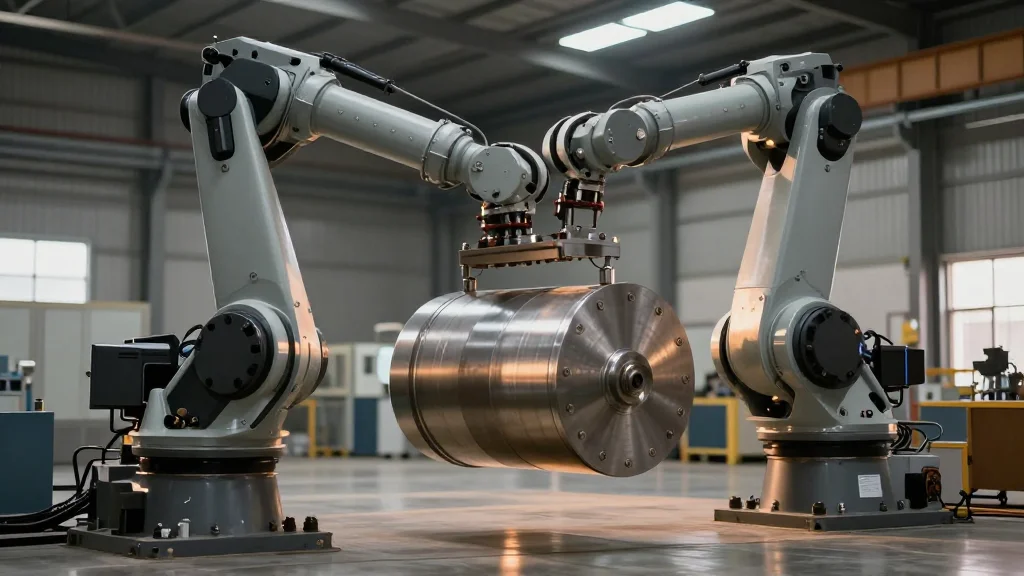
China's Chaifu Robot Lifts 5 Tonnes, Shattering World Payload Record

Companies Mentioned
Why It Matters
The CR5000-3700’s payload breakthrough signals a shift in the competitive balance of high‑end industrial robotics. By offering a domestically produced, cost‑effective alternative to legacy Japanese and European systems, China can capture a larger share of projects that require heavy lifting, from shipbuilding to nuclear plant construction. This could reshape global supply chains, lower total cost of ownership for manufacturers, and accelerate automation adoption in sectors that have been hesitant due to equipment cost. Moreover, the achievement dovetails with China’s broader strategic goal of technological self‑sufficiency. As the robot integrates AI for precision control, it exemplifies the country’s drive to combine advanced software with hardware manufacturing, potentially setting a template for future generations of intelligent, high‑payload machines.
Key Takeaways
- •CR5000-3700 lifted >5,000 kg, certified by Guinness World Records on 15 May
- •Record surpasses Fanuc’s 2,300 kg benchmark from 2016 by more than double
- •China now holds >2 million industrial robots, >50 % of global stock
- •2024 robot installations in China rose 7 % YoY to 295,000 units, a record high
- •Chaifu robot already deployed in Shanghai subway construction and new‑energy vehicle lines
Pulse Analysis
Chaifu’s record is more than a headline; it marks the culmination of a decade‑long state‑backed push to close the high‑payload gap that has long favored Japanese OEMs. Historically, Fanuc’s 2016 record set a de‑facto ceiling for what manufacturers considered feasible in a single‑axis lift. By breaking that ceiling, Chaifu not only proves engineering capability but also leverages China’s vertically integrated supply chain to keep costs competitive. This cost advantage could force incumbents to either slash prices or accelerate their own R&D, potentially igniting a new wave of competition in the ultra‑heavy robot segment.
From a market perspective, the record could catalyze a re‑allocation of capital in heavy industries that have been waiting for a price‑point that makes full automation viable. Ports, for example, have long relied on a mix of human operators and low‑payload robots; a 5‑tonne solution could enable fully automated container handling, reducing labor costs and improving turnaround times. However, the rapid adoption of such powerful machines also raises safety and regulatory concerns. International standards bodies will need to update guidelines to address the unique risks posed by robots that can lift multi‑ton loads with high precision.
Looking ahead, the sustainability of Chaifu’s momentum will depend on its ability to scale production while maintaining quality and integrating AI‑driven diagnostics. If the company can demonstrate reliable, low‑downtime operation across diverse environments, it could become the go‑to supplier for high‑payload automation worldwide, reshaping the competitive landscape for the next decade.
China's Chaifu Robot Lifts 5 Tonnes, Shattering World Payload Record
Comments
Want to join the conversation?
Loading comments...