China's Kung‑Fu Combat Robots Spark Global Security Concerns

Companies Mentioned
Why It Matters
The demonstration signals that China has achieved a level of humanoid robotics capable of rapid, coordinated combat movements—capabilities that could be weaponized or used for covert intelligence gathering. For the broader robotics sector, the event highlights a widening technology gap: Chinese firms are delivering mass‑produced, low‑cost units at scale, while U.S. players such as Tesla lag behind production targets. This disparity could reshape global supply chains, labor markets, and defense postures, prompting governments to reassess export controls and investment in AI‑driven robotics. Moreover, the public visibility of the kung‑fu robots—broadcast to hundreds of millions—underscores how entertainment platforms can serve as de‑facto showcases for strategic technology. The convergence of soft power, commercial ambition, and military potential creates a complex policy environment where civilian innovation may inadvertently accelerate autonomous weapons development.
Key Takeaways
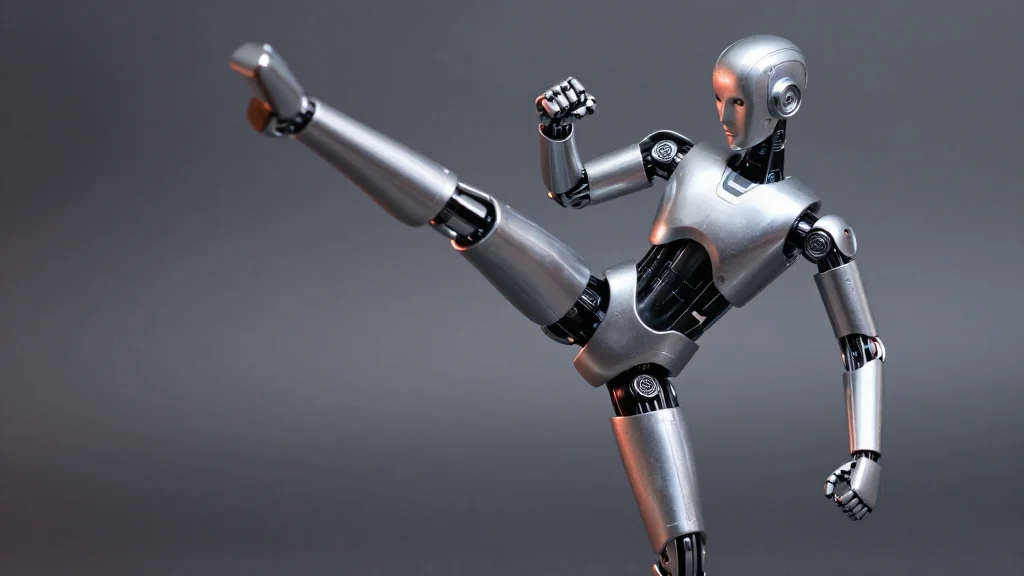
- •Unitree displayed kung‑fu humanoid robots to an audience of ~400 million at the Spring Festival Gala
- •Congressional committee warned the bots could become a "growing national threat"
- •China holds roughly 90 % of global robot trade; Unitree and Agibot aim to ship >50,000 units this year
- •Unitree's R1 robot sells for $4,900, about a third of the U.S. annual minimum wage
- •Tesla has produced ~150 Optimus bots, far below its 2025 target of several thousand
Pulse Analysis
China’s rapid rollout of advanced humanoid robots reflects a strategic convergence of AI research, manufacturing scale, and state support. Historically, the country has leveraged its vast supply‑chain ecosystem to undercut Western competitors on price and volume, a pattern now evident in the robotics arena. The kung‑fu demonstration is less a novelty act than a proof‑of‑concept for deploying agile, AI‑controlled platforms that could be repurposed for surveillance, logistics, or combat.
From a market perspective, the gap between Unitree’s production capacity and Tesla’s modest output underscores divergent business models. Tesla’s Optimus program is tied to its broader vision of factory automation, yet it remains constrained by engineering challenges and a public rollout schedule. In contrast, Chinese firms benefit from state‑backed subsidies, a domestic market that tolerates rapid iteration, and a regulatory environment that blurs civilian‑military lines. This structural advantage enables firms like Unitree to price robots at a fraction of U.S. labor costs, threatening both low‑skill employment and the competitive position of Western manufacturers.
Policy implications are equally stark. The congressional warning and Pentagon blacklist episode reveal growing U.S. concern over dual‑use technologies that could be covertly integrated into intelligence operations. As AI‑driven robotics become more capable, existing export‑control frameworks may prove inadequate, prompting calls for new international norms on autonomous systems. The next few years will likely see heightened diplomatic friction, increased investment in counter‑AI measures, and a push for domestic R&D to close the capability gap before Chinese advances translate into decisive strategic leverage.
China's Kung‑Fu Combat Robots Spark Global Security Concerns
Comments
Want to join the conversation?
Loading comments...