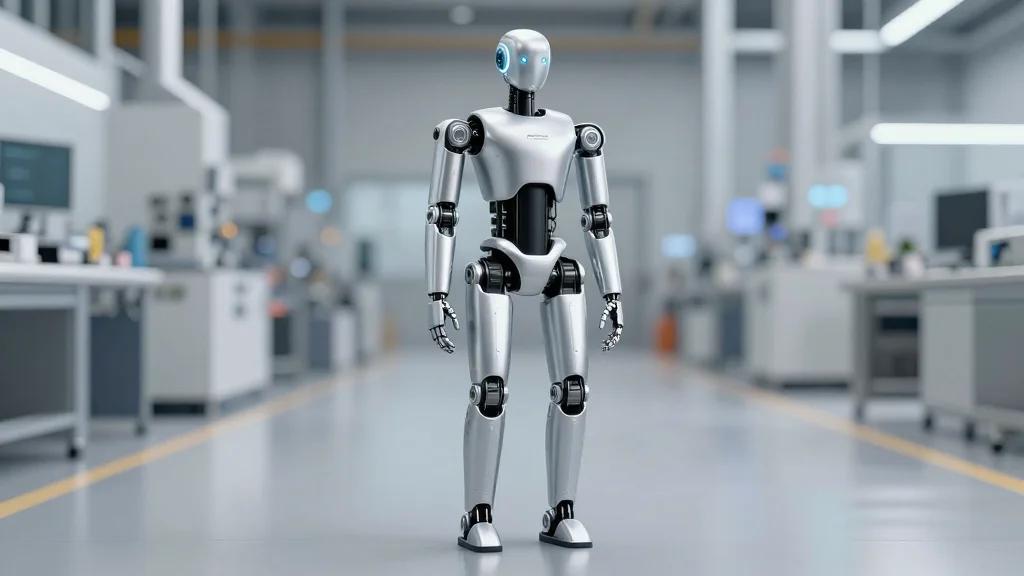
China's Lingyi Launches Mass Production at Beijing Embodied Intelligence Super Factory

Why It Matters
The launch of a fully integrated humanoid robot production line in Beijing marks a pivotal moment for China’s robotics ecosystem. By closing the gap between research and manufacturing, Lingyi reduces time‑to‑market and cost barriers that have historically limited the commercial adoption of humanoid robots. This could accelerate deployment in sectors such as logistics, retail, healthcare and domestic assistance, where labor shortages and rising wages drive demand for autonomous solutions. Globally, the facility challenges the dominance of Japanese and American firms that have traditionally led humanoid hardware. If Lingyi meets its 2026‑2030 capacity goals, it could reshape supply chains, push down prices, and spur a new wave of applications that require large‑scale, reliable robot fleets. The move also underscores Beijing’s broader strategic push to become a world leader in embodied AI, complementing its advances in software, perception and cloud robotics.
Key Takeaways
- •Lingyi’s Beijing super‑factory delivered its first batch of Ultra and 3.0 humanoid robots after a two‑month build‑out.
- •Production lines can change joint‑module setups in under 15 minutes and achieve 99.99% picking accuracy.
- •Factory aims for 10,000 units in 2026, 20,000 in 2027 and 500,000 by 2030.
- •Partnerships with over 20 domestic and foreign firms, including North American ODM orders.
- •Yizhuang’s "Embodied Intelligence Ten‑Point" policy provides regulatory and financial support for scaling robotics.
Pulse Analysis
Lingyi’s aggressive rollout reflects a broader Chinese policy thrust to dominate the embodied AI value chain. By investing in a single‑site, end‑to‑end manufacturing hub, the company sidesteps the fragmented supplier networks that have hampered earlier Chinese robot projects. The ability to swap joint modules in 15 minutes, coupled with real‑time torque monitoring, suggests a shift toward modular, reconfigurable hardware—a trend that could lower the total cost of ownership for end users and make large‑scale deployments financially viable.
From a competitive standpoint, the Beijing super‑factory directly challenges the economies of scale enjoyed by firms like Honda, SoftBank Robotics and Boston Dynamics. Those incumbents have relied on decades‑long supply chains and high‑margin niche markets. Lingyi’s model, backed by municipal subsidies and a domestic component base, could undercut price points, especially in price‑sensitive sectors such as retail logistics and elder‑care. However, scaling to half‑a‑million units by 2030 will test the firm’s ability to maintain quality, safety and reliability—critical factors for public acceptance of humanoid robots.
Looking ahead, the success of Lingyi’s plant will likely influence foreign investment decisions in Chinese robotics. If the factory demonstrates consistent output and meets its capacity milestones, it could attract joint‑venture partners seeking access to China’s burgeoning domestic market and its growing talent pool in AI perception and control. Conversely, any shortfall could reinforce skepticism about China’s ability to translate rapid prototyping into mass‑produced, high‑quality humanoids. The next 12 months, culminating in the planned international showcase, will be the litmus test for whether China can truly become a global hub for embodied intelligence.
China's Lingyi Launches Mass Production at Beijing Embodied Intelligence Super Factory
Comments
Want to join the conversation?
Loading comments...