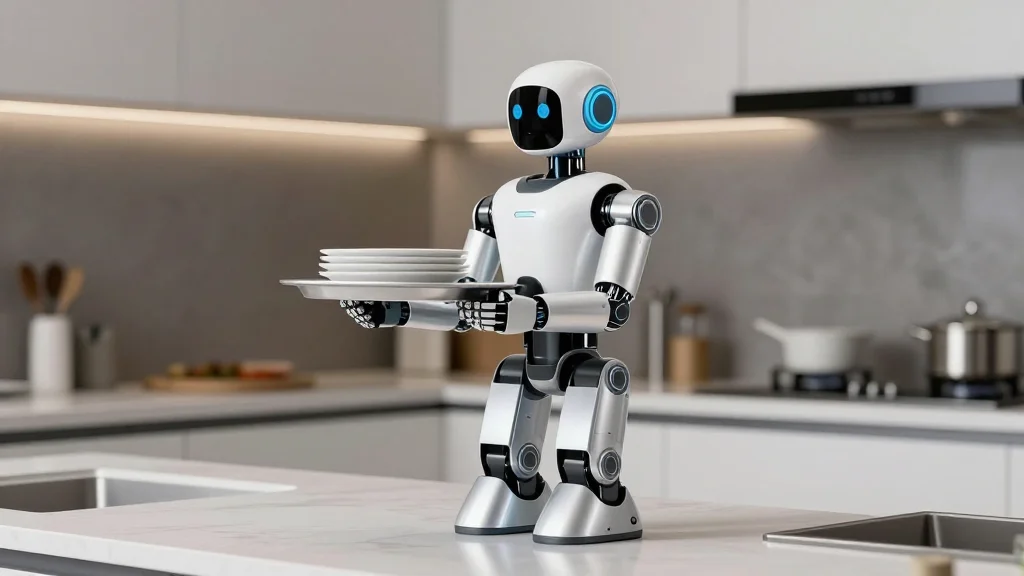
Chinese Startup UniX AI Launches Panther, 176‑lb Humanoid Service Robot for Homes

Companies Mentioned

Why It Matters
Panther represents the first mass‑produced humanoid robot aimed directly at the consumer market, moving the service‑robot sector beyond single‑function devices like robotic vacuums. Its ability to perform a suite of household tasks could alleviate labor shortages in urban China and accelerate adoption of robotics in elder‑care, a demographic trend with global relevance. Moreover, the robot’s four‑wheel stability architecture challenges the prevailing focus on legged locomotion, potentially setting a new design standard for indoor service robots. If UniX AI succeeds in scaling production and pricing, it could trigger a wave of competition among Chinese and international firms, driving rapid innovation, cost reductions, and broader ecosystem development—including software platforms, sensor suppliers, and after‑sales service networks. The ripple effects may extend to logistics, hospitality, and public‑space automation, where reliable, multi‑task robots are increasingly sought after.
Key Takeaways
- •UniX AI began commercial deliveries of Panther, a 176‑lb humanoid service robot, this week.
- •Panther can operate up to 12 hours on a single charge and moves at about 6 ft/s using a four‑wheel drive chassis.
- •The robot features two 8‑DoF bionic arms with 34 degrees of freedom and adaptive grippers for versatile object handling.
- •UniX AI’s CEO Fred Yang emphasized the goal of bringing reliable productivity tools into homes and public spaces.
- •Price details were not disclosed, but mass‑production of key components suggests a focus on scalability.
Pulse Analysis
Panther’s entry into the market signals a strategic pivot from research‑centric humanoids to consumer‑grade service robots. Historically, the high cost and fragility of legged humanoids limited their use to controlled environments. By adopting a four‑wheel base, UniX AI sidesteps the stability challenges that have plagued earlier models, offering a pragmatic solution for cluttered domestic settings. This engineering trade‑off may redefine consumer expectations: reliability and task breadth will likely outweigh the novelty of bipedal gait.
The timing aligns with China’s policy push to automate routine labor amid a shrinking workforce. If UniX AI can price Panther competitively—potentially in the low‑to‑mid‑five‑figure range—it could capture a segment of middle‑class households willing to invest in convenience and elder‑care support. The lack of disclosed pricing, however, leaves a critical uncertainty; a premium price could relegate Panther to institutional buyers rather than mass consumers, echoing the limited uptake of earlier humanoids.
From a competitive standpoint, Panther forces established players to reassess their roadmaps. Companies like Boston Dynamics, which recently announced a consumer‑focused version of Spot, may need to accelerate development of multi‑task capabilities and cost‑reduction strategies. Meanwhile, Chinese rivals such as UBTech and CloudMinds will likely intensify R&D to match UniX AI’s integrated sensor suite and AI planning stack. The market could evolve into a tiered ecosystem: high‑end, highly mobile robots for specialized tasks and robust, wheel‑based humanoids for everyday chores. The next quarter will reveal whether Panther can sustain its early momentum and catalyze a broader shift toward truly multifunctional home robots.
Chinese Startup UniX AI Launches Panther, 176‑lb Humanoid Service Robot for Homes
Comments
Want to join the conversation?
Loading comments...