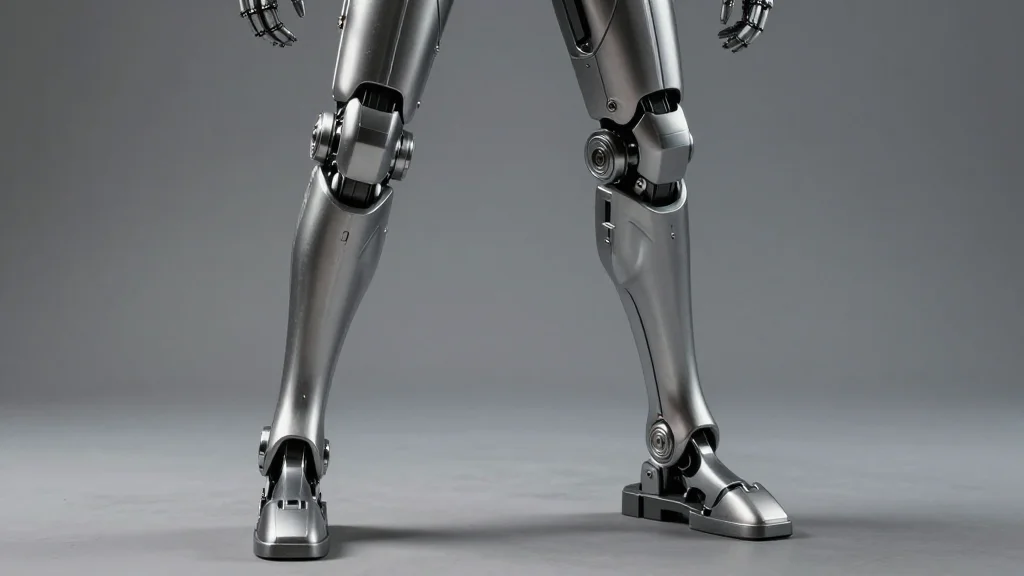
Chinese Team Unveils Wearable 'Centaur' Robot Adding Mechanical Legs to Humans

Why It Matters
The centaur robot signals a shift from conventional exoskeletons toward hybrid locomotion, potentially unlocking new use cases in logistics, emergency response, and defense. If the technology can deliver on its promise of enhanced load‑carrying and terrain versatility, it could redefine how humans interact with heavy equipment, reducing the need for separate transport vehicles and lowering operational costs. Moreover, the unveiling underscores China's broader ambition to lead in advanced robotics, complementing its achievements in UAVs and clean‑energy research. Success in this arena would reinforce China's position as a multi‑domain technology powerhouse, influencing global standards, supply chains, and competitive dynamics across the robotics sector.
Key Takeaways
- •Chinese researchers demonstrated a wearable "centaur" robot that adds mechanical legs to a human user.
- •Technical specifications, pricing, and commercial timeline were not disclosed.
- •The prototype reflects China's broader push in high‑tech hardware, paralleling its work on Shahed‑136 drones (India Today).
- •A new Xinhua‑reported study on abiotic geological hydrogen highlights China's simultaneous investment in clean‑energy research.
- •Industry analysts anticipate the centaur could reshape load‑carrying robotics if it overcomes battery and comfort challenges.
Pulse Analysis
China's centaur robot arrives at a moment when the nation is deliberately diversifying its high‑tech portfolio. The country's aggressive UAV program, exemplified by the Shahed‑136 drone, has already demonstrated the ability to mass‑produce low‑cost, high‑impact systems for both export and domestic use. The centaur extends this playbook into the wearable domain, where the barrier to entry is higher due to the need for sophisticated human‑machine interfaces and safety certifications. By showcasing a functional prototype, Chinese researchers are signaling that they are ready to tackle those challenges head‑on.
From a market perspective, the centaur could carve out a niche that sits between traditional exoskeletons—optimized for strength and endurance—and autonomous quadrupedal robots that operate independently. This hybrid approach may appeal to sectors that require human decision‑making combined with the physical advantages of four‑legged locomotion, such as disaster relief teams navigating rubble or soldiers moving heavy gear across uneven terrain. If the technology matures, it could force Western firms to accelerate their own hybrid exoskeleton programs, potentially reshaping R&D budgets and partnership strategies.
Strategically, the centaur also raises geopolitical questions. As China continues to export its drone technology to conflict zones, a wearable system that enhances soldier mobility could deepen the country's influence in defense markets. Conversely, the lack of disclosed performance data suggests the prototype is still early‑stage, and the path to commercial viability will be fraught with regulatory, ergonomic, and power‑density hurdles. The next few months—when field trials are slated—will be critical in determining whether the centaur remains a laboratory showcase or becomes a catalyst for a new class of wearable robotics worldwide.
Chinese Team Unveils Wearable 'Centaur' Robot Adding Mechanical Legs to Humans
Comments
Want to join the conversation?
Loading comments...