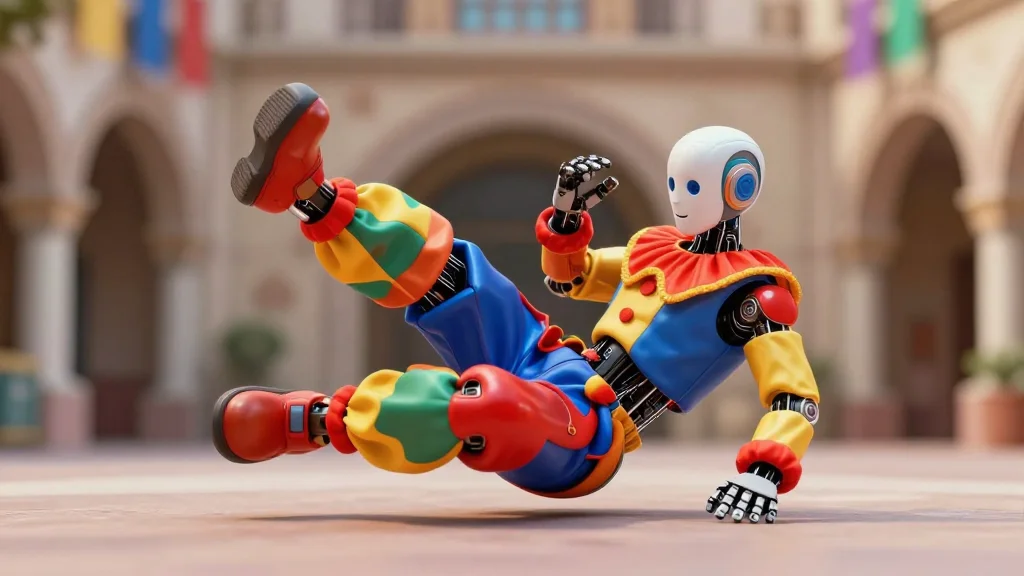
Clown‑Costumed Unitree G1 Robot Kicks Child in Xinjiang, Raising Safety Concerns

Why It Matters
The Xinjiang incident spotlights a critical fault line in the burgeoning entertainment‑robot market: the tension between captivating performances and public safety. As robots become more agile and powerful, the potential for accidental injury rises, prompting regulators to consider mandatory safety standards that could reshape product design and operational protocols. Moreover, the episode may influence investor confidence, as capital flows could be redirected toward firms with proven safety track records, reshaping competitive dynamics. Beyond immediate liability concerns, the event raises broader questions about societal acceptance of humanoid robots in everyday leisure spaces. Public perception of robotics hinges on trust; high‑visibility mishaps can erode that trust, slowing adoption not only in entertainment but also in education, healthcare, and hospitality where similar technologies are being trialed.
Key Takeaways
- •Unitree G1 humanoid robot, dressed as a clown, kicked a child during a Xinjiang show on June 3, 2026.
- •Witnesses likened the force to a "10‑kilogram sack of rice," causing abdominal bruising.
- •Previous incidents include a February 2026 G1 fall that broke a man's nose and a 2025 lawsuit against Figure AI over safety concerns.
- •The global entertainment‑robot market is valued at about $1.2 billion and may face stricter regulations after the incident.
- •Insurance premiums for venues using autonomous performers are expected to rise as risk assessments are updated.
Pulse Analysis
The Xinjiang kick is a watershed moment for the entertainment‑robot niche, exposing a gap between technological capability and operational oversight. Unitree’s G1, praised for its wall‑running and acrobatic feats, demonstrates how performance‑driven engineering can outpace safety engineering. Historically, robotics safety standards have been shaped by industrial accidents; this incident could catalyze a similar regulatory wave for consumer‑facing robots.
Investors should monitor how quickly Unitree and peers adapt. Companies that integrate redundant force‑limiting sensors, real‑time human‑presence detection, and fail‑safe shutdowns will likely retain market confidence. Conversely, firms that rely on post‑incident retrofits may see their valuations erode as insurers raise premiums and venues demand higher compliance guarantees. The episode also underscores the importance of transparent incident reporting; the lack of an official Unitree statement fuels speculation and hampers risk assessment.
Looking ahead, the industry may see a bifurcation: high‑budget venues that can afford sophisticated safety layers versus low‑cost operators that might shy away from humanoid performers altogether. This divergence could reshape the competitive landscape, favoring firms that bundle safety as a service. Ultimately, the balance between spectacle and safety will determine whether the entertainment‑robot market sustains its rapid growth or stalls under regulatory pressure.
Clown‑Costumed Unitree G1 Robot Kicks Child in Xinjiang, Raising Safety Concerns
Comments
Want to join the conversation?
Loading comments...