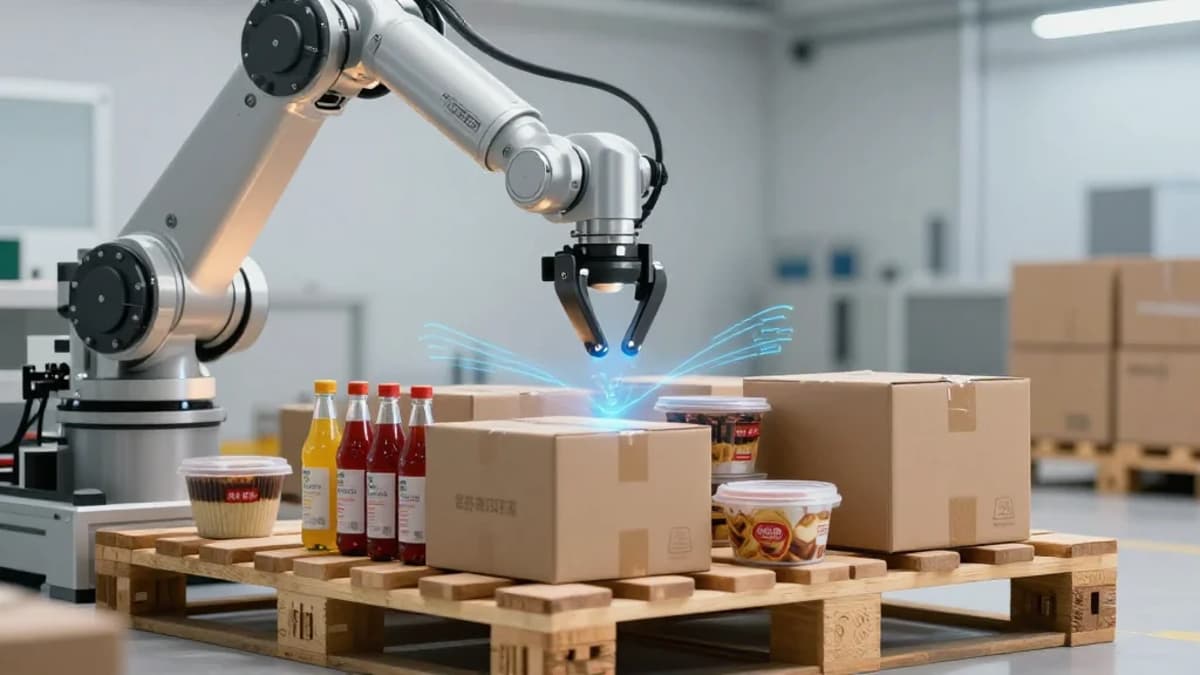
CMES Robotics Expands AI-Driven Warehouse Automation Footprint with New Logistics Projects
•January 20, 2026
0
Why It Matters
The contracts demonstrate market demand for flexible, AI‑driven automation that mitigates labor constraints while boosting productivity in variable manufacturing environments.
Key Takeaways
- •Secured multi-year AI automation contracts with North American food manufacturer
- •Deploys robotic bag palletizing for high-variability product lines
- •AI vision enables mixed case palletizing, random depalletizing, piece-picking
- •Scalable platforms adapt without major facility modifications
- •Addresses labor shortages and rising operational complexity
Pulse Analysis
CMES Robotics' latest contracts illustrate how AI‑vision technology is moving from pilot projects to core production lines. By integrating 3D perception with real‑time motion planning, the company’s systems can identify and manipulate items of differing shapes and sizes without manual reprogramming. This capability is especially valuable in the food ingredient sector, where product variability and strict hygiene standards demand rapid changeovers and consistent accuracy.
The broader logistics and e‑commerce markets are also feeling the pressure of tighter labor pools and higher order volumes. CMES' modular automation platforms allow operators to scale operations incrementally, adding mixed‑case palletizing or random piece‑picking modules as demand grows. Because the software offers a code‑free interface, facilities can adapt to new SKUs or packaging formats without costly engineering interventions, preserving capital and reducing downtime.
Strategically, CMES is positioning itself as a bridge between traditional robotics and next‑generation intelligent automation. Its focus on real‑world warehouse conditions—rather than idealized lab settings—helps differentiate the firm in a crowded market. As manufacturers seek to future‑proof their supply chains, AI‑driven vision systems that combine flexibility, scalability, and labor‑saving benefits are likely to become a baseline expectation rather than a premium add‑on.
CMES Robotics Expands AI-Driven Warehouse Automation Footprint with New Logistics Projects
0
Comments
Want to join the conversation?
Loading comments...