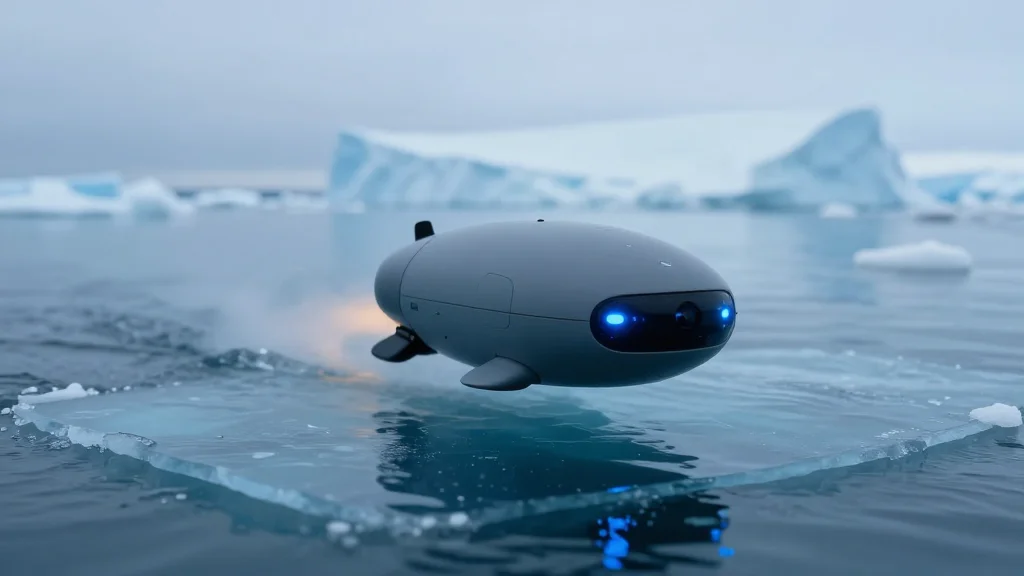
Deep‑Diving Argo Robots Pinpoint Ocean Heat as Driver of Antarctic Sea‑Ice Collapse

Why It Matters
The ability of autonomous robots to collect continuous, high‑resolution ocean data transforms our understanding of the Southern Ocean’s role in global climate. By revealing the hidden heat reservoir that triggered the 2016 sea‑ice collapse, the study highlights a critical feedback mechanism that could accelerate ice‑sheet loss and sea‑level rise. Moreover, the success of the Argo network demonstrates how robotics can fill observational gaps in extreme environments, enabling more accurate climate forecasts and informing policy decisions on mitigation and adaptation. For the robotics industry, the Antarctic deployment showcases a compelling use case: rugged, long‑duration autonomous platforms that operate without human intervention in harsh, remote settings. This proof of concept may spur investment in next‑generation underwater robots for scientific, commercial, and defense applications, expanding the market beyond traditional oil‑and‑gas or naval uses.
Key Takeaways
- •Argo floats identified a sudden release of deep‑ocean heat as the primary cause of Antarctic sea‑ice decline after 2016.
- •Intensified westerly winds disrupted surface freshwater layers, triggering convective mixing.
- •Study links oceanic changes to potential acceleration of ice‑shelf destabilization and sea‑level rise.
- •Quotes from Stanford's Earle Wilson and Climate Central's Zachary Labe underscore scientific consensus.
- •Robotics’ role in climate science expands, offering real‑time data from previously inaccessible ocean depths.
Pulse Analysis
The Antarctic sea‑ice episode illustrates a broader trend: robotics are becoming indispensable for climate observation. Traditional ship‑based surveys are limited by cost, weather, and seasonal access, leaving large swaths of the Southern Ocean under‑sampled. The Argo fleet, by contrast, provides a persistent, global network that can capture rapid, three‑dimensional changes in temperature and salinity—variables that are central to ice dynamics. This shift mirrors the evolution of satellite remote sensing, where continuous data streams have reshaped weather forecasting and climate monitoring.
From a market perspective, the success of Argo in a high‑stakes scientific mission validates the commercial viability of long‑duration autonomous underwater vehicles (AUVs). Companies that can deliver robust, low‑maintenance platforms with advanced sensor suites stand to capture a growing share of research contracts, as well as emerging opportunities in offshore renewable energy, subsea mining, and maritime security. The data‑as‑a‑service model—whereby operators sell processed oceanographic datasets—could become a new revenue stream, akin to satellite imagery services.
Looking ahead, the integration of AI‑driven analytics with robotic data collection will likely accelerate. Real‑time anomaly detection could trigger adaptive sampling, where AUVs change their dive patterns in response to unexpected temperature spikes, maximizing scientific return. For policymakers, the ability to monitor ocean heat content with such fidelity offers a more reliable early‑warning system for ice‑sheet instability, potentially informing coastal adaptation strategies before irreversible tipping points are reached.
Deep‑Diving Argo Robots Pinpoint Ocean Heat as Driver of Antarctic Sea‑Ice Collapse
Comments
Want to join the conversation?
Loading comments...