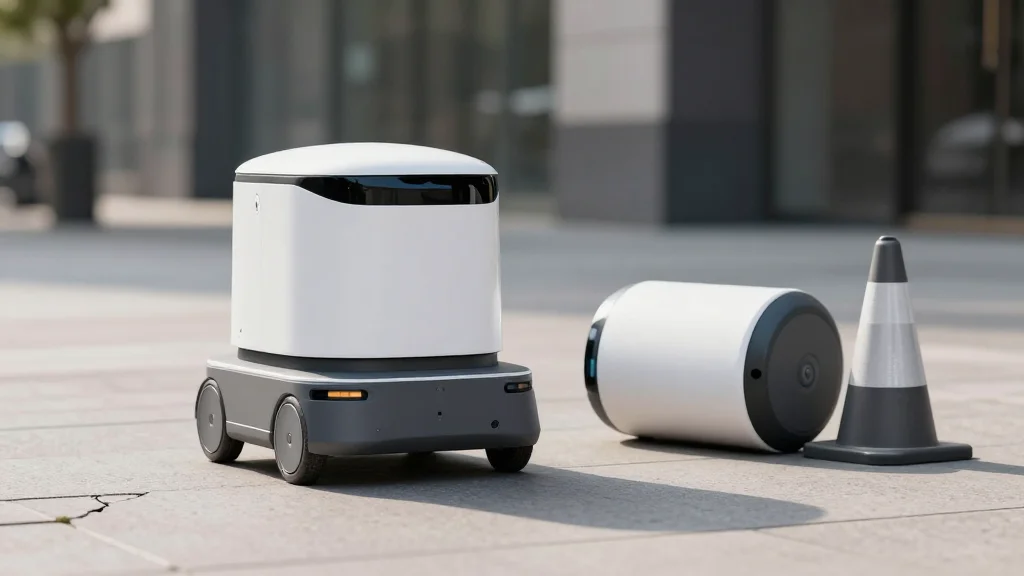
Delivery Robot Fails Go Viral, Highlighting Last‑Mile Deployment Woes

Companies Mentioned
Why It Matters
The viral montage brings the hidden risks of autonomous delivery into mainstream view, forcing policymakers, insurers and the public to confront the trade‑offs of last‑mile automation. Safety incidents can erode consumer confidence, slow adoption, and trigger costly regulatory interventions that could reshape business models for firms like Starship Technologies, Coco Robotics and Serve Robotics. Beyond immediate safety concerns, the episode raises strategic questions about the scalability of sidewalk robots in dense urban settings. If companies cannot reliably navigate existing infrastructure, the economic case for replacing human couriers with autonomous units weakens, potentially redirecting investment toward alternative delivery solutions such as drones or micro‑fulfillment centers.
Key Takeaways
- •TikTok video @BoopMePlz compiled clips of delivery robot failures, reaching millions of views.
- •Incidents include a Coco Robotics bot hit by a train, a Starship Technologies bot crashing through a marching band, and a Serve Robotics bot with a busted tire.
- •Failures occurred in diverse locations: Tennessee, Los Angeles, and an unnamed city with a train crossing.
- •Companies cite software updates and data‑driven learning as responses to the highlighted incidents.
- •Municipalities may tighten sidewalk‑robot permits and insurance requirements following the viral exposure.
Pulse Analysis
The surge of viral robot failure footage is a symptom of a broader scaling problem. Early deployments of autonomous delivery bots have largely been confined to controlled campus environments or low‑traffic suburban streets. Moving into dense, mixed‑use urban corridors introduces a combinatorial explosion of edge cases—unexpected obstacles, erratic human behavior, and legacy infrastructure—that current perception‑action loops struggle to handle. The public’s reaction to the TikTok montage suggests that the industry’s narrative of seamless, contactless delivery is outpacing its technical readiness.
Historically, similar technology rollouts—such as self‑driving cars and drone deliveries—have faced public backlash after high‑visibility incidents. The key differentiator for sidewalk robots is their proximity to pedestrians and the fact that they occupy public right‑of‑way. This amplifies liability concerns and invites stricter municipal oversight. Companies that can demonstrate robust fail‑safe mechanisms, transparent reporting and collaborative engagement with city planners will likely secure the next wave of permits, while laggards may see their deployments curtailed.
Looking ahead, the industry may pivot toward hybrid models that combine autonomous bots with human oversight, especially in high‑risk zones. Investment could shift toward sensor redundancy, AI‑driven predictive maintenance, and real‑time remote monitoring platforms. Moreover, the viral episode could accelerate standard‑setting efforts by bodies such as the International Organization for Standardization (ISO) and local transportation agencies, establishing baseline safety metrics that all operators must meet. Firms that proactively adopt these standards may gain a competitive edge, turning a moment of public scrutiny into an opportunity to differentiate on safety and reliability.
Delivery Robot Fails Go Viral, Highlighting Last‑Mile Deployment Woes
Comments
Want to join the conversation?
Loading comments...