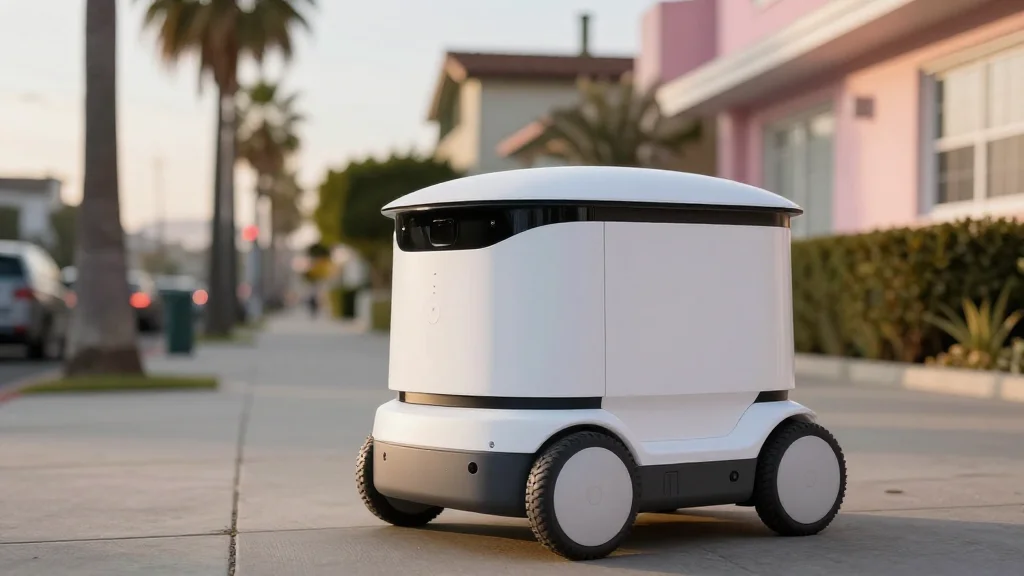
Delivery Robots Multiply in Los Angeles as Residents React with Praise and Frustration

Companies Mentioned
Why It Matters
The Los Angeles rollout is one of the largest municipal deployments of sidewalk delivery robots in the United States, offering a real‑world laboratory for policymakers and manufacturers. Success or failure will influence how other cities approach autonomous micro‑logistics, shaping investment decisions and regulatory frameworks. Beyond the immediate traffic and labor implications, the expansion touches on broader themes of urban equity and environmental policy. If robots can reliably replace vehicle trips for short‑range deliveries, they could cut emissions and free up curb space. However, without clear rules, they risk exacerbating accessibility challenges for people with disabilities and marginalizing workers dependent on gig‑economy delivery jobs.
Key Takeaways
- •Serve Robotics added 500 delivery robots to 40 LA neighborhoods, bringing its total to over 800 units citywide.
- •Coco Robotics operates roughly 300 autonomous delivery bots across Los Angeles.
- •Local business owners report both congestion on sidewalks and curiosity about the technology.
- •Glendale is considering a moratorium on sidewalk robots; Chicago has already limited its expansion.
- •Serve Robotics plans to add another 200 units by year‑end while improving navigation around crosswalks.
Pulse Analysis
Los Angeles' aggressive robot deployment signals a shift from experimental pilots to commercial scale. The city’s dense, mixed‑use neighborhoods provide a stress test for navigation algorithms that must contend with unpredictable pedestrian flows, street furniture, and weather conditions. Companies that can demonstrate reliable performance in such environments will likely secure contracts in other megacities, where the pressure to reduce last‑mile emissions is mounting.
The controversy also reflects a classic technology adoption curve: early adopters celebrate novelty and sustainability, while the broader public reacts to tangible inconveniences. Policymakers must therefore craft nuanced regulations that protect sidewalk accessibility without stifling innovation. Potential solutions include dedicated micro‑mobility lanes, time‑of‑day restrictions, or mandatory sensor standards that enable robots to yield to pedestrians and wheelchair users.
Finally, the labor dimension cannot be ignored. While autonomous bots may lower operational costs for restaurants, they also threaten the livelihoods of gig‑economy couriers. Cities that pair robot deployment with workforce transition programs—such as retraining for robot maintenance or supervisory roles—will mitigate social backlash and create a more sustainable ecosystem for autonomous delivery.
Delivery Robots Multiply in Los Angeles as Residents React with Praise and Frustration
Comments
Want to join the conversation?
Loading comments...