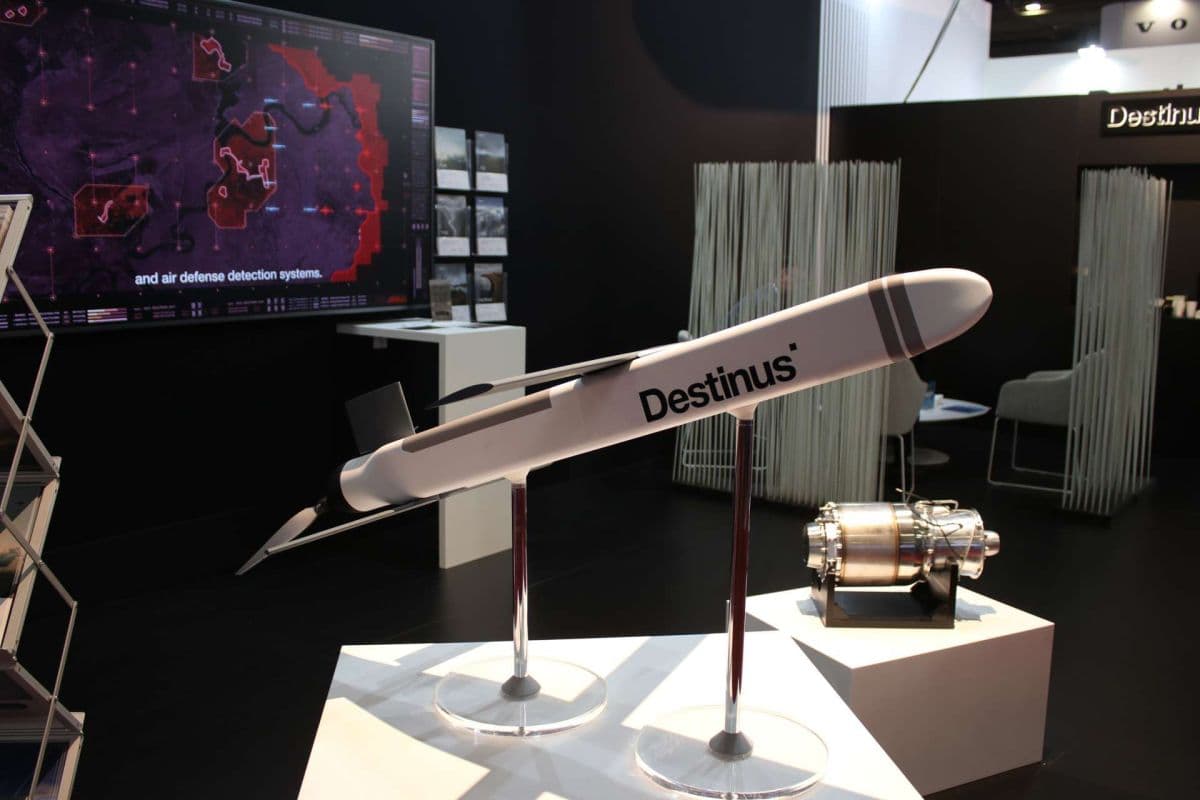
Diehl Defence and Destinus Team up to Add a New Interceptor Class to GARMR

Companies Mentioned
Why It Matters
The integration gives European forces a scalable, affordable layer against massed drone attacks, enhancing both capability and sustainability of air‑defence architectures.
Key Takeaways
- •Hornet interceptor integrates with GARMR via standard interface.
- •Targets fast, low‑cost drones and glide‑bomb threats.
- •Adds cost‑effective layer, preserving high‑value missiles.
- •Boosts Diehl’s market position in European NATO air defense.
- •Enhances capacity for high‑volume aerial attacks.
Pulse Analysis
The partnership between Diehl Defence and Destinus arrives at a pivotal moment for European air‑defence strategy. As drone swarms and inexpensive glide‑bombs proliferate, traditional counter‑UAV solutions risk saturation, forcing operators to rely on costly missile systems. By embedding the Hornet interceptor—a jet‑powered, one‑way missile—into the GARMR platform, operators gain a dedicated, low‑cost effector that can engage high‑speed, low‑observable threats at medium range. This modular approach preserves high‑value missiles for strategic targets while maintaining a robust defensive envelope.
From a market perspective, the collaboration positions Diehl Defence as a more comprehensive supplier for NATO members seeking layered protection. The GARMR system’s open architecture, already compatible with a variety of sensors and effectors, now offers an additional tier that addresses the “capacity” challenge highlighted by defense analysts. Cost‑per‑engagement metrics improve, allowing budgets to stretch further amid rising procurement pressures. Moreover, the joint solution aligns with European initiatives to develop indigenous capabilities, reducing reliance on non‑EU missile technologies.
Strategically, the Hornet‑enabled GARMR configuration could reshape doctrine for defending critical infrastructure and forward operating bases. Planners can now design engagement sequences that start with Hornet for swarms, transition to conventional counter‑UAV lasers or nets for residual threats, and reserve long‑range missiles for high‑value penetrators. This tiered response not only enhances survivability but also supports rapid re‑load cycles, a crucial factor in contested environments where engagement rates may surge. As NATO refines its air‑defence posture, the Diehl‑Destinus alliance offers a timely, cost‑effective tool to meet evolving aerial threat spectra.
Diehl Defence and Destinus team up to add a new interceptor class to GARMR
Comments
Want to join the conversation?
Loading comments...