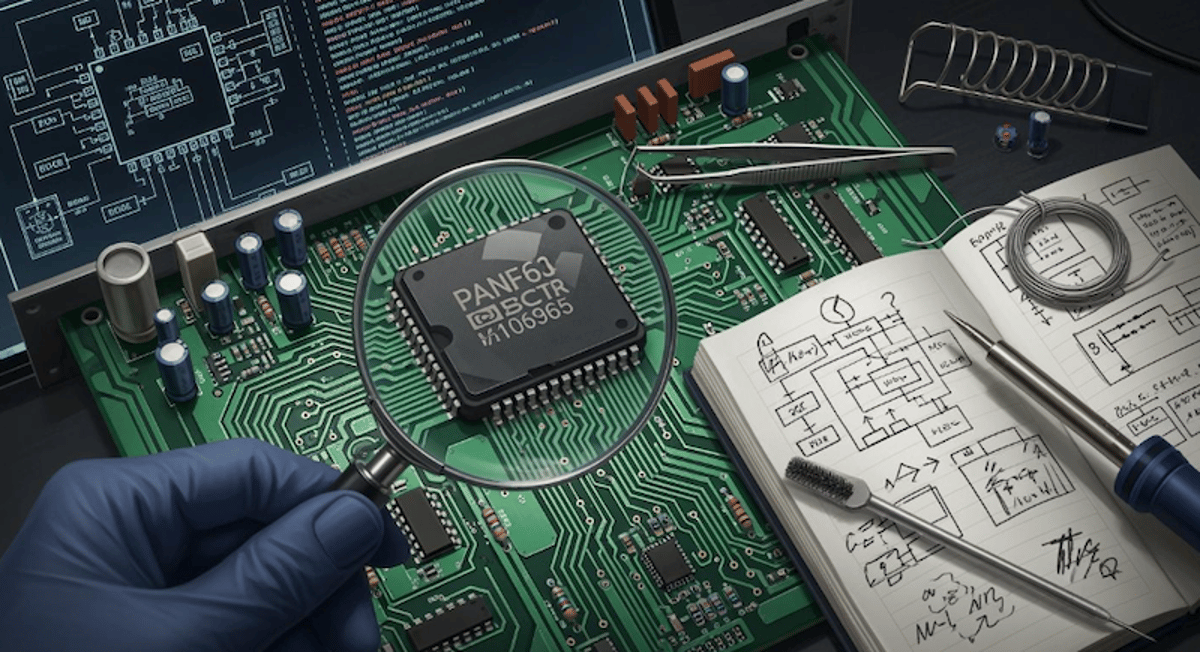
Discontinued Electronic Products: In-Depth Analysis of PCB Reverse Engineering and IC Unlock Techniques
•February 9, 2026
0
Why It Matters
Reverse engineering restores functionality to obsolete equipment, saving costly replacements and extending asset lifecycles. It also opens new business opportunities in legacy support and sustainable electronics.
Key Takeaways
- •Enables repair of legacy devices lacking official support
- •Generates schematics and BOMs from physical boards
- •Uses imaging tools like X‑ray, AI‑driven AOI
- •Legal compliance essential to avoid IP infringement
- •IC unlock methods recover firmware for maintenance
Pulse Analysis
Planned obsolescence has turned many once‑common devices into dead‑ends for manufacturers, leaving end‑users with costly downtime. When a product is discontinued, spare parts and service manuals disappear, forcing organizations to either replace entire systems or find work‑arounds. PCB reverse engineering offers a pragmatic bridge, allowing engineers to reconstruct schematics, generate bill‑of‑materials, and fabricate functional replacements without relying on original vendors. This capability not only extends asset lifecycles but also reduces capital expenditure for industries such as aerospace, medical equipment, and industrial automation, where downtime is especially expensive.
Recent advances in imaging and artificial intelligence have dramatically lowered the technical barrier to board reconstruction. High‑resolution optical scans combined with 2‑D and 3‑D X‑ray computed tomography reveal hidden layers, while AI‑enhanced trace detection automates the mapping of nets and vias. Coupled with open‑source CAD tools, these technologies enable small teams to produce accurate digital twins in days rather than weeks. The democratization of such tools fuels a niche market for specialized reverse‑engineering services and creates new revenue streams for firms that can certify and manufacture legacy‑compatible PCBs.
However, the technical upside coexists with a complex legal landscape. Copyright, patent, and anti‑circumvention statutes such as the DMCA restrict unauthorized copying, making thorough compliance checks indispensable. Companies that embed reverse‑engineering into their maintenance strategy must establish clear licensing agreements or rely on public‑domain designs to avoid infringement. When executed responsibly, the practice supports sustainability goals by reducing electronic waste and encourages innovation by exposing legacy design patterns that can inspire next‑generation products.
Discontinued Electronic Products: In-depth Analysis of PCB Reverse Engineering and IC Unlock Techniques
0
Comments
Want to join the conversation?
Loading comments...