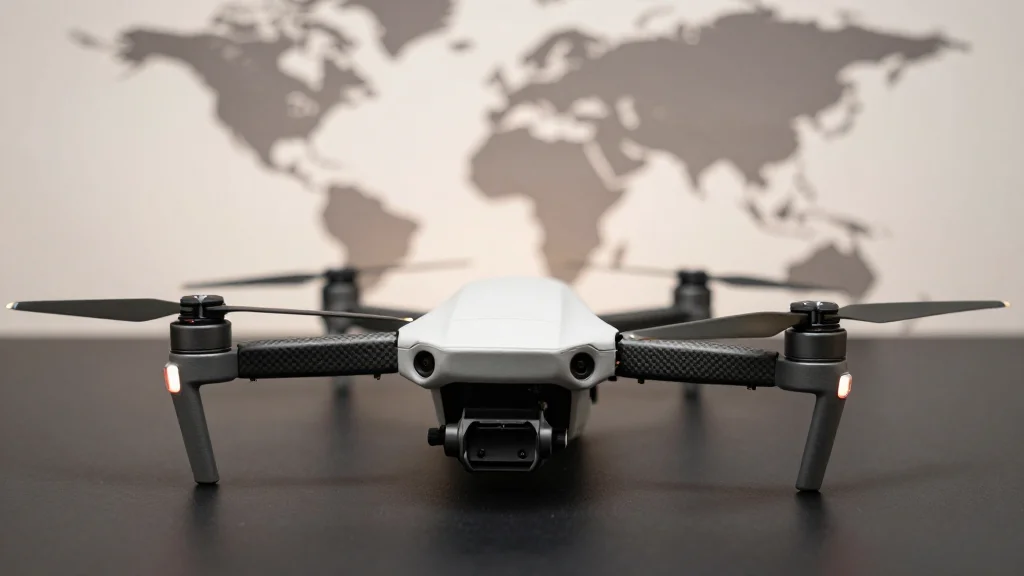
DJI Drone Sales Banned in Beijing and US Over Security Fears

Why It Matters
The bans signal a turning point for the consumer‑drone industry, where security considerations are now reshaping market access. For DJI, the loss of Beijing and the US—two of the largest consumer markets—could erode its near‑monopoly and open space for competitors, especially domestic Chinese firms that can comply with local regulations. The moves also set a precedent for other robotics categories, suggesting that governments may increasingly regulate entire product lifecycles rather than just operational use. For policymakers, the actions illustrate how emerging technologies are being weaponized in geopolitical competition. By restricting drone sales, Beijing aims to protect critical infrastructure, while the US leverages export controls to limit Chinese influence in its communications ecosystem. The outcome will likely influence future regulatory frameworks for autonomous systems worldwide.
Key Takeaways
- •Beijing bans sale, rental, transport and storage of drones in a 2,288 km² zone effective 1 May 2026.
- •US FCC adds DJI to Covered List, blocking 25 new 2026 models and $1.5 bn in projected revenue.
- •DJI controls up to 80% of the global consumer‑drone market, now barred from both capitals.
- •Fines for unregistered drones in Beijing reach up to 10,000 yuan ($1,460) for individuals.
- •DJI has filed a lawsuit in the Ninth Circuit challenging the FCC’s decision.
Pulse Analysis
DJI’s dual regulatory squeeze underscores a broader shift: robotics firms are now operating in a landscape where national security can trump commercial viability. Historically, consumer drones thrived on open skies and minimal oversight, but the rapid proliferation of affordable, high‑resolution platforms has turned them into potential surveillance tools. Beijing’s all‑encompassing ban is a blunt instrument aimed at reasserting control over a technology that can easily breach airspace around sensitive sites. The policy’s breadth—covering purchase, storage and disposal—suggests future regulations may target the entire supply chain, forcing manufacturers to embed compliance mechanisms from design to end‑of‑life.
In the United States, the FCC’s Covered List reflects an escalating tech‑war narrative that treats hardware as a vector for espionage. By blocking new DJI models, the agency not only curtails a revenue stream but also sends a warning to other foreign‑origin robotics firms. The legal challenge DJI faces will test the limits of administrative authority versus corporate rights, potentially setting a precedent for how quickly regulators can act against emerging tech.
For the market, the immediate impact is a vacuum in the premium consumer‑drone segment. Domestic Chinese rivals such as Autel Robotics may capture Beijing’s market share, while U.S. companies like Skydio could benefit from reduced competition in the United States. Investors will likely reassess exposure to firms heavily dependent on cross‑border sales, and supply‑chain partners may diversify to mitigate geopolitical risk. In the longer term, the episode could accelerate a bifurcation of the global robotics ecosystem, with parallel standards and certification regimes emerging in the East and West.
DJI Drone Sales Banned in Beijing and US Over Security Fears
Comments
Want to join the conversation?
Loading comments...