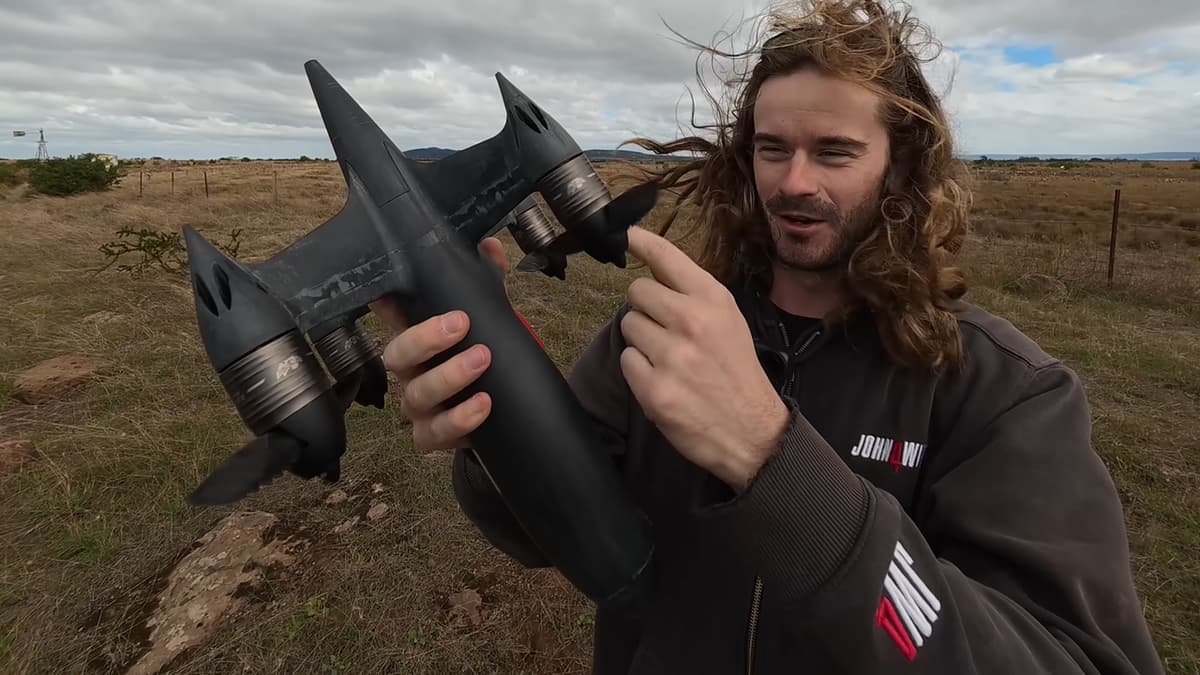
Drone Breaks World Speed Record with 453 Mph in Test Run — Exotic Sawtooth Carbon Fiber Propeller Blades One of the Key Advances in the Blackbird Design
Companies Mentioned
Why It Matters
The achievement showcases how advanced propeller engineering can dramatically extend UAV speed envelopes, opening new possibilities for high‑performance drone applications and competitive record‑setting.
Key Takeaways
- •Blackbird reached 453 mph, surpassing previous 408 mph record
- •Custom carbon‑fiber sawtooth propellers enable higher pitch without stall
- •High‑pitch blades reduce drag but demand more battery power at takeoff
- •Downwind run benefited from 34 mph tailwind, yielding 419 mph true airspeed
- •Team plans official attempt after repairing crash‑damaged drone
Pulse Analysis
The drone‑speed race, once dominated by hobbyists, is rapidly evolving into a showcase for cutting‑edge aerodynamics. While commercial UAVs typically cruise below 150 mph, the Blackbird’s 453 mph peak places it in the same speed class as light aircraft, challenging conventional design limits. This surge in performance is driven less by raw motor power and more by sophisticated propeller technology, underscoring a shift toward precision‑engineered airfoils for high‑velocity flight.
At the heart of the Blackbird’s success are its custom carbon‑fiber propellers, which combine an aggressive pitch angle with sawtooth‑shaped leading edges. The high pitch aligns the blades more closely with the airflow, minimizing induced drag, while the sawtooth geometry creates controlled vortices that keep the boundary layer attached, preventing stall at steep angles. The trade‑off is higher power draw during take‑off and hover, as the blades generate less thrust at low speeds, forcing the motors to tap deeper into the battery. This design philosophy mirrors trends in aerospace, where blade‑tip shaping and surface texturing are used to squeeze out every ounce of efficiency.
The implications extend beyond record books. Faster, more efficient propellers can enhance payload delivery, emergency response, and even point‑to‑point logistics, where speed translates directly into cost savings. As the team readies an official attempt, industry observers are watching for validation that such extreme configurations can be reliably reproduced at scale. Should the Blackbird’s design prove durable, manufacturers may adopt similar blade treatments for high‑speed commercial drones, accelerating the convergence of hobby‑level innovation and enterprise‑grade UAV performance.
Drone breaks world speed record with 453 mph in test run — exotic sawtooth carbon fiber propeller blades one of the key advances in the Blackbird design
Comments
Want to join the conversation?
Loading comments...