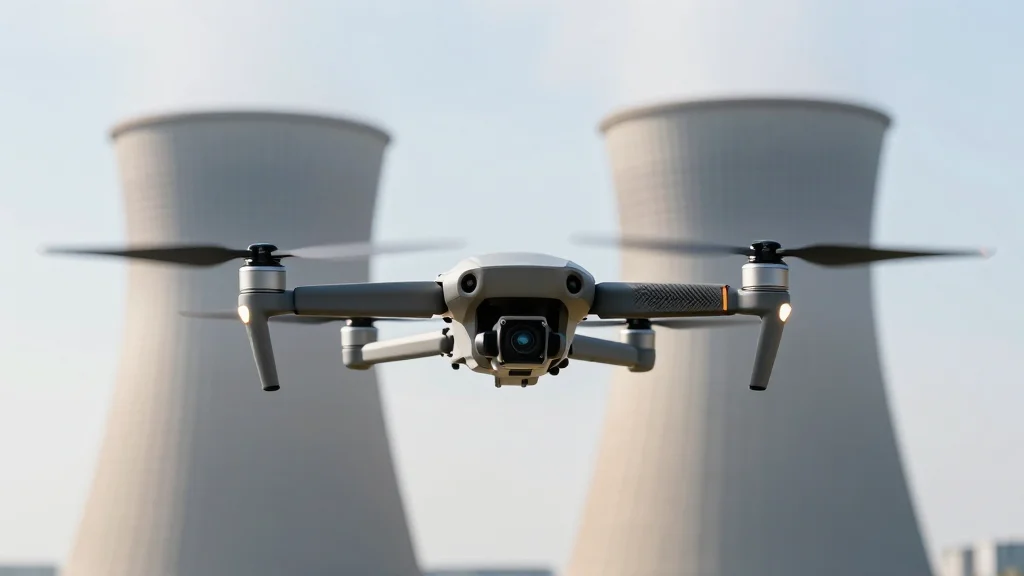
Drone Strike Hits UAE’s Barakah Nuclear Plant, Raising Robotics Security Stakes

Why It Matters
The Barakah drone strike illustrates how rapidly advancing robotics—particularly autonomous or semi‑autonomous drones—are being weaponised to target high‑value, civilian infrastructure. Nuclear power plants are traditionally protected by layered physical security, but the ability of small, low‑observable UAVs to breach airspace challenges those safeguards and forces operators to invest in new detection and counter‑UAV technologies. Beyond the immediate safety of the Barakah facility, the incident signals a broader shift in modern conflict: robotic platforms are becoming low‑cost, high‑impact tools for state and proxy actors to exert strategic pressure without deploying manned aircraft. This trend could spur an arms race in counter‑drone systems, tighten international regulatory efforts on loitering munitions, and compel nuclear regulators to revise emergency response protocols to account for robotic threats.
Key Takeaways
- •Three drones entered UAE airspace from the western border; two were intercepted, one hit a generator at Barakah nuclear plant.
- •Barakah plant, a $20 billion facility, provides roughly 25 % of the UAE’s electricity and is key to its net‑zero goals.
- •No injuries or radiation release were reported; IAEA confirmed radiation levels remained normal.
- •UAE foreign ministry called the strike an "unacceptable act of aggression" and reserved the right to respond.
- •The incident highlights the growing use of weaponised drones—autonomous robotics—in regional conflicts.
Pulse Analysis
The Barakah incident is a watershed moment for the robotics industry, marking the first known use of a combat drone against a civilian nuclear power plant in the Middle East. While drones have long been employed for surveillance and targeted strikes, their deployment against a facility that underpins a nation’s energy security demonstrates a new level of strategic intent. This escalation is likely to accelerate demand for advanced counter‑UAV solutions, spurring investment in radar, electro‑optical sensors, and directed‑energy weapons capable of neutralising small, fast‑moving aerial robots.
From a market perspective, firms that specialize in drone detection and mitigation—such as Raytheon, Leonardo, and emerging Israeli startups—could see a surge in orders from governments seeking to harden critical infrastructure. At the same time, manufacturers of loitering munitions, notably Iran’s Shahed series, may experience heightened scrutiny and potential export restrictions, reshaping the global supply chain for autonomous weapons. The incident also puts pressure on international bodies to revisit the legal framework governing the use of unmanned systems near nuclear sites, a gap that has been largely overlooked in existing arms‑control treaties.
Looking ahead, the convergence of AI‑driven autonomy with low‑cost airframes means that future attacks could become more sophisticated, with swarms capable of overwhelming traditional defence layers. Nations will need to adopt a holistic approach that combines technology, intelligence sharing, and clear rules of engagement to prevent robotic warfare from compromising the safety of nuclear facilities and other critical assets worldwide.
Drone Strike Hits UAE’s Barakah Nuclear Plant, Raising Robotics Security Stakes
Comments
Want to join the conversation?
Loading comments...