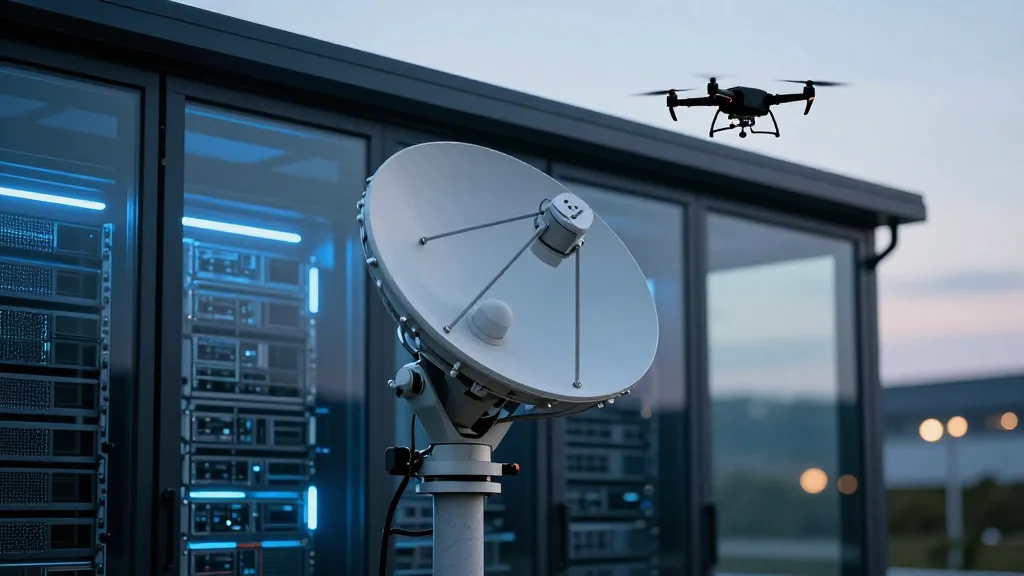
Drones and Data Centers: The AI Boom Is Outpacing Security Protocol
Companies Mentioned


Why It Matters
Unaddressed drone threats could disrupt AI‑driven services and compromise sensitive data, jeopardizing billions in investment and operational continuity across the data‑center sector.
Key Takeaways
- •AI-driven data center builds projected to reach $7 trillion by 2030.
- •Over 1 million US drones increase espionage and weaponization risks.
- •FAA/FCC rules block kinetic drone mitigation for critical sites.
- •Radar, RF, and EO/IR layers enable soft‑mitigation actions.
- •Design‑phase drone risk assessments prevent expensive retrofits.
Pulse Analysis
The AI boom is reshaping the data‑center landscape, with investors pouring capital into facilities that will consume massive amounts of power. McKinsey forecasts a $7 trillion spend on data‑center infrastructure by 2030, underscoring the sector’s strategic importance. Yet the same skies that host these high‑value assets are becoming increasingly crowded with drones—both registered and rogue. Hobbyist operators, malicious actors, and even influencers are using inexpensive UAVs to capture imagery or deliver payloads, creating new vectors for cyber‑espionage and physical sabotage that traditional perimeter defenses simply cannot see.
Regulatory constraints compound the problem. Current FAA and FCC policies prohibit kinetic countermeasures such as shooting down or jamming drones, even when they pose clear threats to critical infrastructure. Consequently, security teams must rely on “soft” mitigation strategies that begin with robust detection. A layered sensor suite—combining 24/7 radar, passive RF monitoring, and high‑resolution EO/IR cameras—provides continuous airspace awareness, classifies threats, and supplies actionable data. This information enables operators to engage pilots, trigger system shutdowns, or summon law‑enforcement, turning a blind spot into a manageable risk.
Forward‑looking operators are shifting from reactive retrofits to proactive design. Conducting a Drone Vulnerability Risk Assessment (DVRA) during the planning stage allows architects to integrate sensors, allocate space for antennae, and define response protocols before construction begins. Early integration reduces capital expenditures, avoids gaps in coverage, and future‑proofs facilities against evolving UAV capabilities. As drones become more sophisticated and affordable, the only sustainable defense is to treat the airspace above data centers as an integral component of overall security architecture.
Drones and data centers: the AI boom is outpacing security protocol
Comments
Want to join the conversation?
Loading comments...