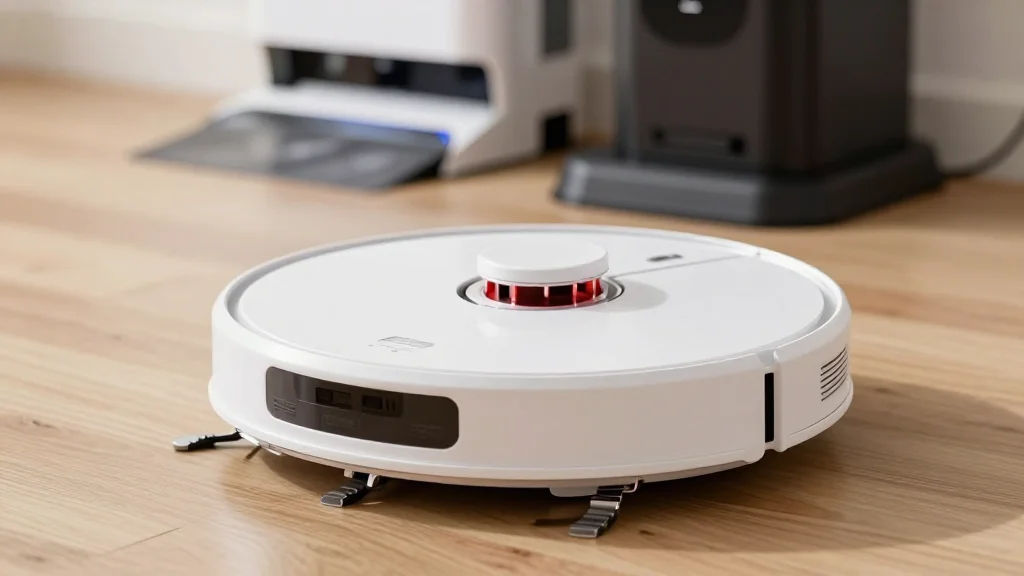
Dyson Launches $1,200 Spot & Scrub AI Robot Vacuum‑mop, Co‑engineered with Third‑party Motor

Companies Mentioned
Why It Matters
Dyson’s decision to co‑engine a flagship robot with an external motor supplier signals a shift in how premium consumer‑electronics firms approach robotics. By leveraging third‑party hardware while retaining proprietary AI and dock technology, Dyson can accelerate product cycles and compete on features rather than pure suction power. The move also raises questions about brand perception: consumers accustomed to Dyson’s in‑house motor expertise must now evaluate a hybrid product that blends Dyson’s software with a partner’s mechanical core. If successful, the Spot & Scrub could validate a partnership model that other high‑margin brands might emulate, potentially reshaping the competitive dynamics of the home‑robot market. Conversely, if performance gaps become evident, Dyson may face pressure to reinvest in proprietary motor development, reinforcing the importance of end‑to‑end engineering in premium robotics.
Key Takeaways
- •Dyson launches Spot & Scrub AI robot vacuum‑mop at $1,200.
- •Motor is sourced from a partner, not a Dyson V10, per senior design manager Nathan Lawson McLean.
- •Device features lidar navigation, AI stain detection, heated mop, and a multifunction dock that empties dust, washes mop, and refills water.
- •Industry analysts link the robot’s chassis to Shenzhen‑based Picea Robotics, an ODM used by Roborock, Ecovacs, and iRobot.
- •Dyson aims to compete with lower‑priced Chinese rivals by leveraging brand cachet and AI capabilities.
Pulse Analysis
Dyson’s hybrid engineering strategy reflects a pragmatic response to the rapid commoditization of robot vacuums. Historically, Dyson’s market differentiation hinged on its proprietary high‑speed motors and cyclonic suction, but those advantages have eroded as Chinese OEMs deliver comparable suction at a fraction of the cost. By outsourcing the motor, Dyson can allocate resources to differentiate on software—AI‑driven stain detection and a sophisticated dock ecosystem—areas where it retains a competitive moat.
The partnership also mitigates supply‑chain risk. Building a new motor in‑house would require significant capital investment and lead‑time, especially as the global semiconductor shortage continues to affect motor controllers. Leveraging an established ODM like Picea allows Dyson to tap into existing manufacturing capacity and accelerate time‑to‑market, a crucial factor when consumer expectations for feature updates are increasingly short.
However, the trade‑off is brand dilution. Dyson’s reputation for engineering excellence is a core part of its premium pricing strategy. If consumers perceive the Spot & Scrub’s vacuum performance as inferior, the $1,200 price tag may become a barrier, especially when competitors such as Roborock S8+ and Ecovacs Deebot T10 Omni offer similar wet‑and‑dry capabilities for $800‑$900. The success of Dyson’s launch will therefore depend on how well it can convince buyers that its AI and dock innovations deliver tangible cleaning benefits that outweigh any perceived loss in raw suction power.
Looking ahead, Dyson’s approach could catalyze a broader industry trend where legacy appliance makers adopt a modular design philosophy—combining in‑house software with outsourced hardware—to stay agile. If the Spot & Scrub meets sales expectations, we may see a wave of premium brands entering the robot market via similar co‑engineering deals, reshaping the competitive landscape and potentially raising the overall quality bar for consumer robotics.
Dyson launches $1,200 Spot & Scrub AI robot vacuum‑mop, co‑engineered with third‑party motor
Comments
Want to join the conversation?
Loading comments...