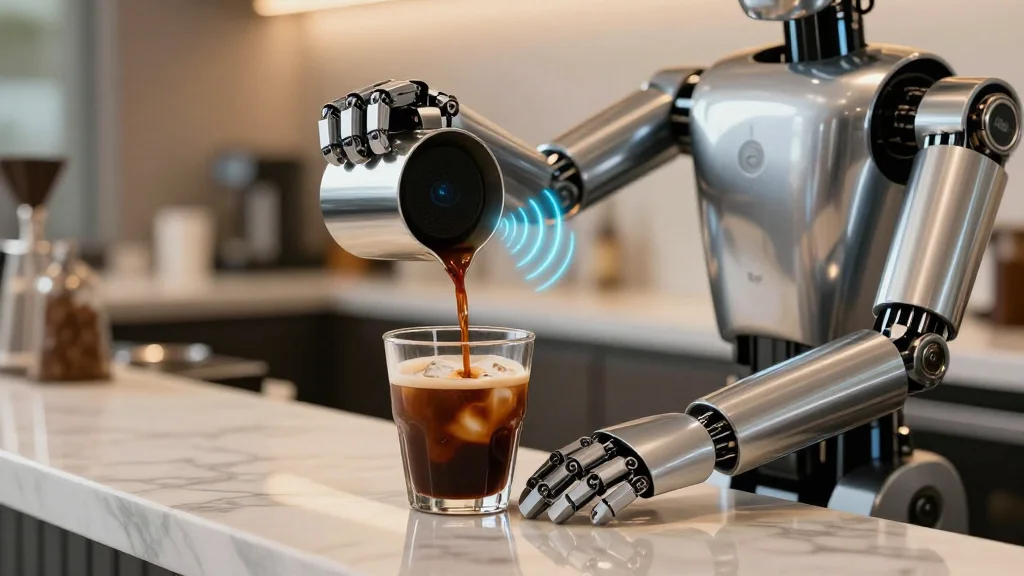
ElevenLabs Debuts Robot Barista at NYC Pop‑Up, Merging Voice AI with Coffee Service

Companies Mentioned

Why It Matters
The ElevenLabs pop‑up illustrates how speech‑generation technology can be the nervous system of a physical robot, opening a pathway for voice‑first consumer robotics that bypass traditional UI constraints. If successful, such integrations could reshape labor dynamics in hospitality, offering cost‑effective service while intensifying debates about automation’s impact on urban employment. The demo also positions New York as a proving ground for AI‑driven robotics, potentially attracting further venture capital to the city’s burgeoning AI ecosystem. Beyond the immediate novelty, the event serves as a litmus test for user acceptance of AI‑mediated transactions. Positive reception could accelerate investment in voice‑controlled robots across sectors, while any friction—such as the haggling experience—may prompt regulators and designers to reconsider transparency and fairness standards in automated commerce.
Key Takeaways
- •ElevenLabs opened a SoHo pop‑up during NY Tech Week featuring a robot barista and AI shopkeeper.
- •The robot poured cold brew and negotiated the price of a $27 hat down to $24.
- •Sam Sklar, ElevenLabs' COO, emphasized the goal to "show, not tell" with physical AI demos.
- •NY Tech Week expects 40,000 attendees across 1,500 events, highlighting the city’s AI focus.
- •City comptroller warns AI could displace up to 250,000 white‑collar jobs by 2027, underscoring the automation debate.
Pulse Analysis
ElevenLabs' foray into physical robotics marks a strategic pivot from pure software to embodied AI, a move that mirrors trends seen at companies like Boston Dynamics and SoftBank Robotics. By leveraging its core competency—high‑fidelity voice synthesis—ElevenLabs sidesteps the massive R&D costs of building autonomous navigation systems, instead focusing on the interaction layer that most directly influences user experience. This approach could give it a first‑mover advantage in niche hospitality settings where voice control is already trusted, such as hotel concierge services.
Historically, robotics deployments in consumer spaces have stumbled over UI complexity; think of the early failures of voice‑controlled home appliances that required precise phrasing. ElevenLabs’ demo demonstrates that when the robot’s function is narrow—pouring a drink and handling a simple transaction—voice AI can deliver a frictionless experience. The haggling scenario, while entertaining, also surfaces a risk: AI agents must balance brand protection with customer goodwill. Overly rigid pricing logic could alienate users, while too much flexibility might erode margins.
Looking ahead, the key to scaling will be integration with existing POS ecosystems and compliance with health‑code standards. If ElevenLabs can package its voice engine as a plug‑and‑play module for third‑party robot manufacturers, it could become the de‑facto speech layer for a new generation of service robots. Venture capitalists, already bullish on AI’s city‑wide impact, may view this as a low‑risk, high‑reward play, especially as the New York market continues to attract AI talent and funding. The real test will be whether the novelty translates into repeatable revenue streams and whether regulators will endorse voice‑driven commerce in public spaces.
ElevenLabs Debuts Robot Barista at NYC Pop‑Up, Merging Voice AI with Coffee Service
Comments
Want to join the conversation?
Loading comments...