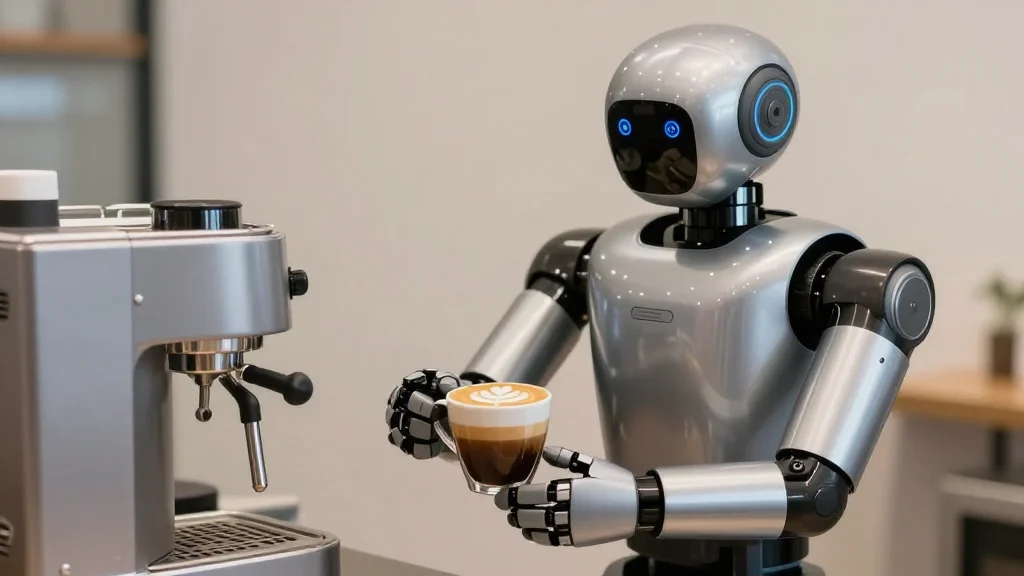
Elite Robots Unveils RoboBarista, Autonomous Coffee Cobot for High‑Traffic Venues

Why It Matters
RoboBarista signals a shift from niche industrial automation toward consumer‑facing service robots that directly interact with end‑users. By delivering a premium coffee experience without human labor, Elite Robots is testing the limits of cobot versatility in environments where speed, consistency and brand experience matter. Success could accelerate adoption of similar autonomous kiosks in other verticals, such as fast‑food ordering, retail checkout and even health‑care dispensing, reshaping labor models across the service economy. The launch also underscores the growing convergence of robotics, AI and IoT in commercial settings. Remote monitoring, analytics and customizable output demonstrate how data‑driven automation can create new revenue streams while reducing operational friction. As hospitality brands seek to differentiate themselves post‑pandemic, the ability to offer a novel, high‑tech coffee experience may become a competitive advantage, prompting a wave of investment in similar service‑robot platforms.
Key Takeaways
- •Elite Robots introduced RoboBarista, an autonomous coffee kiosk capable of producing 60+ cups per hour.
- •Dual‑arm version creates latte art and can print custom images on foam via a caramel‑jet printer.
- •The system includes remote monitoring, sales analytics and auto‑cleaning to lower labor costs.
- •RoboBarista will be showcased at Venditalia, FOOD TAIPEI – HORECA and World of Coffee in mid‑2026.
- •Launch aligns with a projected 22% CAGR for the global service‑robot market through 2032.
Pulse Analysis
Elite Robots' entry into the self‑service coffee market is more than a product launch; it is a litmus test for the broader viability of consumer‑grade cobots. Historically, collaborative robots have excelled in repeatable, high‑precision tasks within factories, but translating that reliability to a public-facing role demands a different set of performance criteria—speed, aesthetic quality, and user interaction. RoboBarista's dual‑arm latte‑art capability addresses the latter, turning a functional transaction into a shareable experience that can drive social media buzz and brand loyalty.
From a financial perspective, the coffee segment offers attractive unit economics. Specialty coffee margins often exceed 70%, and a fully automated station can operate 24/7 with minimal staffing, effectively multiplying revenue per square foot. If Elite Robots can achieve a break‑even point within 12‑18 months, the model becomes replicable across other high‑margin consumables. However, the upfront cost—likely in the high‑five‑figure range—could be a barrier for smaller operators, limiting early adoption to large hotel chains and airport concessions that can amortize the expense over high foot traffic.
Competitive dynamics will also shape RoboBarista's trajectory. Companies like Briggo and Cafe X have already deployed robotic coffee kiosks in the U.S., but they rely on proprietary hardware and limited customization. Elite Robots' advantage lies in its extensive cobot portfolio and global service network, which could accelerate after‑sales support and parts availability. Yet, the market will watch closely how the company handles data privacy for personalized prints and integrates with existing POS ecosystems. A misstep could erode trust and give rivals an opening to capture market share. In sum, RoboBarista could be a catalyst for a new wave of service robots, provided Elite Robots navigates the technical, financial and regulatory hurdles that accompany consumer‑grade automation.
Elite Robots Unveils RoboBarista, Autonomous Coffee Cobot for High‑Traffic Venues
Comments
Want to join the conversation?
Loading comments...